How to save succulents that are dropping leaves? Use the right methods and grow them until they are lush and thriving
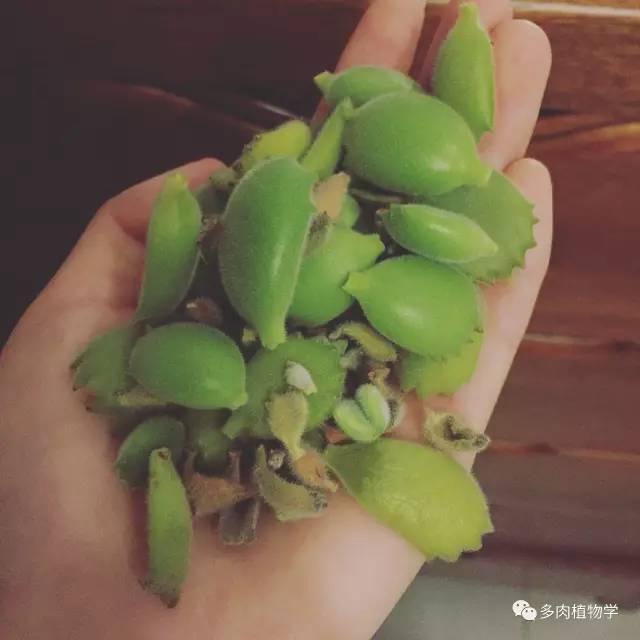
Once summer arrives, succulents develop all kinds of problems.
Quite a few friends have said in the backend that their succulents are dropping leaves very seriously!
Last year I wrote about the problem of succulents dropping leaves, because at that time a friend's bear's paw (Cotyledon tomentosa) was practically on the verge of dropping all its leaves.
For bear's paw (Cotyledon tomentosa), summer brings a brief dormant period.
During the dormant period, growth stops.
Too much water during the dormant period causes leaf drop and root rot.
If you want to improve the situation and stop the leaf drop, the first things to do are:
Place it in a ventilated spot;
Maintain light exposure;
When the soil is completely dry, water without soaking it through; after the dormant period ends, you can water until it runs through.
During the dormant period, leaf drop in succulents is also normal, but be sure to remember not to give too much water, and ventilate, ventilate, ventilate.
There really are quite a few hidden secrets behind succulent leaf drop,
Each spot is a different alarm signal from the body
When succulents drop leaves, everyone needs to pay attention to observing exactly which part of their succulent has a problem.
1. Roots
Observe whether the roots have a problem.
If it is a newly planted succulent, you need to check whether the roots have recovered well.
When repotting or transplanting, it has just encountered a new environment, and the root system has not yet recovered.
For succulents that have been planted for quite a while, you need to check whether too much water was given during the dormant period.
Too much water easily causes root rot.
If root rot occurs, it must be replanted!
Excess moisture can cause leaves to fall off at the slightest touch.
So when watering, be sure to pay attention: besides watering only after the soil is completely dry, you also must not let water accumulate in the pot.
2. Pathogens
Black rot or sooty mold.
Succulents disturbed by pathogens will also drop leaves, and the fallen leaves show signs of turning to mush.
If it is black rot, you have to behead it and replant.
Sooty mold may be caused by scale insects or ant droppings.
3. Natural shedding
Metabolism; this generally starts from the roots, where the leaves gradually soften and wither, but they do not fall off easily, so it is very easy to identify.
4. Lack of water
Leaves can also drop when there is a lack of water, but if they are only dropping and the leaves are not wrinkling, then it is not lack of water.
5. Ventilation
Hot, stuffy summer weather and low air pressure easily cause succulents to drop leaves.
Especially succulents such as bear's paw (Cotyledon tomentosa) and peach egg (Graptopetalum 'Peach Egg').
6. No direct sun scorching
In hot, high temperatures, direct sun scorching easily causes succulents to drop leaves.
7. Lack of light
Long-term lack of light can also cause leaves to fall off at the slightest touch.
Solutions
Water less, and do not water on cloudy days.
The soil should have good air permeability; you cannot just dig up any soil to plant succulents.
Give more sun, but not direct scorching sun.
Pay attention to ventilation.
For leaf drop caused by black rot, use a sterilized knife to cut off the infected part and spray with carbendazim.
When summer is too hot, you can use a fan to blow air; if you are rich, you can use an air conditioner.
If the roots are healthy, then even if it turns into just a stem, there is nothing to fear, because new leaves will grow again in autumn.
·END·
"Succulent Botany"
The most academic WeChat public account in the succulent field
Cute succulent news | Expensive succulent photos | Succulent care tutorials | Disease research | Leaf propagation exploration
WeChat public account: suanming108
Cooperation WeChat ID 343660451