When growing Chinese roses, be careful not to let this small action harm them
Click the [Follow] button in the top right corner to follow the Lanyao Garden Toutiao account, send a private message with "Gardening Encyclopedia", and receive 1 free e-book that can solve 70&-80% of gardening problems (updated regularly)
This is day 880 of Lanyao's daily original articles
Chinese rose cultivation series articles: No. 78
Many of our gardening friends always make some small mistakes when growing Chinese roses, but sometimes a very small mistake can cost your Chinese rose its life!
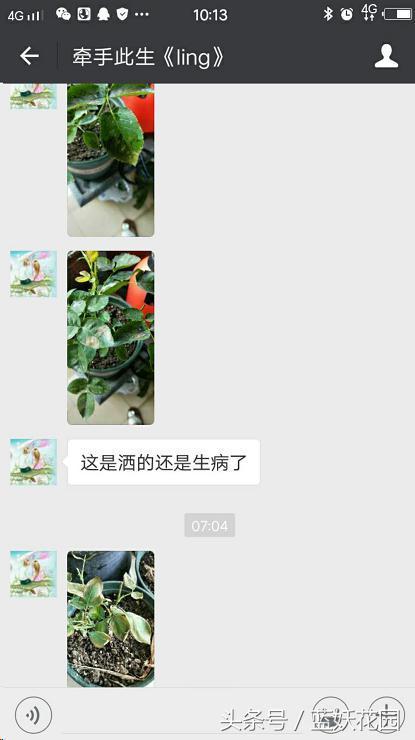
Just the day before yesterday, a gardening friend asked Lanyao this question:
Only a few days after buying it, severe yellowing of the leaves appeared. After Lanyao saw the pictures, the first reaction was fertilizer burn!
So I asked about the care process, and it turned out that this gardening friend had added compound fertilizer as a base fertilizer when repotting the Chinese rose.
Some of our beginner gardening friends may not quite understand why adding compound fertilizer as a base fertilizer causes fertilizer burn. Isn't it said that Chinese roses should be given base fertilizer when repotting?
The correct use of base fertilizer for Chinese roses:
We say that when repotting Chinese roses, it is best to add base fertilizer, but not all fertilizers can be used as base fertilizer.
Fertilizers that can be used as base fertilizer should be fertilizers with a mild and long-lasting effect, such as fermented organic fertilizer, slow-release fertilizer, controlled-release fertilizer, etc., as well as some inorganic fertilizers that cannot dissolve in water, such as potassium fertilizer, calcium fertilizer, etc.
But what this gardening friend used was water-soluble quick-acting compound fertilizer.
Quick-acting fertilizer releases its nutrients fast. A newly repotted Chinese rose already has its root system damaged to some extent. Using quick-acting fertilizer at this time is undoubtedly adding insult to injury, so it naturally shows fertilizer burn symptoms such as yellow leaves and leaf drop.
The correct way to deal with fertilizer burn:
When fertilizer burn occurs from using quick-acting fertilizer, if it was applied by shallow burying, then the soil in the part where the fertilizer was shallowly buried should be dug out and replaced, and then a large amount of clean water should be used to drench the roots.
If the fertilizer burn was caused by dissolving the fertilizer in water and drenching the roots, then a large amount of clean water should be used directly to drench the roots.
What is drenching the roots with a large amount of clean water?
Many gardening friends do not understand what drenching the roots with a large amount of clean water means, which leads to watering four or five times in one day and then continuing to water the next day. This easily causes root rot.
The correct understanding of drenching the roots with a large amount of clean water should be: watering heavily all at once.
It is actually using a large amount of clean water to flush out the fertilizer in the soil, reducing the concentration of fertilizer in the soil, and thereby alleviating fertilizer burn.
Therefore, it should be a one-time heavy watering. If normally one watering only needs half a pot of water, then when fertilizer burn occurs, water with 5 pots or even more at one time. Is this easy to understand when Lanyao explains it this way?
If you have gardening questions, find Lanyao. Please follow my WeChat public account: Lanyao Garden (ilanyao) to grow with me.
Welcome to follow the [Lanyao Garden] Toutiao account, accelerate your growth together, and become a gardening expert. If you like my articles, feel free to like, forward, and save them!