A multi-trunk privet bonsai, crafted by a master over 8 years
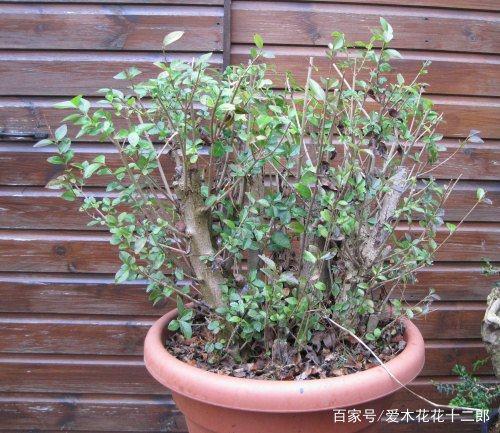
Around 2010, a family on the outskirts of London was rebuilding their hedge, and about 30 privet trees were dug up. This multi-trunk privet was one of them, but because it had more branches, it did not grow as tall as the others, so it was rather looked down upon, planted in a large flower pot, and left untended for 18 months. Until one day a bonsai artist came along, and the owner forced him to buy it.
This is the one in the picture, growing quite well, with lush foliage.
The bonsai artist reluctantly took it home, planning to repot it. He lifted it out of the pot. Hmm, the roots were not bad, very well developed.
Rinse it with water to take a closer look.
In order to plant it in a shallow pot, most of the roots had to be removed. After pruning, it turned out to be a very nice multi-trunk tree, with 5 or 6 fairly straight trunks.
Once the roots were pruned, it was finally settled into this round pot.
Because hedge cutting is done by sweeping with an electric saw, the trunks were all the same height. But bonsai requires variation in height and thickness. So the heights of the trunks were adjusted, and some pruning was done along the way.
Throughout the 2012 growing season, this privet was treated with heavy fertilizer and heavy watering, to make it grow stronger. But the top branches needed regular pruning to keep them from growing too coarse.
In May 2013, the tree was repotted. And several trunks were carved to give them some taper, making them look weathered and shapely, and also increasing the gaps between the trunks so the new buds at the top would have more room to grow. You can see the secondary branches at the tops of the trunks were already fairly thick.
From the back, the deadwood is clearer.
By the spring of 2014, the bonsai artist decided to do the final work on this tree. He hollowed out its base, making it look more weathered and interesting. This kind of carving should be made as natural as possible, not too stiff.
Take a close look, it is done very realistically
It was grown like this for over a year. To make it more saleable, it was given a handmade pot. It looks at least 10 points better.
The next work was still building branches, pruning and leaf plucking. It was cared for like this year after year, until someone took a fancy to it.
After another year or so, the carved areas had oxidized and become very natural.
This photo is the latest, and it is already a very ideal multi-trunk tree.
The whole tree is 44 cm tall, and the base is 27 cm wide.