Shuaimei papaya crabapple is a great variety for bonsai
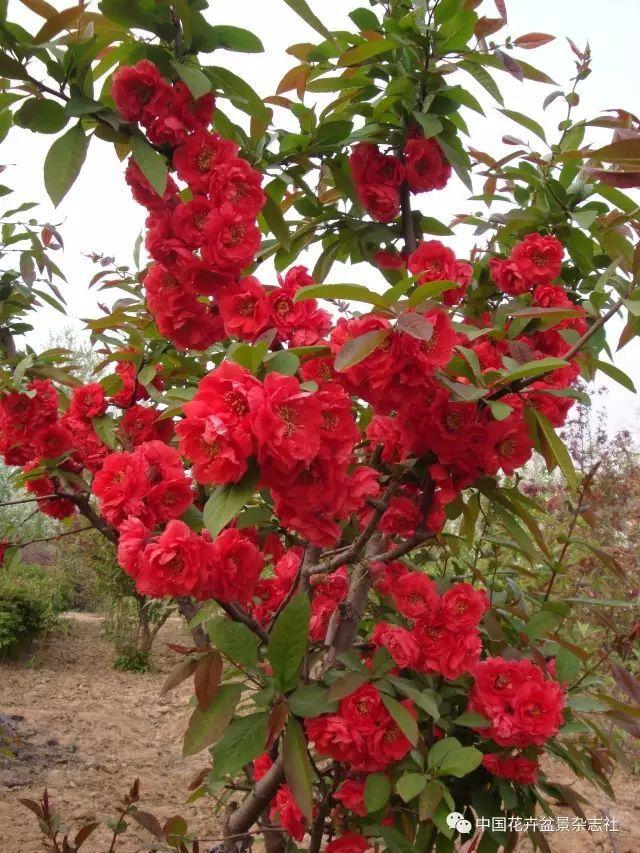
Shuaimei No. 1
The papaya crabapple I bred uses an excellent variety of Yizhou papaya crabapple as the female parent and a double-flowered papaya crabapple variety as the male parent, through crossbreeding and selection. Follow Aimu Bonsai, and play bonsai with Aimu.
During decades of cultivating and producing papaya crabapple, I saw that true papaya crabapple bears fruit early, large and abundantly, with extremely high ornamental-fruit and medicinal value, but its flowers are single-petaled, rarely double-petaled, so its ornamental-flower value is low. How could single-petaled flowers be turned into double-petaled flowers for landscaping and pot cultivation, raising their ornamental-flower value? At first I used the single-cross technique to hybridize parents. After 5 years I found an individual plant with double-petaled flowers and saw hope. Carefully summing up experience: the single-cross method is too slow, emasculation and bagging are too troublesome, and a large number of varieties would not be bred within a decade or more. How could the speed be increased? Then I thought of natural breeding. Since the principle that bees pollinating can also breed new varieties applies, I decided to use the mass-cross method.
Taking pollen from the male parent, I crossed it repeatedly with several hundred different papaya crabapple varieties, then collected seeds in autumn and sowed them. After 5 years I successively discovered more than a hundred double-flowered variety resources, promptly dug them out and planted them individually, observing growth vigour, traits and other conditions, and choosing as breeding goals those with fast growth, no thorns or few thorns, double-petaled flowers, large flowers and bright colour, and a long flowering period.
Then I carried out grafting propagation, conducted comparative variety observation, selected the superior and eliminated the inferior, and over 20 years selected more than 30 varieties in four major series - ink red, brilliant red, pink, and green-flowered. The flower colours are unusual and gorgeous, the growth vigour is like that of papaya crabapple, and the ornamental and landscaping value is very high. Follow Aimu Bonsai, and play bonsai with Aimu.
In 2011 some varieties passed appraisal by the Linyi Municipal Science and Technology Commission and won the second prize for scientific and technological achievements; in 2013 they won the second prize for scientific and technological progress from the Linyi Municipal People's Government; in 2014 they won the third prize for scientific and technological achievements from the Shandong Provincial Forestry Bureau.
■Outstanding characteristics
Fast growth. With strengthened management of grafted seedlings, the 1-year growth is: ground diameter about 0.8 cm, plant height 80-150 cm. After 4 years of planting, the ground diameter is about 3.5-4.5 cm; after 6 years of planting, some can reach a ground diameter of 6 cm, a plant height of 3.5 m, and a crown width of more than 3 m, suitable for planting in courtyards, residential compounds, parks and large ornamental gardens.
Early flowering. Flower buds form on the current year's branches, and the following spring they bloom abundantly. In general years, early-flowering varieties begin flowering on March 24-26; mid-flowering varieties begin flowering on April 2; late-flowering varieties begin flowering on April 12-16. The ornamental flowering period is about 26-28 days.
Large flowers. General flower diameter is about 4 cm, and large flowers are 6-8 cm.
Double-petaled flowers. The flowers open in 3-9 layers, with 14-45 petals, and some varieties bear feather-like flowers.
Bright flower colour. The flowers are gorgeous and multi-coloured, comparable to plum blossom, peach blossom, crabapple and cherry blossom. There are incomplete-flower varieties and complete-flower varieties, and there are distinctions between those that bear fruit and those that do not.
Because they flower abundantly and large, and have lots of pollen, they are also beneficial for developing the beekeeping industry and increasing economic income. Some can bear fruit, with small fruits weighing more than 150 grams, large fruits reaching more than 1000 grams, and per-mu yield also reaching more than ten thousand jin. For landscaping and flower viewing, potted flower viewing, and building scenic areas, combining ecological and economic benefits, they have broad development prospects.
Strong adaptability. They can be cultivated in the open field in places with an altitude of 5-1700 m, rainfall of 600-1600 mm, soil pH of about 6.5-7.5, and temperatures of -20-40°C.
Strong resistance. Their drought, waterlogging, disease and alkali resistance is superior to plum blossom, peach blossom, cherry blossom and Malus crabapple varieties. Follow Aimu Bonsai, and play bonsai with Aimu.
■Key cultivation points
Cultivation time: the period from the Autumn Equinox to the Spring Equinox is suitable for planting. In areas south of Shandong, Henan and Shaanxi, planting before the New Year is best, and after the New Year it must be planted before the Spring Equinox. In cold northern areas, planting with buds can be done from the Spring Equinox to Qingming after the soil thaws. Note that transport must be fast and planting must be fast. When planting, dig a deep hole of 30×30 cm, put the flower seedling into the hole, fill in 2/3 of the soil, lift the seedling to spread the roots, then press firm, pour in one bucket of water, and afterwards fill the hole with soil. If conditions permit, ridge up, cover with film, keep a constant temperature and preserve soil moisture, so that the roots are in the soil, loose above and firm below, which is favourable for the development of young seedlings.
Planting density: plant and row spacing 2×1.5 m, 220 plants per mu. For secondary seedling raising to cultivate young trees, plant and row spacing 1.5×1 m, more than 400 plants per mu. If raising seedlings for bonsai, up to 1200 plants per mu. Note that when the density is high, promptly transplant and sell by alternating rows and alternating plants.
Management: topdress 3 times each year. Pre-flowering fertilizer: in June-July, apply flower fertilizer during the peak growth period and after autumn. 20 days before flowering, apply 50 jin of compound fertilizer and 15 jin of urea per mu, which is favourable for more and larger flowers. Topdressing during the growing period strengthens growth vigour. Applying base fertilizer in autumn lays the foundation for flowering the following year.
Watering: water when there is drought, drain when there is waterlogging, and do not water during the flowering season. If watered, the leaves absorb nutrients first and grow vigorously, affecting the ornamental-flower effect of flowers before leaves.
Shuaimei papaya crabapple is an emerging flower that is easy to plant and easy to manage, with a high rate of flower formation, no alternate bearing, and little pruning. It can be trained into a cylindrical shape, cup shape, or trunk-layered shape. It saves labour and fertilizer, has good results, and is a new highlight in landscape greening.
Shuaimei No. 2
Shuaimei No. 3
Shuaimei No. 4
Originally published in: China Flowers & Potted Plants; authorized release; please indicate the source when reprinting.
The best way to approve of Aimu Bonsai - share,
The best way to support Aimu Bonsai - follow,
Follow Aimu Bonsai, and play bonsai with Aimu.