Three simple tips to make orchids bloom abundantly, with flowers year after year
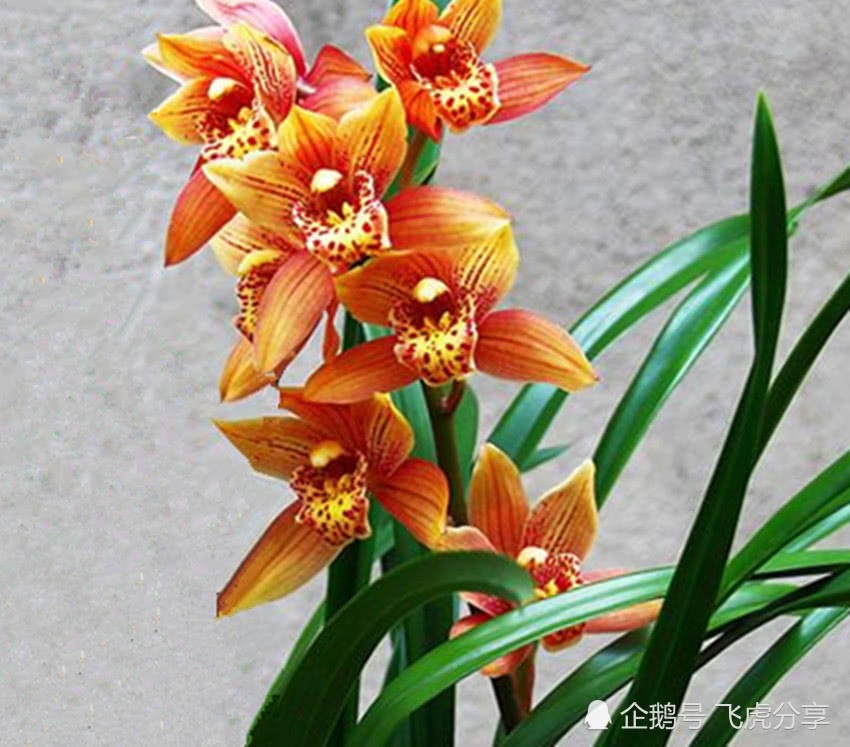
Orchids are a famous flower through the ages, known to everyone, but many people always think orchids are hard to grow. Actually, that is not the case. I think orchids are quite easy to care for. Like other plants, as long as you understand their habits and growth patterns, growing orchids is not hard at all. The difficulty lies in not truly understanding them. Any plant needs certain conditions to bloom, and orchids are no exception. If your orchids bloom little or not at all, you can refer to the following methods to make your orchids bloom abundantly, with flowers year after year.
1. Orchid roots are fleshy roots, containing a fair amount of water, and their water needs during growth are relatively small. Since ancient times there has been the growing method of "dry roots grow roots, wet grows leaves," and in my long-term practice, this saying holds some truth. One of the only ways to make orchids bloom more and bloom frequently is timely water control. Water control means watering less, because orchids forming flower buds depends entirely on nutrient supply from the roots. Only when the root system is vigorous and the root nutrients are sufficient can flower buds form. Practice has shown that during the sprouting stage, letting the growing medium dry out a little for a short time can promote more sprouts and more flower buds. But water control is not needed throughout the entire growing period. Start water control one month before the orchid blooms, with a ratio of eight parts dry to two parts wet being best. Keep the surface inside the orchid pot on the drier side, but it must not dry out completely. When you find it has dried, you still need to water thoroughly, just less often than usual. After flowering is finished, there is no need to control water; simply keep the medium moist without waterlogging as normal. Because there are many orchid varieties, the flowering period is not fixed, and each person can adjust the water control time appropriately according to the flowering period of the orchids they grow.
2. Another condition orchids need for flowering is temperature. During the bud formation period, orchids need an environment with a large temperature difference between day and night. If orchids are grown indoors where the day-night temperature difference is relatively balanced, this is not conducive to flower bud formation. From before bud formation to the bud formation period, a certain temperature difference needs to be provided, requiring daytime temperatures of 18-28 degrees and nighttime temperatures of about 13-16 degrees, creating a difference between day and night, which is beneficial for orchid bud formation. For orchids grown on a balcony, the daytime temperature is very high due to sunlight. At night you can open the windows to let outdoor air flow onto the balcony and lower the temperature, thus creating a day-night temperature difference, which is very beneficial for orchid flowering, except in winter.
3. Nutrients are one of the conditions that promote flowering, so orchids lacking fertilizer will likewise not form buds or bloom, but orchids like very light fertilizer, and concentrated fertilizer is instead harmful to them. Therefore, before bud formation and flowering, you can appropriately use monopotassium phosphate to promote flower bud formation. The method is to add about 1 gram of monopotassium phosphate to 1000 grams of water, let it sit for 24 hours, then use it to water the orchids, once every 10 days, for three consecutive times, which can achieve the goal of bud formation and flowering. But when watering, be sure not to pour it into the flower center, to prevent heart rot. It should be poured along the edge of the pot, and the next day after pouring, water once with clean water.