Reasons Why Fuchsia Does Not Bloom and Solutions
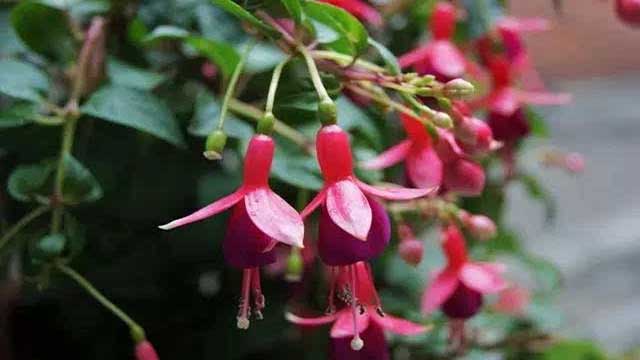
I. Increase Light
1. Reason: Because fuchsia has a relatively high demand for light, if there is no light, the plant easily grows poorly, and when it grows poorly it is very difficult for it to bloom.
2. Solution: Give it more light, especially when it is growing very rapidly; light is indispensable, and it needs to be placed in a spot with plenty of sunshine. If it is autumn or winter, as soon as the sun appears, move it to a sunny spot. Of course, if the sun does not appear for a long time, we can artificially increase light for it.
II. Reasonable Fertilization
1. Reason: Insufficient fertilization is very likely to cause a lack of nutrients, making it difficult to provide nutrients for blooming. Of course, if the amount of nitrogen fertilizer far exceeds what it needs, this phenomenon will also be caused.
2. Solution: Fertilize it reasonably. When it is growing relatively fast, add some bean cake fertilizer or fertilizer mixed with various elements. Be sure to remember not to apply only nitrogen fertilizer; it is best to apply chicken manure or a dilute phosphorus-potassium fertilizer.
III. Reasonable Watering
1. Reason: Improper watering is also very likely to make its flowers difficult to bloom. Because this plant does not have a high demand for water, watering too much promotes excessive growth of its branches and leaves, so there are not enough nutrients to support blooming.
2. Solution: In summer, we only need to water in time; if it has bloomed, then watering needs to be controlled. If the time is autumn or winter, then watering also needs to be controlled well, and only then will it bloom better the next year.
IV. Pruning and Pinching Back
1. Reason: If the branches are not pruned, the phenomenon of excessive growth will be relatively serious, and blooming will be relatively difficult.
2. Solution: During the season of vigorous growth, prune and pinch back; carry out the last time in late March, and it will bloom in mid-to-late April.