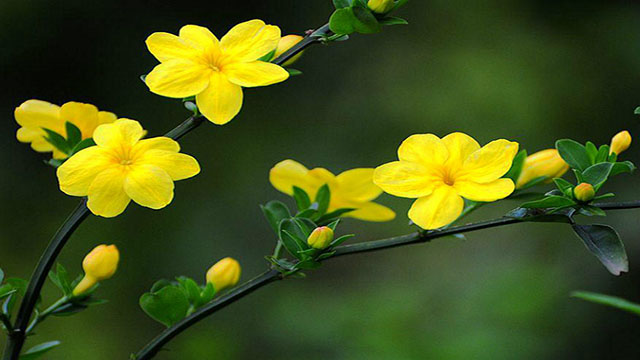
What causes winter jasmine (Jasminum nudiflorum) to fail to bloom
1. Apply phosphorus fertilizer
1. Cause: If there is a lot of nitrogen fertilizer and relatively little phosphorus fertilizer, winter jasmine is very likely to keep growing leaves without blooming. This is because nitrogen fertilizer easily promotes the growth of branches and leaves, and in excess it may even cause excessive vegetative growth. Phosphorus, however, plays a fairly large role in the formation of flower buds and more easily prompts it to bloom.
2. Solution: Two months before its blooming time arrives, apply an appropriate amount of phosphorus fertilizer, preferably by burying the fertilizer at the edge of the pot, which can prevent fertilizer burn and make it easier for it to bloom.
2. Supplement light
1. Cause: Winter jasmine kept indoors rarely blooms. The main reason is that the light it receives is relatively weak, so it is hard for it to produce nutrients, and it will bloom very little or even not bloom at all.
2. Solution: At this time we need to be a bit more diligent every day and move it outside the house to bask for one or two hours. Of course, morning and evening sunlight is best and helps it bloom.
3. Prune in time
1. Cause: A large part of the reason it does not bloom may be that it has hardly been pruned. This is because once its branches have bloomed, they will not bloom again. If we do not prune, some old branches will grow very vigorously, while new branches will hardly grow, so naturally it is difficult for it to bloom.
2. Solution: After it blooms, prune it to a certain extent. Cut off the relatively dense, relatively withered, and relatively old branches, and shorten the leggy branches, which is beneficial for its next bloom.
4. Supplement water and fertilizer
1. Cause: If water and fertilizer are insufficient, nutrients will also be insufficient. Without nutrients, it is very difficult for the plant to bloom.
2. Solution: When it is growing relatively quickly, apply fertilizer once about every fifteen days. Each time you apply it, be careful to use a thin fertilizer, not one that is too concentrated. Also note that before blooming, organic fertilizer needs to be used, so that the flowers will be larger and will also bloom for a longer time. Of course, it also needs watering, but the amount must be controlled well and must not be excessive.