Is the white bug on the Buddhist pine an aphid? Introduction to aphid damage symptoms
Is the white bug on the Buddhist pine an aphid? Here is an introduction to aphid damage symptoms, let's take a look.
Morphology: Nymph: Newly hatched nymphs have a flat body, the waxy powder on the body surface is relatively thin, so the color appears redder; older nymphs have thicker waxy powder, making the body color whiter. Most bodies densely gather at the tips of branches and buds on new leaves, and pure white dried cast skins left behind by nymphs during growth remain on the older leaves behind them.
Adult: The wingless viviparous adult is about 2 mm long, with a round and plump body, dark purple; because the surface secretes a layer of white waxy powder, the body appears grayish purple, and the legs also have white waxy powder.
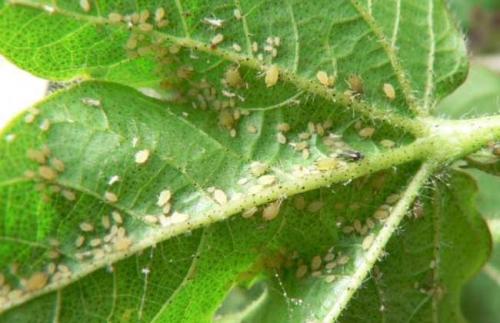
Damage habits: Adults directly give birth to nymphs, and a group of adults and nymphs commonly gathers on the tender leaf tips of the Buddhist pine, squeezed between the layers of new leaves; sucking the leaf sap causes the new leaves to turn yellow and become small. There are many dried cast skins of nymphs, adhering to the back of leaves near the tender leaf tips where the insects gather, and when the branches and leaves are shaken they float in the air with the wind. When the Buddhist pine sprouts new leaves and encounters long-term drought, the outbreak is more severe; aphids secrete large amounts of honeydew, which also induces sooty mold, covering the surface of middle and old leaves with a layer of black powdery substance. Host plants include the Buddhist pine, Chinese podocarpus, and Podocarpus macrophyllus.