How to handle side shoots on succulents? A method to turn one plant into many
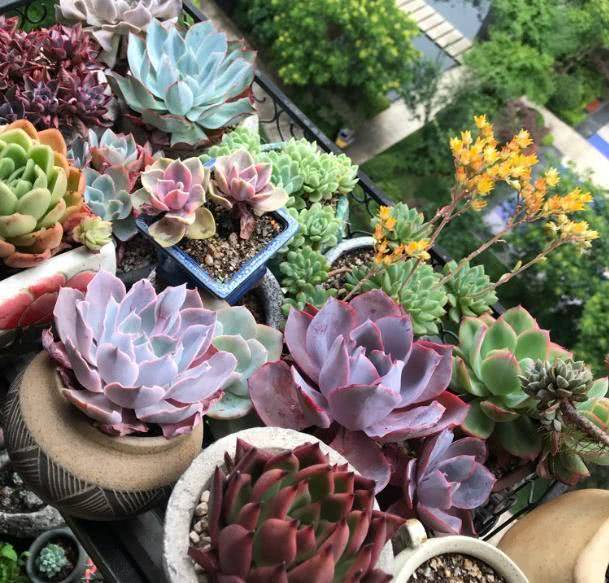
Sometimes succulents naturally form side shoots during growth, which is of course very good. Many gardening enthusiasts don't know how to handle succulent side shoots. In fact, succulent side shoots can be cut off or left alone to develop freely. Even if left alone, the side shoots will usually grow naturally and eventually form a reasonable shape.
If you want to maintain the mother plant's shape, don't want side shoots, and don't plan to propagate, in this case, when side shoots sprout, gardeners can use tweezers, a knife, or similar tools to simply cut off the side shoots. After cutting, be sure to let the wound dry promptly. If you plan to propagate, you can keep the side shoots, and when they grow larger, you can cut them off for propagation. That is, cut off the side shoots. Gardeners should be reminded to be careful when cutting off side shoots to minimize damage to the mother plant.
There are roughly two types of side shoots: one that will definitely grow into a plant, and one that probably won't. The ones that probably won't grow are those that often burst out as small buds on the stem, then disappear after a while. You can keep one or two larger bud points, provide some shading or a small amount of light, avoid too much strong direct light, but also don't leave them completely without light.
Some succulent side shoots can grow large, but they still need to be dealt with. Those that keep sprouting side shoots from the bottom of the rosette can sometimes form a full ring when there are many. You can cut off the more crowded side shoots and treat them as stem cuttings. This has three benefits: you get new stem cutting seedlings, some new side shoots can continue to grow out (if they're all crowded together, there's no space for them to emerge), and the bottom gets proper ventilation (being crowded together in summer can easily cause problems). For those that keep sprouting new seedlings near the plant, because the old and new seedlings are relatively dense, some seedlings lack light and eventually die. You can properly thin them out, pull out some small seedlings, and plant them separately.
For succulent plants that are being propagated by cuttings or transplanted, pay attention to the soil mix. The basic requirements of succulents for soil are: loose and breathable, good drainage and water retention, containing a certain amount of humus, moderate particle size, no overly fine dust, and slightly acidic or neutral. A few species can tolerate slightly alkaline soil. For watering time, summer is best in the early morning, winter should be done in the morning on a sunny day, and in spring and autumn, either morning or evening is fine. Generally, do not water from the top, otherwise over time ugly spots will appear on the spherical body, the hairs of hairy column types are easily soiled and matted, and water accumulating at the growth point of plants like Haworthia can cause rot.
To master the watering techniques for succulents, you must first understand the dormancy habits of each type. Watering during the dormant period can easily cause the plant to rot. For example, Lithops, which are dormant in summer, will rot immediately if watered in summer. For cactus species that are dormant in winter, watering in winter will cause root rot or make them susceptible to freezing. Although they may not necessarily rot in winter, they will rot as soon as spring arrives.
This is a gathering place for succulent enthusiasts, sharing succulent care tips. Welcome to follow and exchange ideas.