Add this to your succulent soil and the roots will grow well, with no black rot for years
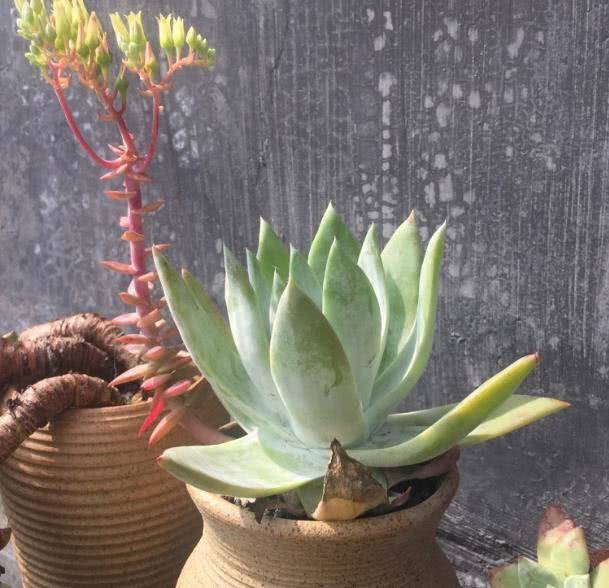
When succulents are not growing well, some growers take them out of the soil to check, only to find that the cause of the black rot was actually the lack of top dressing, which led to poor airflow around the base of the succulent and caused the black rot. Top dressing is mainly for aesthetics and to keep soil from splashing onto your clothes when watering, and it also helps prevent insect eggs. So top dressing is very necessary. A very important point about top dressing stones is that when planting succulents, you should leave enough space for the top dressing soil; if the top dressing is too high, it can easily be washed away when watering.
What materials are suitable for top dressing? There are many types of succulent top dressing sold online, including green zeolite, kanuma soil, akadama soil, pine bark (pine tree bark), iris stone, white pebbles, volcanic rock, perlite, and some use clay pebbles; of course, the most common is maifan stone. Based on my growing experience, I think it still depends on your own growing micro-environment. For example, my place is a rooftop, very airy, so there is no need to worry about airflow. I previously also used pure white pebbles for top dressing, and the succulents grew very well; there was no problem in my conditions. If you are a balcony grower, ventilation is not as good, so you need to be careful. Clay pebbles are round, and it is hard for them to cover the potting soil, so I do not recommend them either. Pine bark (pine tree bark) and phytolite are relatively light; they are fine for mixing into soil, but not very suitable for top dressing.
The role of top dressing is really not just aesthetics; it can also isolate the leaves of succulents from the moist soil. If it is a low-growing clustering succulent with fairly dense lower leaves, it is best to use a cotton swab to gently prop up the succulent leaves a little, so that the air on the soil surface can circulate and the ventilation effect will be better.
The top dressing stones used for succulents should preferably be moderate in size, and they should not be laid too densely, as that is not good for the succulents. Pay attention to the color matching of the top dressing; for example, green zeolite looks good with red and yellow succulents such as 'Afterglow' and 'Yellow Beauty', but with green succulents like 'Spring Breeze' and 'Hime Botan' it is not obvious. Volcanic rock is dark red, suitable for blue succulents such as blue echeveria and 'Prism'. Maifan stone goes with almost everything. If the flower pot or the succulent is darker in color, the top dressing color should be lighter and brighter.
Do not let the top dressing stick to the leaves or fall onto the plant. The thickness of the top dressing should be based on covering until the potting soil is no longer visible, and finally adjust it with tweezers. Larger, smooth top dressing stones not only play a role in air and water permeability, but can also provide some support to the succulent plant, making those old stems less likely to topple over.
Do not apply top dressing right after potting; wait until after watering a few times. This is because right after potting there will be gaps between the soil particles, and after watering the soil will settle a little, so you can add a bit more soil before applying top dressing. Before applying top dressing, try to level the soil in the pot as much as possible, using a small plastic scoop, and do not scoop too much at a time; pour it in slowly. If you want your succulents to get through summer safely, not only should you apply top dressing to every pot of succulents, but when choosing the color of the top dressing stones, it is best to choose light colors, because dark colors absorb heat. Also, top dressing stones must not have prominent sharp edges, so as not to scratch the succulent leaves; wounds make it easy for black rot and wateriness to occur.
This is a gathering place for succulent lovers, sharing succulent care tips; you are welcome to follow and exchange ideas.