Using soy products to supplement nutrients for succulents makes them grow quickly and fill the pot
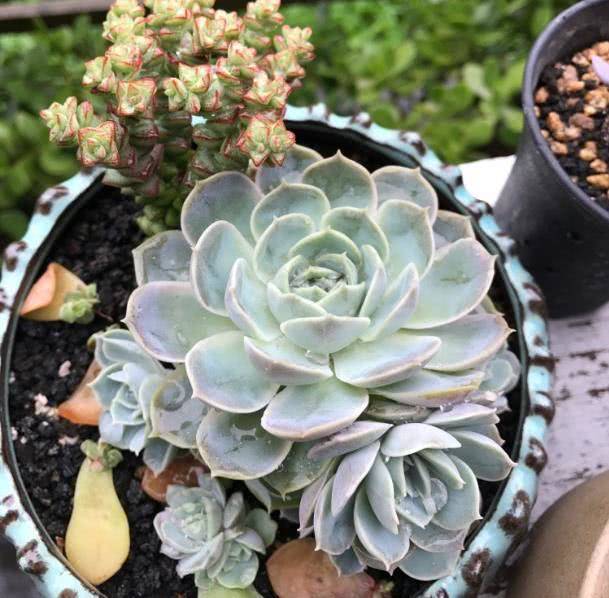
Soy residue and all kinds of soy products can be used to supplement nutrients for succulents, such as soybean cake and tofu residue. They also need to be fermented before use. Just put some water in a plastic bottle. If you want to speed up fermentation, you can also add some sugar. Use it the same way as rice-washing water, diluted with water. Generally, fertilizing succulents once every half a month is enough.
If tofu residue is scattered directly on top of the soil, it will attract flies and mosquitoes, breed maggots, and also grow a kind of nameless, tiny black bug, which is very annoying. It is recommended to bury homemade tofu residue fertilizer into the soil. This can reduce the bad smell and also avoid attracting flies and mosquitoes. The best way to deal with the tiny black bugs is to put garlic skins on top of the soil, or soak leftover cigarette butts in water and spray a few times. Both of these work quite well.
Succulents must be given water at the right time to meet their needs for growth and development, and definitely not follow the idea some people have of "better dry than wet." Of course, for plants grown in the ground, watering can be less frequent. For most succulents and own-root cultivated cactus-type plants, watering is hard to get right, mainly in terms of timing. In summer, the best time to water is early morning; in winter, it should be done before noon on clear days; in spring and autumn, either morning or evening is fine.
For actively growing winter-type and intermediate-type plants, keep the potting soil moist but not waterlogged. Water so that it is dry through before watering thoroughly. It should neither be waterlogged nor too dry. Summer-type plants can be given a little water, but not too much. If there is rainy weather or the temperature suddenly drops, stop watering. Under normal circumstances, do not water from the top, otherwise after a long time the body will have ugly spots, the hairs of hairy column types are easily soiled and matted, and water accumulating at the growth point of plants such as Cuihua palm can cause rot.
After continuous absorption by the root system and repeated watering, the nutrients are almost completely lost, and the potting soil also changes from its original granular form into powder. In addition, during the process of absorbing nutrients, the root system also continuously excretes acidic metabolites, making the soil acidic. These are very unfavorable to plant growth, so after the plant grows to a certain stage, it must be repotted and the soil changed.
There are generally not many succulents kept at home, so you can often check whether there are insects on them. Common insects on succulents include: red spider mites, scale insects, and whiteflies. These can all be cleaned off by hand. Too much watering, air that is too humid, and failure to repel insects can all cause succulents to rot. Rotten succulents appear faded and softened. If you find a rotting succulent, you need to cut it off as soon as possible. It is best to disinfect the tools used to avoid infecting other plants.
This is a gathering place for succulent lovers, sharing succulent care tips. Welcome to follow and exchange ideas.