How to prune and shape a black pine bonsai? Master the common methods to keep the tree form graceful
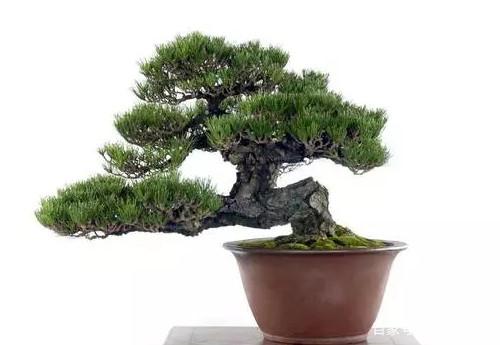
The black pine bonsai is also known as the white-bud pine. It is majestic and upright, with a masculine spirit, so people call it the "man's pine." It is deeply loved by the public. Its budding vigor is not very strong, so it should not be pruned too much. However, in order to maintain the bonsai's shape, pruning and branch shaping of the black pine become very necessary. Today, the editor will share with you the pruning and branch-shaping methods for black pine bonsai.
Pruning of the black pine is mainly bud removal. A newly potted stump specimen does not need bud removal within one year. Branches and leaves grow from March to April of the second year, and this is done before the needles have grown out. Usually about 1/2 of each terminal bud is removed. If you do not need to increase branches, you can remove all terminal buds. During the winter dormant period, branches that affect the stump's graceful posture can be cut off and sealed with wax or glue. The black pine does not like fertilizer. After it survives, rotted cake fertilizer can be applied twice a year. During the winter dormant period, branches and leaves that affect the tree's graceful posture are also cut off.
Because the black pine's needles are relatively long, in order to make them shorter, in addition to controlling water and fertilizer, when new leaves grow in spring, Japanese bonsai also created the "short-needle method," including removing young buds, thinning buds and old leaves. From July to August, all the new branches grown that year are cut off. Because the plant has the ability to self-recover and balance, a second new bud grows on the branches from August to September.
From September to October, excess buds can be removed, leaving only two buds on the sides or in the horizontal direction. As the climate gradually cools, the growth of new buds and new leaves is inhibited. From November to December, the remaining old leaves are cut off, and the plant retains a second round of short needles. This is the best view of a black pine bonsai.
To meet the needs of bonsai, in field cultivation, soil with sufficient light and poor fertility should be selected, and the supply of water and nutrients should be controlled, so that the plant's main root is short, the lateral roots are well developed, and the tree stump's trunk is relatively large. It can be processed appropriately, and then the retained side branches can be trained flat or drooping.