How to grow Hippeastrum in pots? Detailed care methods and tips
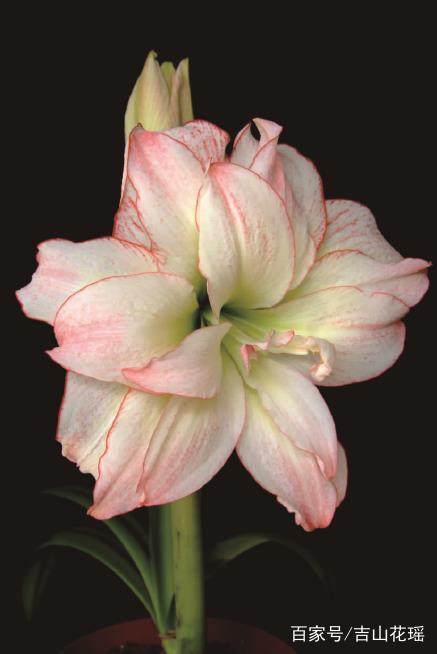
Hippeastrum potting and care
Hippeastrum is a famous bulbous flower, widely cultivated around the world. In southern China it can be grown in the open ground, while in the north it is mostly grown in pots. Hippeastrum, also known as red flower lily, huazhou orchid, and duihong, is a perennial bulbous plant with 6 to 8 strap-shaped leaves. The flower stem is hollow and slightly flattened. It bears 2 to 4 flowers, with tepals that are oblong and pointed at the tip, in magenta or red, both single and double forms. Many of the plants cultivated today are hybrid Hippeastrum, with extremely rich flower colors.
People often call Hippeastrum "Amaryllis". Amaryllis is a perennial bulbous plant of the genus Amaryllis, while Hippeastrum is a perennial bulbous plant of the genus Hippeastrum. At present, the use of these two genera internationally is also rather confused. The flower stem of Hippeastrum is hollow and it is distributed in the Americas, while the flower stem of Amaryllis is solid and it is distributed in southern Africa. Although some advocate merging them, because the two differ fundamentally in distribution and flower stem, it is still better to keep them as separate genera.
Hippeastrum can be purchased through online group buys or from seedling companies as superior variety bulbs. After the bulbs arrive, treat them to prevent disease that could cause the plants to rot.
1. Bulb treatment: After purchasing Hippeastrum bulbs, first remove the withered and dried roots. Keep the white fleshy roots that have already emerged and do not damage the new roots. At the same time, remove the outer withered bulb skin.
2. Bulb disinfection: Bulbs are susceptible to red blotch infection. Before planting, they can be soaked and disinfected in an 800-fold solution of carbendazim or chlorothalonil. Generally soak for 10 to 15 minutes, take them out, and once the water has drained, they can be potted.
3. Growing medium: Although ordinary soil can be used for cultivation, pot cultivation has limited nutritional area, so a good medium should be chosen. You can choose commercially available bulb nutrient soil, or mix leaf mold or peat soil with a small amount of perlite to make nutrient soil. A slightly acidic medium is best.
4. Pot selection: When planting, the pot diameter can be chosen according to the size of the bulb. Commonly used pots have a diameter of 16 cm and 18 cm, planting one plant per pot. Multiple bulbs can also be planted in one pot, which looks even better when in bloom. When potting, the bulb can be left 1/2 or 1/3 exposed above the soil surface. If you want more bulbs to form, you can plant it somewhat deeper.
5. Water and fertilizer: Hippeastrum bulbs store a large amount of water, so they do not require much water. After the soil is half dry, water thoroughly once. Fertilizer requirements are not very high, because the bulb stores a large amount of nutrients and it can bloom even without fertilization. If you keep the bulb for propagation, during the growing period you can apply some compound fertilizer. After flowering, cut off the flower stem and apply a topdressing of nitrogen fertilizer. After autumn begins, increase the application of phosphorus and potassium fertilizers to promote bulb plumpness.
Bulb treatment of Hippeastrum
Disinfection of Hippeastrum
Growing medium
Potting
The country with the largest production of Hippeastrum is the Netherlands, and Belgium, France, Spain and other countries also produce it. At present, superior hybrid varieties introduced from Europe and elsewhere, such as the single-flowered 'Sanhe', 'Brown Lemon', and 'Fengdie', and the double-flowered 'Flame Peacock', 'Promise', and 'Rome Double City', have entered ordinary households.
Hippeastrum has large flowers and brilliant colors, and a relatively long flowering period. It is an excellent bulbous flower, suitable for pot cultivation to decorate indoor table tops, balconies, windowsills and other places, and can also be used in landscaping.
Hippeastrum used for table top decoration
Hippeastrum used for living room decoration