Rose bonsai is elegant and distinctive, a horticultural gem worth owning.
Bonsai is an art form that expresses natural landscapes in a pot, developed on the basis of potted plants and stone appreciation. Bonsai is an ingenious combination of plant cultivation techniques and shaping techniques. It uses plants, rocks and other materials, which through artistic processing are planted or arranged in a pot to imitate beautiful natural scenery as a decorative display.
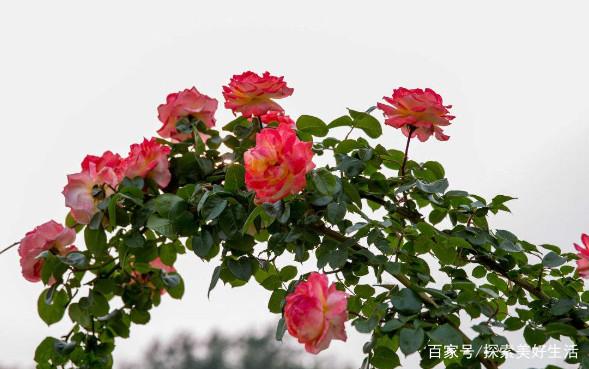
Rose (Rosa chinensis), known as the queen of flowers, also called yueyuehong, changchunhua, shengchun, shouke, douxuehong and other names, is a plant of the genus Rosa in the family Rosaceae. Roses prefer warmth and love sunlight, dislike intense heat, and have high light requirements; only in locations with good light conditions can they grow robustly. The soil is best when loose and fertile, rich in organic matter, well-drained and slightly acidic.
Because potted roses grow in pots, the volume inside the pot is limited, and the nutrients in the potting soil can hardly meet the needs of plant growth. To overcome the inherent shortcomings of pot cultivation and achieve the goal of meeting the growth and development needs of roses even with a small pot and little soil, the potting soil should be a nutrient soil mixed from 4 parts vegetable garden soil, 3 parts humus soil, 2 parts rice husk ash and 1 part river sand. First spread it out to sun-dry for 2 to 3 days to kill pathogens, then sprinkle with water to moisten it before use.
Roses are plants that greatly love sunlight and need more than 8 hours of direct sunlight per day to grow healthily. If your home only gets 4 to 8 hours of light, the flowering branches will become longer, and the number of flowers will be somewhat less than in a full-sun environment. In this situation, you can appropriately use a high-potassium fertilizer, which can to a certain extent alleviate the leggy growth caused by insufficient light.