During the growing period, Selaginella bonsai is susceptible to these 3 pests and diseases. Have you ever encountered them?
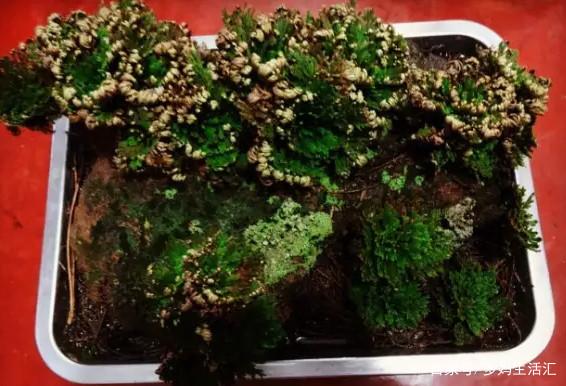
Introduction: Hello everyone, welcome to read my article. During the care of Selaginella bonsai, you may encounter blackening at the base of the leaves and rotting leaf tips. In fact, this means the Selaginella has become diseased. Today, the editor will share with you the pest and disease control during Selaginella care. Selaginella is very suitable for bonsai, and daily care is not complicated either, but you must pay attention to pest and disease control. During the care of Selaginella bonsai, encountering these situations means the Selaginella has become diseased. What symptoms appear when these pests and diseases attack? What should we do?
The first type: leaf spot disease. The disease often occurs on the leaves of Selaginella and is likely to occur when humidity is high. The lesions are linear, initially brown and small, with a water-soaked margin, fading to green, and becoming round, round to oval, white inside with a brownish-gray edge. In the late stage, black spots appear on the lesions, and dark brown mold appears under moist conditions. The method to prevent and treat this disease is to promptly remove diseased and dead leaves. At the early or late stage, spray 0.5%-1% Bordeaux mixture (or 50% carbendazim 1000-fold solution).
The second type: anthracnose. This disease also occurs on Selaginella leaves and can spread to the leaf stalks in severe cases. In the early stage of the disease, there are small yellow spots, oval in shape, brown or pale yellow, slightly striped; in the later stage, they become dry spots with small black spots arranged in concentric rings. This disease is mainly caused by poor ventilation and diseases caused by scale insects. The prevention and treatment of this disease is to strengthen care and increase the application of phosphorus and potassium fertilizers; in the early stage of the disease, spray 0.3%-0.5% equivalent (or 60% zinc 800-900-fold solution, or 70% thiophanate 1500-fold solution).
(3) Brown soft scale. This pest has a complex diet and harms many plants. Selaginella is one of the many flowers that is damaged by it. It usually gathers on the leaves or stems, sucks plant sap and excretes a sticky substance. Its excrement may cause a large amount of bacteria to multiply, making the stems and leaves black, affecting the plant's photosynthesis, and causing weak plant growth, yellow leaves, and hindering ornamental value. When it is severe, the branches are covered with insects, causing the plant to turn yellow and affecting its growth.
During the care of Selaginella bonsai, encountering these situations means the Selaginella has become diseased. Pest and disease control for Selaginella must be handled promptly, otherwise it will cause great harm to the bonsai. During bonsai care, if you have any insights, you can also share them with the editor. Comments and reposts are welcome.