Fragrant potted plants bloom with the strongest scent, with extra-large flowers, many petals and a longer blooming period
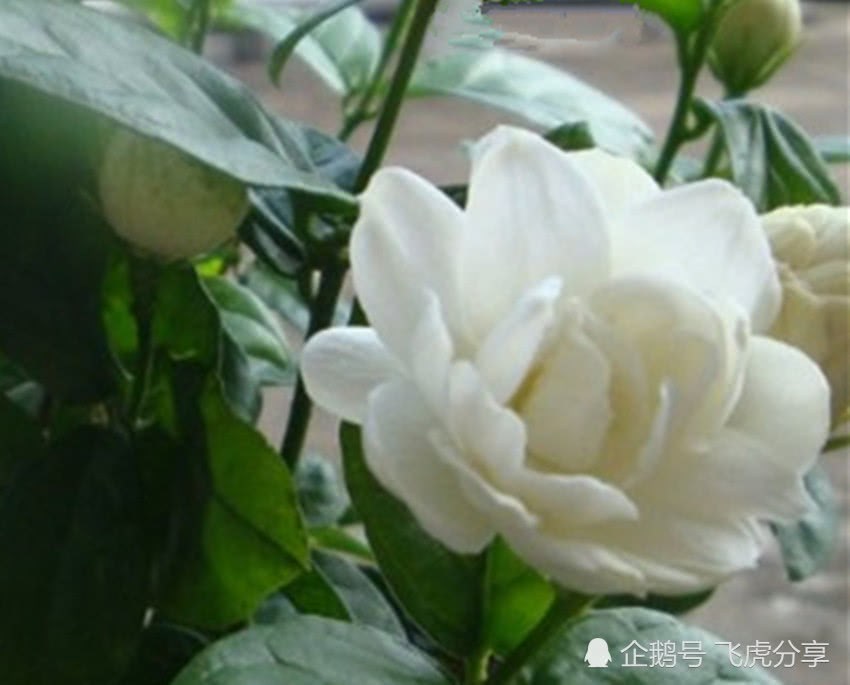
Many people like to grow potted plants that are full of fragrance, have a long blooming period and look especially beautiful when in flower. Today, the editor will introduce everyone to a home potted plant that has the strongest scent, extra-large flowers and an especially long blooming period among all flowers, and is also loved by everyone: the strongly fragrant flower Tiger Jasmine.
Tiger Jasmine is a rare treasure among jasmines. Its blooming period is generally from April to October. Its leaves grow in whorls of three, and the buds are flat and round with a ring of floral filaments around the edge and a pale yellow color. When unopened, its fragrance is restrained; when fully open, the scent is rich and hits you in the face, and the color is white. The largest flowers reach 5-8 cm. It is one of the most strongly fragrant flowers, very attractive to many female flower lovers who like fragrance. Keep one pot at home and the whole house is filled with scent.
I think Tiger Jasmine should be cared for on the dry side. Water only when the top 1 cm of soil is dry, and the soil must have very good air permeability. I use decomposed sawdust plus garden soil. This variety has weak disease resistance, so spray some carbendazim often to eliminate mold. Tiger Jasmine grows leggy easily, so it needs frequent pruning, but never prune when the temperature is low, because the cut is very easily invaded by pathogens. Even in the normal season, the cut should be treated a little, either sealed or disinfected. Tiger Jasmine needs a lot of nutrients to bloom, so do not be greedy for too many buds, otherwise some buds will definitely turn purple before fully opening. Fertilize frequently, but keep the fertilizer dilute. Slow-release fertilizer is recommended. Be cautious with self-made organic fertilizer or other fertilizers if you are a beginner, because whether it is fully decomposed and how much to apply are hard to judge.
Tiger Jasmine can be propagated by cuttings. For cuttings, be sure to choose semi-lignified branches. Too tender and they rot easily; too old and they are reluctant to root. Choose a branch with 2 leaf nodes, cut off the lower leaves, keep 2 to 3 leaves on top, and cut each leaf in half. For the substrate, fine river sand or sphagnum moss can be used. The soil must not be too fertile. Finished seedling blocks are best. For the container, a seedling box with a transparent lid is the first choice; others such as disposable plastic cups also work. I often use KFC sundae cups. Poke 2 small holes in the bottom of the cup for drainage, and poke 2 slightly larger holes in the lid for ventilation. Insert the branch prepared for cutting into the substrate, water thoroughly, and keep the substrate moist until roots form. After rooting, open the lid on sunny days to let it get some sun. Once more than 5 or 6 new roots have grown, it can be transplanted into a flowerpot.