Worried about root rot? These 4 little things are treasures, and any one of them will do
Many little things in daily life are great for growing flowers, and they are everywhere, yet many people do not know it. Let's take a look at 4 versatile materials for growing flowers, come and see!
“
Flower-growing materials"
- Leaf mold -
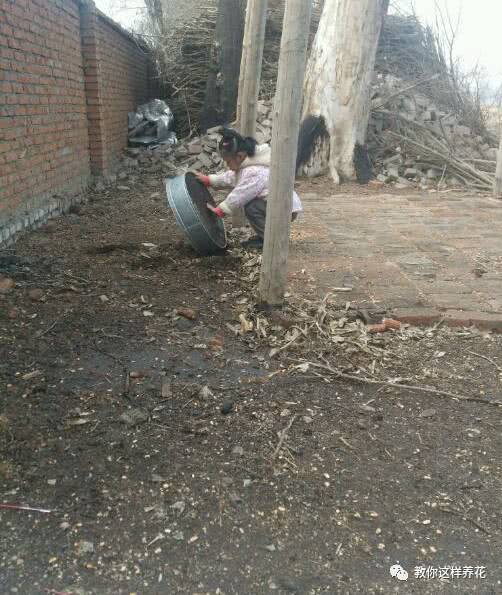
We often say that garden soil is not breathable and cannot be used alone as soil for growing flowers. In fact, there is another kind of soil that is much more breathable than garden soil, does not compact, and is richer in nutrients, and that is leaf mold. Leaf mold plus some granules can be used to grow flowers, and leaf mold is especially easy to find as a source; under trees in less crowded places there is plenty of leaf mold.
(Hua Ba 9890lms)
Leaf mold also has a drawback: it has bugs, so the leaf mold you collect should be sun-dried first. After the bugs have been driven away by the sun, it can be used. Clivia, succulents, kalanchoe, rhododendrons and so on can all be grown with leaf mold, with very good results.
(Hua Ba Xingbude Ye Jiejie)
Many flower lovers who use leaf mold to grow flowers find that it is even better than bought soil: rich in fertility, plants grow strong, and the roots are thick and white, incredibly healthy.
- River sand -
Sand has many uses, and combined with leaf mold it can achieve better drainage performance. Leaf mold is rich in nutrients, has good breathability, and also holds water well, so relatively speaking it needs to be mixed with some materials that help with drainage. Coarse sand has larger particles, and after being added to potting soil it creates many gaps, and no matter how time changes it does not easily deform or decompose, so it can strengthen the drainage performance of the potting soil, making waterlogging less likely.
(Sina Blog Laoluoluo de Chuntian)
Coarse sand can be added to potting soil, or placed at the bottom for drainage.
Fine sand holds water well, and after disinfection it has few bacteria, so it can be used for sowing or cuttings, making infection and rot less likely, and it is especially widely used for cuttings. Generally, before use, soak it in boiling water, or expose it to the sun to sterilize it.
- Sawdust and wood shavings -
Sawdust and wood shavings are the wood chips left over from wood processing at lumber mills. Sawdust and wood shavings are loose in texture and breathable while holding water. After fermentation, they are very good for growing flowers.
When sawdust is used to grow flowers, it is best to compost it first before use. Uncomposted sawdust has a relatively high internal temperature during fermentation and easily burns seedlings. You can put the sawdust in a container, add water, seal it, and place it in the sun to bake; generally after 1-2 months, when the sawdust turns black, it can be used. Mix the fermented sawdust into potting soil, with the amount not exceeding 30%, and you can also add an appropriate amount of fertilizer; potted flowers will become more and more lush.
Besides being used to grow flowers, sawdust can also be used as wrapping substrate for air layering of flowers such as camellia and osmanthus. On a branch that has been ring-barked, you can wrap a plastic bag filled with moist sawdust and mountain soil, tie both ends tightly, and roots can form in 2-3 months.
Sawdust can also be used for cuttings. Insert cuttings of rose and gardenia into fermented sawdust; after the plants take root and survive, put the sawdust block together with the plant into a pot, reducing root damage.
Larger wood shavings can be used for sowing Clivia. The wood shavings should first be boiled in boiling water for 15 minutes to disinfect them. After Clivia seeds are soaked in warm water to hasten germination for 2-3 days, place them on the wood shavings, and in about 10 days small sprouts begin to grow.
- Charcoal -
Charcoal is loose and breathable, with a porous structure. Placed at the bottom of a pot, it can be used as a drainage layer, avoiding the problem of waterlogging and root rot. Moreover, charcoal can also absorb fertility and release it slowly, providing fertility for plant growth.
For hydroponic flowers such as lucky bamboo, you can also add a few pieces of charcoal to the water. Charcoal pieces can adsorb small and medium-sized impurities, purify the culture water, indirectly improve water quality, and reduce the occurrence of root rot in lucky bamboo; in hydroponic flowers with charcoal added, root rot and yellow leaves rarely appear.
Now many people buy activated carbon packets when they buy a car or a house, and throw them away after a long time when they are no longer useful. The activated carbon taken out of these activated carbon packets can also be used to grow flowers.
Activated carbon is breathable; mixed into potting soil, it can promote root growth and also absorb excess nutrients and release them slowly, so it is very good for growing flowers. Large pieces go at the bottom of the pot, while small pieces or powdered activated carbon can be mixed into the potting soil.
So these 4 little things have so many uses
Did you know?
Share it with flower lovers who need it!