Repotting succulents: pruning the roots beforehand is simple and takes only 3 minutes to learn
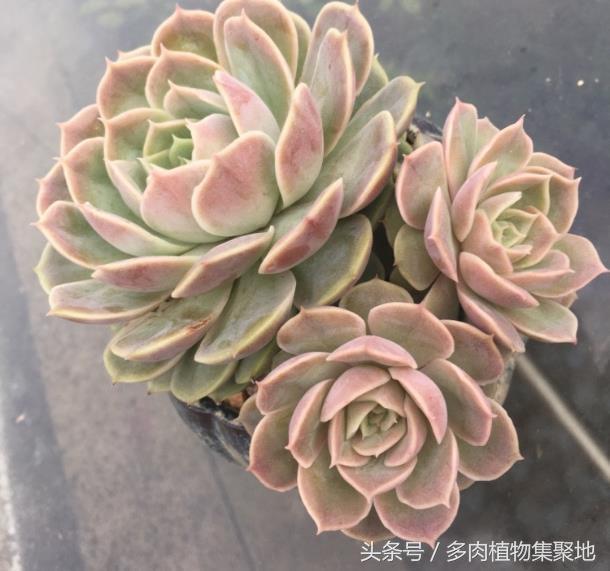
Many people love growing succulents, but there are always some who just cannot keep them alive. How can you grow succulents well without knowing the tricks? Speaking of this, we need to talk about how to prune succulent roots. When pruning roots, the white fibrous roots do not need to be trimmed. Just shake off the old soil, shake it off as clean as you can, and then plant it directly.
These fibrous roots are the main force through which the plant absorbs water and nutrients. If you mistakenly cut them, the succulent will have to consume its own nutrients to regrow roots, as if its whole body has been hollowed out. Over time, how could it possibly grow well? I usually let it dry for three to four days after root pruning, then plant it. After planting, wait three to four days before watering. Once watered thoroughly, water once a week after that, though it also depends on the weather. If there is a lot of rain, once every two or three weeks is fine too. If you cannot tell, you can stick a toothpick into the pot.
After a succulent has been growing for some time, about 1-2 years, some of the roots will die off due to pathogen infection, soil compaction and other reasons. These dead roots will affect the plant's absorption, and wound infection will also spread, affecting other healthy roots and causing blackening, rot and similar phenomena. At this point, you need to repot the plant to deal with the dead roots.
After root pruning is complete, you can apply a fungicide. For the fungicide, it is recommended to dilute medical alcohol. Because alcohol evaporates more easily than water, it can form a protective film against pathogens on the plant's roots in a short time. Roots fully coated with fungicide will effectively reduce the chance of wound infection. Also, root mealybug-type pests probably do not like this smell much either. Finally, let it dry and pot it up, and hope this plant recovers its vitality as soon as possible.
For succulents that stay shriveled and will not plump up over the long term: reduce light, reduce the loss of water from the succulent itself, let the root system grow well, and then gradually increase light. Rule out the possibility of pests and diseases. Mealybugs, sooty mold and similar problems will also speed up the loss of nutrients in the succulent, causing its condition to deteriorate. Reduce the burden: if some branches and stems are too large and numerous, consider removing some of them for cuttings.
Some people find it very strange that even though a succulent has been planted for a long time, it still looks thin and shriveled, not as plump as other people's succulents. The essential reason a succulent becomes shriveled is that consumption outpaces production. Most people have a misconception: they think succulents are desert plants, so right after buying one and planting it, they dare to put it straight into the sun, and for quite a long time too, or they go a very long time without watering. If this were any other small plant, it would have been sunburned to death long ago. It is only because succulents have such strong water-storage ability that they do not die, but instead just show you a shriveled look.
This is a gathering place for succulent lovers, sharing succulent care tips. Welcome to follow and exchange ideas.