Kalanchoe grown for two years, cut once in summer, one pot becomes ten in autumn and winter
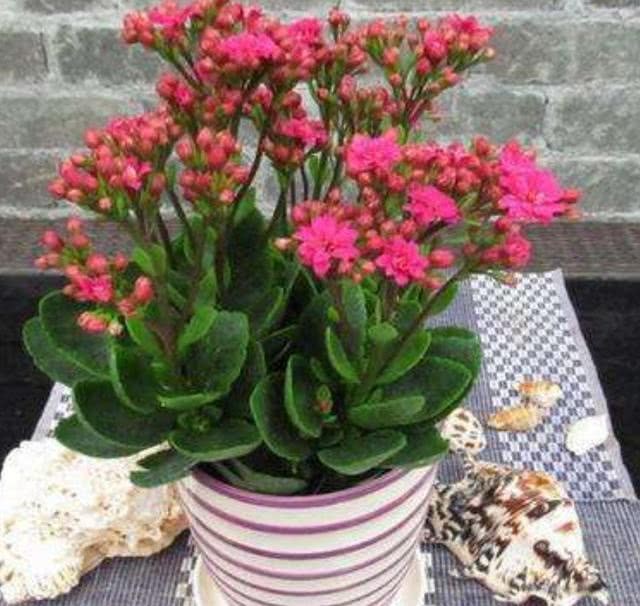
Yesterday I received a message from a gardening friend: their two-year-old kalanchoe (Kalanchoe blossfeldiana) old stump, still carrying a second flush of blooms on its branches, suddenly developed black rot at the base of the stem, and they were unsure whether to cut off the rotten part. In fact, this is a phenomenon commonly encountered when growing kalanchoe.
Kalanchoe differs from other plants. Generally, on old stumps grown for more than two years, the lower branches gradually become woody, and some even grow roots along the branches. Apart from severe water shortage at the roots, most of the cause is poor growth of the old roots, though a few varieties naturally tend to grow aerial roots under normal conditions.
Once the branches become woody, the kalanchoe's absorption of water and nutrients is affected. Combined with high summer temperatures, kalanchoe easily wilts or dies from various causes during its dormant period, and if water and fertilizer management in autumn and winter is not timely, it will bloom poorly or not at all.
It is generally recommended to cut off the branches on the old stump after flowering in summer (that is, to give it a "buzz cut") and replant the cuttings in fresh soil (those who prefer old-stump kalanchoe can ignore this). Cut from the base of the branches and choose healthy, non-woody stems, each about 10 cm long. Keep 2 to 4 leaves at the top for photosynthesis. The cuttings can be soaked in a carbendazim solution or rooting water, then left to dry and inserted into clean sand or loose, breathable potting soil. Keep the temperature at 15 to 28°C, and roots will form in about 20 days.
You can also root them directly in water after soaking them in rooting powder. Take a small piece of foam board, cut a hole in the middle, insert the kalanchoe cutting into it, and place it in a clean glass or container of water. To encourage rooting, you can also add a little white sugar to the water. Water rooting is generally faster, and once rooted, the cutting can be moved into potting soil for normal growing. Kalanchoe cuttings rooted in summer, given timely pinching and timely water and fertilizer management in early autumn, can bloom the same year.