A Personal Profile of Chinese Bonsai Master Wang Yongkang
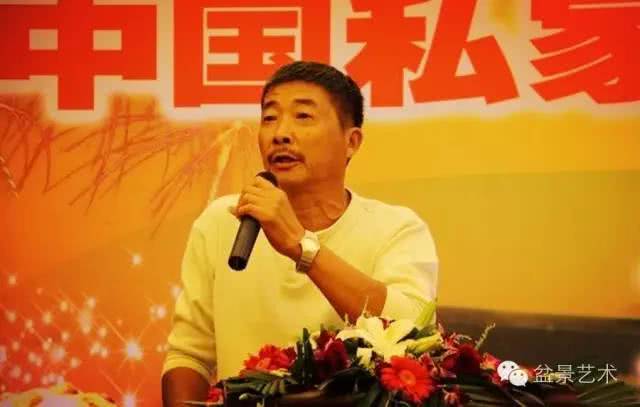
"Tang Feng Exhibition," the highest honor in mainland bonsai competitions, with Wang Yongkang serving as chairman of the judging committee; "Hua Feng Award," the highest award in Taiwan, China's bonsai circles, with Wang Yongkang being the first person from the mainland invited to serve as a judge; on the "International Bonsai Master" list named by BCI (International Bonsai Association), which has a sixty-year history, Chinese people are few and far between, yet Wang Yongkang's name stands out prominently... An unassuming man from Changzhou has achieved great renown through his pursuit of bonsai.
He has a "communication of life" with every tree
On a drizzly day, I walked into Suiyuan, located by the shore of Ge Lake in Wujin Development Zone. Entering the garden, misty rain brushed the islets, and in the faint haze, water and stones mirrored each other.
The garden contains a great variety of flowers and trees. At first glance they seem to follow no method, but upon closer inspection, they take nature as their principle, with a structured layout, by no means a wild thicket: tall trees are planted to shade against the fierce sun, and trees with ancient simplicity or elegant form and posture (such as gnarled pines and graceful willows) are planted for appreciation, supplemented by the colors and fragrances of flowers, fruits, and leaves (such as red osmanthus, red maple, kumquat, wintersweet, and autumn chrysanthemums). Those verdant greens quietly set off the garden's colors; creeping grasses and vines add a touch of wild woodland charm; lotus leaves and plantain in the rain, birds singing and cicadas chirping in the branches, fill the entire garden with lively vitality.
Mention the two words "Suiyuan," and some may think of the rear garden of Yuan Mei in the Qing Dynasty. When Wang Yongkang named his garden, he was completely unaware of this. He said the reason he chose this name was, first, that he felt the garden he had made championed a spontaneous, natural approach, and second, that he felt opportunities in this world must be pursued by "following fate."
This garden is called by friends in Changzhou's bonsai circles the "living calling card of Changzhou bonsai." There are many bonsai enthusiasts in Changzhou, but very few can afford to build a private bonsai garden. Moreover, Suiyuan has a large area and fine scenery, and Wang Yongkang is naturally hospitable, so many people store their bonsai at Suiyuan. Over time, Suiyuan became the "museum" of Changzhou bonsai and the "clubhouse" of Changzhou bonsai fanatics.
Wang Yongkang happily introduces each of his bonsai: "Look at this one, without tens of millions of years of natural formation, such a shape would be impossible," "This is a typical literati posture, aloof and detached from the world," "This was originally a dead stump discarded by someone else; it took ten years to bring it back to life," "This one was bought for 200 yuan; not long ago a Japanese guest said it was worth 1 million yuan." What makes Wang Yongkang happiest is "bringing every dying withered tree back to life."
In front of his residence stands a tall American shore pine. This was given to China when Nixon visited China, and there were only about ten of them in total. By chance, Wang Yongkang transplanted it, curled up in a corner, to his front door, cared for it carefully, and now it is once again full of green branches.
Wang Yongkang says he "knows every one of his trees." Several years ago, 4 beloved bonsai were stolen, and for this he offered a reward of 100,000 yuan for clues. Although many years have passed and the bonsai have not been found, whenever there is a large domestic bonsai exhibition, Wang Yongkang still goes to distribute his "reward notice."
To be so obsessed, one could well call him a remarkable eccentric.
It was also at that time that 15-year-old Wang Yongkang acquired his first bonsai in life. "It was a single-trunk winter jasmine, which I then treasured for more than forty years, until a few years ago it unfortunately died when I was repotting it."
In 1968, Wang Yongkang was sent down to Liyang. By then, the flowers and bonsai at home were already quite numerous. Unexpectedly, his father, who had always scolded him for "not attending to proper business," actually began caring for the bonsai his son had left behind as if caring for his own son. Wang Yongkang said that was "the old father placing his longing for his son in the flower pots."
During 8 years of being sent to live in the countryside, Wang Yongkang did not forget bonsai. On weekends and rest days, he often walked dozens of li on foot into the Wuyuan Mountains, discovering and collecting wood from the mountains, and when he found something he liked, he would send it back to his home in Changzhou.
"Later there were more and more bonsai, and some friends took a liking to them and asked me to give them some. I was young then, so if they wanted them, I gave them away, without thinking much about it. I didn't notice that my father's expression grew worse each time, until finally I realized that bonsai had become part of my father's life."
From "Lüyang Flower Shop" to "Master of Suiyuan"
In 1976, Wang Yongkang ended his years of being sent to the countryside and returned to the city. He worked successively at Dongfeng Printing and Dyeing Mill and the First State Cotton Mill, and in 1984 he came to the No. 4 Pharmaceutical Factory as a gardener. What made Wang Yongkang different from other gardeners was that he did not follow the factory's clock-in and clock-out times. His reasoning was, "A gardener's working hours should be determined by the flowers, not by people. Watering and pruning at midnight is not impossible."
In 1985, Wang Yongkang and a good friend from his Dongfang Printing and Dyeing Mill days went to the mountains of Anhui to dig tree stumps for several months and transported them back to Changzhou. That very year he made a lot of money, "and all at once became a ten-thousand-yuan household."
In 1988, Wang Yongkang formally went into business, renting 2 mu of land in Lihua and planting flowers such as carnations, Chinese roses, and baby's breath. Wang Yongkang, who had little experience in growing and selling flowers, went with his old friend He Qingcheng to Guangzhou, then the flower market distribution center, in order to figure out the market. "In that place where we were completely in the dark, a big sister from Wuhan took us, total strangers, and guided us bit by bit, telling us the tricks of the trade."
Gradually, Wang Yongkang's "Lüyang Flowers" became one of the largest and most famous flower shops in Changzhou. The joint purchasing and group buying initiated by Lüyang Flowers directly influenced and controlled Shanghai's flower market. "For a period of time, we chartered flights from Kunming to Changzhou specifically to transport carnations and the like." Wang Yongkang remembers that when Lüyang Flowers was at its hottest, the vehicles coming to the shop to pick up flowers often jammed Qingtan Road so tightly that nothing could get through.
After decades of working with flowers, what interested Wang Yongkang most was actually still bonsai. In 1996, Wang Yongkang discovered many boxwood trees on Chongming Island, all more than a hundred years old, and was overjoyed. So he rode a motorcycle from village to village, going door to door to inquire, and ultimately purchased 800 boxwood trees. "At the time they were purchased as landscaping nursery stock. The most expensive one cost about 600 yuan. Now, if used as bonsai, the lowest price would be 300,000 to 500,000 yuan."
When talking about his understanding of bonsai, Wang Yongkang is somewhat different from others. He remembers that when he was sent to live in the countryside, a teacher told him: "Don't saw this way and that, or you'll saw out a Zhu Bajie." For decades, Wang Yongkang has firmly believed this. He thinks bonsai is a kind of realm, guided by circumstances, and must never be forced. Working with bonsai should be a kind of respect for the tree, a respect for its life. Wang Yongkang has always opposed the practice of giving bonsai names. If there was really no way around it, he would only give it the name "Untitled." He says that a bonsai, in your eyes and in his eyes, because of different spaces, different times, and even because of differences in the viewer's mood and experience, appears different to everyone, and everyone's space for imagination is very large. Therefore, insisting on giving it a name to limit the viewer's imagination is really not a good idea.
"Making bonsai is about presenting its most beautiful side." So sometimes, for the sake of "one point" on the trunk, he will often wait three to five years, cultivate the other parts well, and only then begin, presenting the tree's most beautiful side to the world. The black pine work "Longevity," which won the first-class gold award at the First China Tang Feng Bonsai Exhibition, was born in this way.
Back then, after this black pine was dug down from the mountain by someone, it was purchased by Wang Yongkang and cultivated until it survived. In order to develop the large cascading branch on the left, Wang Yongkang waited a full 3 years. Who could imagine that an ordinary, unremarkable piece of rotten wood from the wild mountains could, 4 years later, win its owner a medal made of 150 grams of 24K pure gold?
In 2002, when friends from Taiwan, China's bonsai circles had just entered the mainland to do bonsai business, Wang Yongkang began doing bonsai business with them, thereby laying the foundation for his bonsai business. At present, the number of finished bonsai, semi-finished bonsai, and raw stock in "Suiyuan" available for sale exceeds ten thousand, and there are nearly 20 professional bonsai maintenance workers.
"My happiest thing now is to wake up in the morning and go inspect every tiny change on the bonsai."