Balloon vine is notorious abroad; farmers hate it, yet some people get rich from it
Our country is vast and rich in resources, and there are countless kinds of wild grasses, especially in rural areas where there are even more wild grasses. Farmers have mixed opinions about these wild grasses. Some wild grasses are loved by farmers because they can be eaten or used medicinally, while some grow beside crop fields or orchards, harming crops or fruit trees, and are hated by farmers. Below, the author introduces one such wild grass that makes farmers both love and hate it.
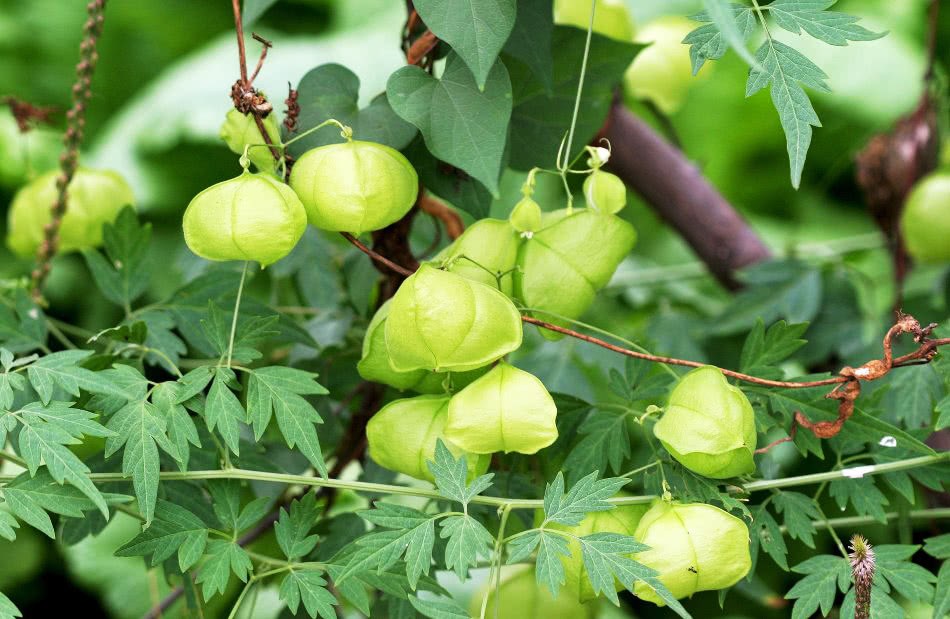
In the afternoon, the author saw a large patch of peculiar wild grass outside a farmhouse yard. It is called a wild grass because the author remembers seeing it in the mountains. Its fruit is very strange, looking like the fruit of the commonly seen balloon plant or Chinese lantern plant, but with one difference: it is triangular. When the author asked the owner of the house, it turned out that this was a wild grass he had specially planted. This wild grass is neither balloon plant nor Chinese lantern plant, but a wild grass called "balloon vine" (Cardiospermum halicacabum). Because its fruit resembles a lantern and has a distinctive shape, it is also called "ghost lantern."
Speaking of this balloon vine wild grass, friends who have lived in rural areas for a long time may have seen it, but are not very familiar with it. Balloon vine is actually "notorious" abroad. Why? Because balloon vine has extremely strong adaptability and can grow in rural shrublands, riverside meadows, wasteland, open grasslands, forest edges, roadsides, hillside meadows, hillside shrublands, hillside roadsides, dry areas in open forests, farmland, and orchards.
Moreover, balloon vine is a climbing plant, often twining around crops or fruit trees as it grows, and can grow to more than 3 m at most, seriously affecting the growth of crops and fruit trees. Therefore, in the past, farmers were very annoyed by it and cut it down as soon as they saw it, fearing it would affect the growth of crops and fruit trees.
Although balloon vine has a very bad reputation abroad, in our country quite a few farmers use it to make money, because although balloon vine climbs other plants as it grows, if managed well it is also a very good wild grass. According to this farmer who grows balloon vine, you may not know that balloon vine is a wild grass with great medicinal value. Its whole plant can be used as medicine, and its extract can even sell for 75 yuan per kg.
The author also checked relevant information on balloon vine. It is recorded in the "National Compilation of Chinese Herbal Medicines" that the whole plant of balloon vine can be used medicinally, with the effects of clearing heat and detoxifying, reducing swelling and relieving pain. It can be used to treat pneumonia, jaundice, diabetes, gonorrhea, boils, rheumatism, traumatic injuries, snake bites, and many other conditions. Its roots can also stop vomiting and relieve constipation, and its seeds can be pressed for oil for industrial use. It can be said that the whole balloon vine plant is a treasure, so it has also become a money-making "wild grass" for some farmers.
The author reminds everyone that the fruit of balloon vine is very attractive, looking just like a plum, but it cannot be eaten because it is toxic, so do not eat this fruit if you see it.
Friends, have you ever seen balloon vine? You are welcome to leave a message and share!