These few plant diseases can be cured completely by spraying carbendazim
Carbendazim is all too familiar to flower lovers. When green plants encounter diseases, it is time for it to come into play. It is a highly effective and low-toxicity fungicide that protects and treats plants; moreover, its fungicidal effect can last up to half a month, and during the rainy season it can last as long as a week. Carbendazim controls a relatively wide range of diseases, such as plant powdery mildew, stem rot, black spot, southern blight, anthracnose and many other diseases caused by fungal infection. The following explains in detail the usage and effects of carbendazim.
1. Orchid stem rot
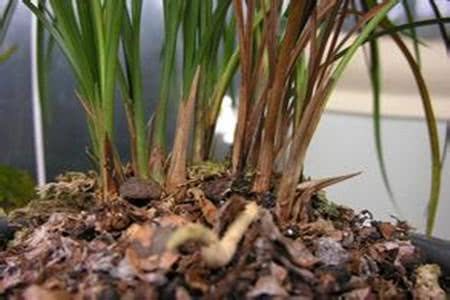
From May to September each year is the peak period for this disease, mostly caused by fungal infection resulting from high temperature, high humidity and an environment that is not ventilated enough. At first, yellowing signs appear at the base of the orchid, and after a day or two the plant withers and dies. If you touch the leaves with your hand, you will find that they drop off at a touch. The disease develops quite rapidly. When the roots are dug out, at first glance the outside looks intact, but the inside has already become diseased and turned brown, and in severe cases even rotting occurs.
Remedy: Take the infected stem rot plant out of the pot, first cut off the rotten parts, then soak it in a bottle containing diluted carbendazim solution for at least more than one hour, then take it out and let it dry. After disinfection, it can be planted in a pot.
2. Clivia root rot
The causes of Clivia root rot are many-sided; it may be improper watering, excessive fertilizing, or fungal infection in the potting soil. Whether a Clivia with root rot can survive depends on whether the rhizome is still intact. If the leaves and root axis have not yet separated, it means it can still be saved; if even the new leaves in the middle have rotted, then there is nothing that can be done.
For a Clivia with root rot that can still be saved, a carbendazim solution is needed. The usage is as follows: first remove the plant from the pot, carefully wash the roots, and remove all the diseased roots. Then soak the roots in the carbendazim solution for several tens of minutes, take them out and let them dry, and then they can be potted.
3. Dracaena sanderiana anthracnose
This disease mainly appears on the leaves of the plant, so it is relatively easy to spot. At the beginning of the disease, faint brown spots grow on the leaf surface of the Dracaena sanderiana. As the disease worsens, the spots continuously expand outward; in the later stage of the disease, they become black dotted granular spots.
The treatment method for disease on the leaf surface is relatively simple. Dilute the carbendazim solution with clean water, then spray it on the leaf surface every few days.
In the future, when plants encounter diseases, you will not be in a rush. This little helper carbendazim is still quite good, but when using it, pay attention to the dosage, as too much may instead harm the green plants.