Detailed Explanation of Orchid Division Propagation and Pseudobulb Cultivation Methods
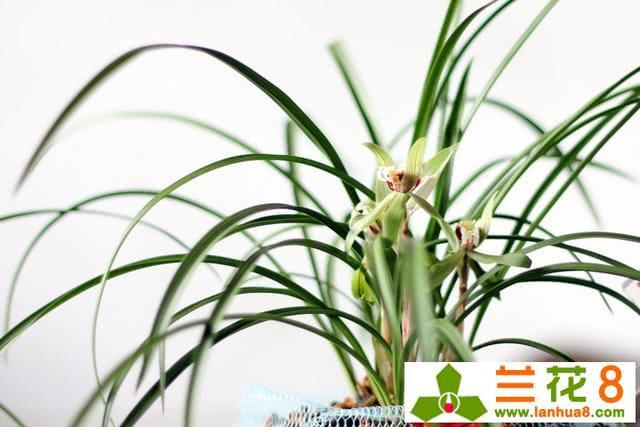
Orchids broadly refer to ornamental plants of the family Orchidaceae, usually divided into two categories: Chinese orchids and exotic orchids. Chinese orchids are traditional precious flowers of our country, with graceful leaf forms, elegant flower colors, and rich delicate fragrance, long known as the "gentleman among flowers," and deeply loved by people. With the opening up to the outside world and the development of our country's flower industry, epiphytic orchids native to tropical and subtropical forests, such as Phalaenopsis, Cattleya, Oncidium, and Dendrobium, have gradually become accepted and loved by people in China. However, with people's "plundering-style" exploitation, orchid resources have been greatly damaged. Among the plants protected by the Convention on International Trade in Endangered Species of Wild Fauna and Flora, Orchidaceae accounts for over 90%. Therefore, researching orchid propagation methods is very necessary to protect resources and maintain the sustainable development of the flower industry.
I. Division Propagation Method
Division propagation, also called pot division, means dividing an overgrown pot of orchids into 2 to several pots. Division propagation is widely used in orchid cultivation, especially when the planting quantity is small or for small-scale home cultivation, where division propagation is mainly used. Division propagation is suitable for orchids with pseudobulbs and clumping growth habits, such as Chinese orchids, Paphiopedilum, Oncidium, Dendrobium, and Cattleya. This method is relatively simple, easy to master, does not damage the orchid seedlings, usually does not affect flowering, and can ensure the inherent characteristics of the variety without causing variation, but the propagation coefficient is relatively low. Below, Chinese orchids are used as an example to introduce the specific method of division propagation.
Chinese orchids refer to a few terrestrial orchids of the genus Cymbidium native to China. They are perennial, with pseudobulbs, and each year 1-2 new shoots grow from the base of the newly formed pseudobulbs. Growth is completed at the end of the growing season, and pseudobulbs then form at the base. Usually, for orchids potted for more than 2-3 years, the seedlings in the pot become too crowded, affecting growth. At this time, one pot of orchid seedlings can be divided into 2 to several clumps, each clump potted separately to become a new plant. The specific process is as follows.
1. Suitable season: Generally speaking, as long as it is not the vigorous growth season of orchids, division can be carried out, but the more suitable season is the orchid's dormant period, that is, March-April before new shoots emerge from the soil and September-October after orchids stop growing. Different types of orchids should be treated differently. Varieties that bloom in early spring, such as Cymbidium sinense, Cymbidium goeringii, Cymbidium kanran, and Cymbidium faberi, should be divided after flowering when growth vigor is relatively weakened, so as not to affect flower viewing, or they can be divided during the dormant period before flower buds have extended, but operation requires great care not to damage the flower buds. Varieties that bloom in summer and autumn, such as Cymbidium ensifolium, are best divided in early spring. Orchids need more water during the vigorous growth season from May to August. Excessive dryness during division is unfavorable to plant growth, and new shoots and new roots are very tender, making operation inconvenient and easily bruised with slight carelessness.
2. Preparatory work
(1) Preparation of seedlings: For convenient operation, the potting soil can be appropriately dried before division, making the root system whitish and producing inconspicuous wilting, so that the brittle and easily broken fleshy roots become soft. This can reduce root damage during division and potting, but excessive dryness should be avoided.
(2) Preparation of potting materials and various tools: Need to prepare culture soil (graded first), broken tiles, broken bricks, coarse sand, copper window screen, plastic window screen, orchid pots (clean, soaked), and scissors, etc.
3. Division
(1) Selection of orchid seedlings: Orchids used for propagation should grow well and be free of pests and diseases. Cymbidium ensifolium is divided once every 2-3 years. Cymbidium faberi can only be divided when it has 8-9 pseudobulbs. Cymbidium goeringii can be divided with slightly fewer. Different regions have different habits; for example, Sichuan Province prefers large pots, potting dozens of pseudobulbs, with growth and flowering both very luxuriant. If division is too frequent, too many roots are damaged, and post-division management is poor, recovery is relatively slow, new shoots do not grow large, and flower buds are inhibited or flowering is abnormal.
(2) Division method: When dividing pots, first extend the five fingers of the left hand close to the pot surface into the orchid seedlings, firmly supporting the potting soil, and with the right hand turn the pot upside down and gently tap around the pot to separate the pot from the potting soil. Then grasp the bottom hole of the pot with the right hand to separate the pot from the potting soil. Then lay the orchid seedlings and potting soil flat, and do not let the soil ball suddenly break apart, so as to avoid breaking the orchid root system. Carefully pat the soil ball gently to loosen it, gradually shake off the old potting soil, and separate the potting soil from the seedlings. Carefully grasp the pseudobulbs without tender shoots, do not damage tender shoots and leaves, and cut off already yellowed leaves, rotted bract leaves on pseudobulbs, and rotted dry old roots. However, leaves on pseudobulbs with new shoots should be retained as much as possible, otherwise new shoots grow slowly and small. Pseudobulbs whose leaves have completely fallen off should also be cut off. Finally, select the larger clumps of plants that have been cleaned, find places where two pseudobulbs are relatively far apart and easily loosened when shaken by hand, cut open with sharp scissors, apply charcoal powder and sulfur powder to the wounds to prevent wound rot. Both cut parts of the pseudobulbs should have new shoots and each can independently develop into a new plant. Each part after cutting should have at least 3 pseudobulbs; too few is unfavorable for new shoot growth and also makes flowering difficult.
4. Potting method
(1) Selecting orchid seedlings and preparing the assembled pot: Before potting, according to the size of the pot, select several clumps of orchid seedlings and assemble them into a matching group of seedlings for one pot. When assembling seedlings, note that the part with new shoots should face the pot rim, and leave 2-3 years of growth space when planting.
(2) Specific operation: First find an orchid pot with holes; to prevent insects, lay a layer of nylon mesh or copper gauze. Cover the drainage holes with broken pot pieces and several clam shells. Next lay the drainage layer, such as broken pot pieces, broken bricks, and furnace ash cinders (013-1 cm in diameter). The thickness of the drainage layer is 1/5-1/4 of the pot depth. Then add culture soil, which can first be added to half the pot depth, then press the potting soil firmly with the hand, with the soil in the center of the pot slightly higher than around it. Finally place the assembled seedlings in the center of the pot, gradually add culture soil, and according to the planting depth lift the orchid seedlings gently upward so as to arrange the orchid root system properly in the pot, and at the same time fill the gaps between roots with soil and press firmly. On top spread a layer of crushed stone granules, ceramsite, and Selaginella, water thoroughly, and place in a cool place to recover. The division methods for Paphiopedilum, Oncidium, Cattleya, and Chinese orchids are similar.
II. Pseudobulb Cultivation Method
1. Direct planting method: Chinese orchids and Cymbidium hookerianum usually have 2 buds at the lower part of each pseudobulb (there are also latent buds at the upper part), generally only 1 sprouts each year, and the other remains dormant. Remove the leaf sheaths from these rootless and leafless pseudobulbs, wash them clean with water, plant them with moss in small flower pots, keep moist and warm, and each old pseudobulb can grow 1-2 new leaves, then roots form at the base of the new shoots, and with careful cultivation they can become new plants. This method is used more in the cultivation of precious orchid varieties and variegated orchid varieties. Sometimes the roots and leaves of old plants are deliberately cut off, and most pseudobulbs are planted in large flower pots or wooden boxes to promote the sprouting of new shoots, accelerate propagation, or promote leaf variation.
2. Cutting propagation: For Dendrobium, select pseudobulbs that have not flowered and are plump, and cut them from the base for cuttings. Make each 2-3 nodes into a section, insert upright on a small cutting bed made of peat and moss, with half exposed outside, place in a semi-shaded, moist, and relatively warm environment, and after the moss surface dries, spray a little water to keep the moss moist. After 1-2 months, when new shoots have grown and there are 2-3 small roots, plant in a new pot to become a new plant. I publish orchid knowledge and pictures every day, taking you to understand orchids in depth and teaching you to easily grow orchids well. If there is anything you do not understand about orchids, you can ask me anytime or leave a message below. If my knowledge has helped you, I hope you can give me a like or forward it to help more people!