This vegetable has weight-loss benefits, so friends who want to slim down can eat it often.
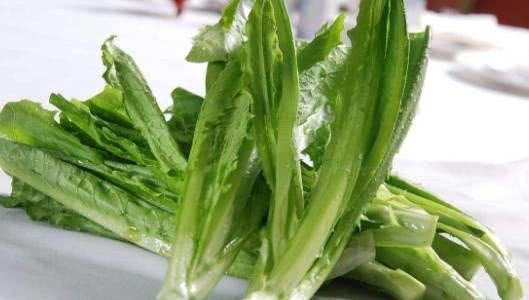
Leaf lettuce, also known as yam leaf lettuce, belongs to the Asteraceae family and the Lactuca genus. It is a pointed-leaf type leaf lettuce grown for its tender tips and tender leaves, with long lanceolate leaves, a pale green color, and a crisp, tender texture. Its taste is extremely tender, fresh and fragrant, with a unique flavor. It contains a large amount of vitamin A, vitamin B1, vitamin B2, and plenty of calcium, iron and other nutrients. It is a top-grade vegetable for raw eating and is known as "phoenix tail." Leaf lettuce is a new face on the vegetable market. In some places it is also called bitter vegetable or ox-tongue lettuce. It belongs to the Asteraceae family and is a type of pointed-leaf type leaf asparagus lettuce grown for its tender tips and tender leaves.
Because leaf lettuce is a pointed-leaf type of lettuce, there are not many varieties. At present, the most widely used is pure-fragrance leaf lettuce, which was introduced from abroad. China started research on leaf lettuce relatively late and does not yet have particularly good varieties. It is cultivated in many parts of our country. The nutritional value of leaf lettuce is slightly higher than that of lettuce and far superior to that of asparagus lettuce. For example, compared with asparagus lettuce, its protein content is 40% higher, carotene is 1.4 times higher, calcium is 2 times higher, iron is 33% higher, and selenium is 1.8 times higher. Leaf lettuce is eaten in the same way as lettuce; it can be stir-fried plain or made into soup, and the cooking time should be short rather than long. It tastes tender, crisp and refreshing, and is well liked.
Leaf lettuce is a pointed-leaf type leaf lettuce grown for its tender tips and tender leaves. It has strong adaptability and prefers a cool climate, but through measures such as insulation in winter and shading in summer, it can be produced all year round. In autumn and winter greenhouse cultivation, it takes only 40 to 45 days from planting to harvest, and the yield per mu can reach more than 3000 kg. It has strong adaptability and prefers a cool climate, but through measures such as insulation in winter and shading in summer, it can be produced all year round. In autumn and winter greenhouse cultivation, it takes only 40 to 45 days from planting to harvest, and the yield per mu can reach more than 3000 kg. The planting benefit is quite good.
Seed treatment: To raise leaf lettuce seedlings, the seeds need to be soaked to promote germination. Wrap the seeds in gauze and soak them in cool water for about 1 hour, then take them out and place them at 15-20°C or in a household refrigerator crisper for 2-3 days. Once the seeds show white sprouts, they can be sown. Seedbed preparation: Choose a seedbed in a plot where long-residual herbicides such as Pursuit and chlorimuron-ethyl have not been applied to the previous crop, with high, dry terrain and strong water- and fertilizer-retention capacity. Apply more organic fertilizer. For each mu of cultivation field, use 15-20 sq m of seedbed. Sowing at the right time: When sowing, mix an appropriate amount of fine sand with the seeds to separate them, then broadcast them for seedling raising. Do not sow too densely, to prevent the seedlings from becoming leggy. Cover the seeds with 0.5 cm of medicinal soil mixed with phoxim, and set up a shed for sun protection and rain protection. Seedling-stage management: When the leaf lettuce seedlings grow two true leaves, divide the seedlings, with a transplanting spacing of 6 x 6 cm. The seedbed for leaf lettuce should be kept moist, and shade is needed at noon. At the same time, during the seedling stage of leaf lettuce, attention should be paid to the prevention and control of pests and diseases.
Among leafy greens, leaf lettuce contains relatively more vitamins as well as calcium and iron. Its content of vitamin A, B-group vitamins and vitamin C is not low, so it has the reputation of being a top-grade raw food. Low in calories and high in nutrition, its nutritional value is slightly higher than that of lettuce and far superior to that of asparagus lettuce. It has effects such as lowering cholesterol and clearing dryness and moistening the lungs. It is mainly eaten raw; it can be served as a cold salad or dipped in various seasonings. When cooked, it can be stir-fried or cooked by blanching, and the flavor is unique. It is rich in vitamins and fiber, can increase a person's sense of fullness, and promotes gastrointestinal motility, making it a fairly suitable vegetable for girls who are trying to lose weight.