Mountain roses are an evergreen green rose that never withers
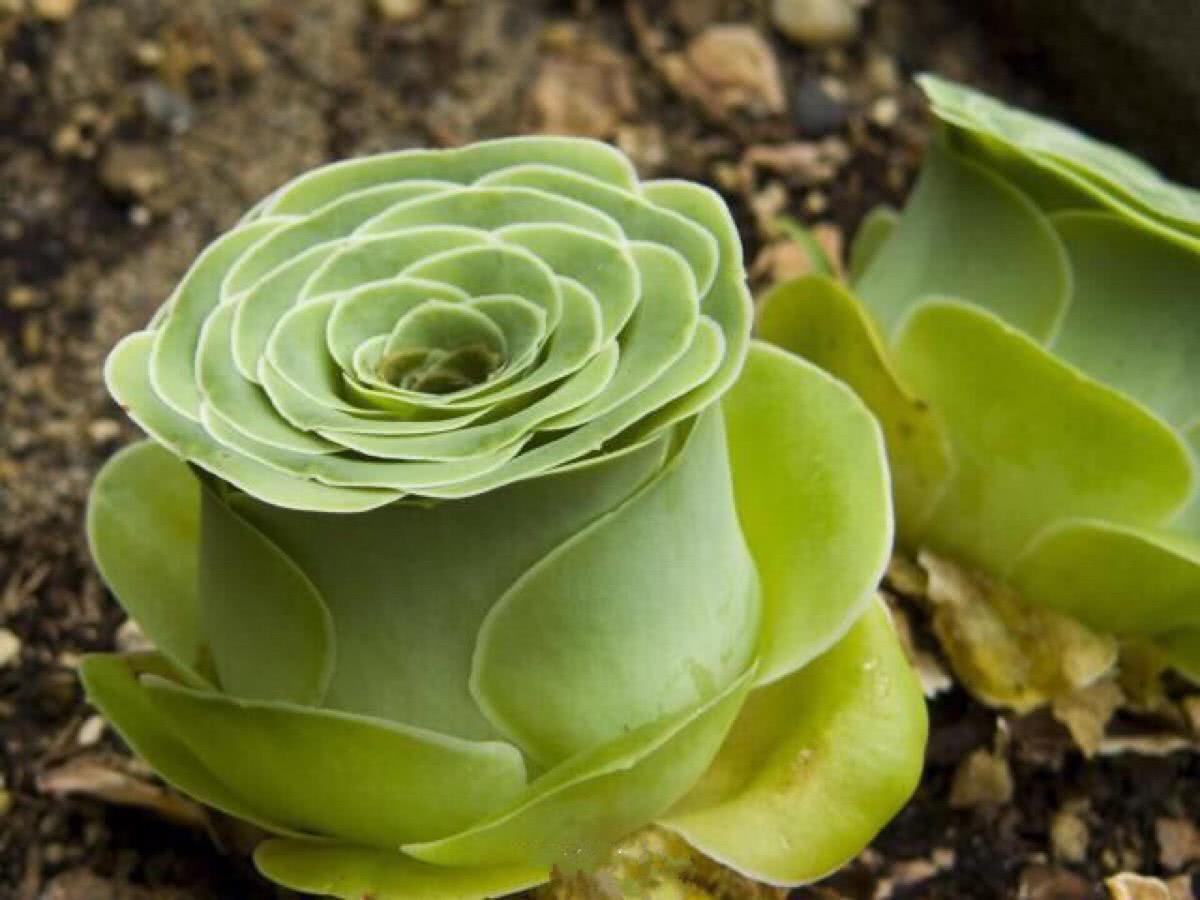
Mountain rose is a general term for the succulent plants formerly in the family Crassulaceae and the genus Greenovia, now classified under the genus Aeonium. They are characterized by leaves that open during the growing season (winter and spring) and close during the dormant period (summer).
The fleshy leaves are arranged in a rosette. Plant size varies greatly among species. Small species are only 2 to 4 cm, while large ones can reach 30-40 cm or more. Leaf color varies according to species and growing environment, ranging from grayish green and blue-green to green, and leaves may develop reddish-brown markings when exposed. Some varieties have a slightly white powdery coating and fuzz, or glandular hairs along the leaf margins. The flowering period is from late spring to early summer, with racemes and yellow flowers. As the seeds mature, the mother plant will gradually wither, but side shoots at the base of reliable plants continue the lineage.
Mountain rose
Because during its dormant period it avoids unfavorable conditions such as strong light and intense heat, the outer leaves age and wither while the leaves in the center are tightly wrapped together, making the plant resemble buds of roses about to bloom. It is precisely this characteristic that drives most plant enthusiasts crazy.
It is distributed in the Canary Islands and nearby islands such as Gran Canaria, Tenerife, El Hierro, La Gomera and La Palma, in rock crevices of north-facing slopes in coniferous forest areas at elevations of 1000-1900 m, in the southern highlands of Tenerife in remote areas of the north slope at an elevation of 950 m, and in open areas in coniferous forests at an elevation of about 650 m on the north side of La Palma, El Hierro and La Gomera.
Mountain rose
Mountain roses grow in canyons, rock crevices in mountainous areas, and coniferous forest land. The dormant period is from July to August. During dormancy the outer leaves wither and the central leaves tighten into a rose shape. In summer, ventilation, little water and 50% shading can maintain their "soul-stirring" state.
Mountain roses prefer a cool, dry and sunny environment, are tolerant of drought and partial shade, and fear waterlogging and stuffy, humid conditions. They have the habit of going dormant in high-temperature seasons and growing in cool seasons. The growing season is from autumn to late spring, when they should be given sufficient sunlight. Insufficient light will cause the plants to grow leggy, resulting in a loose plant shape and thinner leaves.
The growing season is from mid-September to June of the following year. Moving them indoors in winter allows normal growth, but be careful to ventilate frequently. After entering the growing season, the originally "soul-stirring" rose shape will quickly open within a few weeks, and at this time the form is very close to other varieties of the genus Aeonium. This may be the reason they were merged into the genus Aeonium.
Mountain rose
Mountain roses refer to the plants of the genus Greenovia. In fact, after 2003 this small genus Greenovia no longer exists, because in 2003 it was merged by taxonomists into the genus Aeonium. However, for convenience of description, they are still referred to below as Greenovia. The reason the mountain rose series is so popular is mostly because they look so adorable when dormant.
The so-called "ever-blooming green rose" is the charming mountain rose series in the family Crassulaceae. The flower language of roses is love and beauty, so does the ever-blooming green rose represent even more enduring love and beauty?