Succulent plants never grow roots? Change this kind of soil and they will take root and settle in within a few days
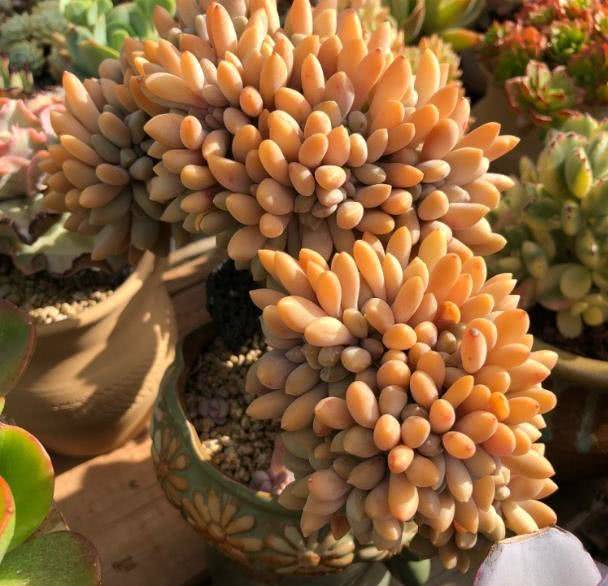
Many people, when they first buy succulents, more or less run into the situation where the succulent's root system is underdeveloped or even completely absent. At this point, it is best to do some root-promoting treatment before planting. After trimming the roots, spray the roots with some carbendazim solution to disinfect them, then place the succulent in a ventilated, shady spot to dry, which takes about one to two days.
When succulent plants are short of water, they enter a dormant state to avoid excessive water loss. If we raise succulents that have not yet settled in using the "water thoroughly once the soil dries out" method, then succulents whose soil has dried out completely will have a very hard time settling in. For succulents waiting to settle in, a breathable, slightly moist soil environment with fairly constant humidity is best. Only when they sense that the external environment stays unchanged do succulents have the urge to grow roots and settle in; otherwise, they will without question choose to live a bit longer rather than grow roots and settle in.
If your succulent has almost no roots, then soils like akadama or pure granular soil are very unsuitable for rooting, because the surface layer of this kind of soil dries out in almost no time, and this characteristic leaves the succulent with no subjective desire to grow roots and settle in at all. For newly planted succulents, because root lengths differ, what you need to ensure is not the soil moisture of the entire pot, but the soil moisture at the location of the succulent's roots.
What should you do if a succulent leaf cutting only grows buds and no roots? For leaf-cutting propagation, you must first select healthy leaves, so that the success rate of leaf cutting will be higher. Before breaking off the leaves, it is best to withhold water from the succulent for a few days; when the leaves are short of water to a certain degree, that is the best time to break them off. If you are too impatient when breaking off leaves, the leaves in a plump state can very easily have their growth point snapped off, and for most varieties of succulents, such leaves will not sprout.
Neither roots nor buds grow. It is possible that the growth point is not intact. The growth point is the place where the leaf connects to the plant. If the growth point is damaged, in many cases it cannot grow roots or sprout, and it is not recommended for leaf cutting. If the leaf is intact but still does not sprout, then there is nothing to do but wait; as long as the leaf is healthy, it will sprout sooner or later. Of course, there are exceptions, such as Kalanchoe daigremontiana (mother of thousands); for this variety, even half a leaf can grow a ring of small buds, and when it propagates you cannot pull them off fast enough.
It is hard for us to judge whether a succulent plant has begun to settle in, because separated by the soil, we cannot see the root system. The settling-in period differs for every variety of succulent. At this point we can also judge by touch: after the succulent has been potted for a week or ten days, we can touch the succulent plant and feel its state in the pot. If you feel resistance, it means it may have begun to settle in and grow roots. If it still feels very light with little resistance and wobbles unsteadily from side to side, it means it has not yet settled in. You can also touch the leaves to feel whether they are plump.
This is a gathering place for succulent plant lovers, sharing succulent care tips. You are welcome to follow and join the discussion.