How to Integrate Traditional Bonsai with Modern Makeup
Click here to contact Hongjiang Bonsai Culture Park
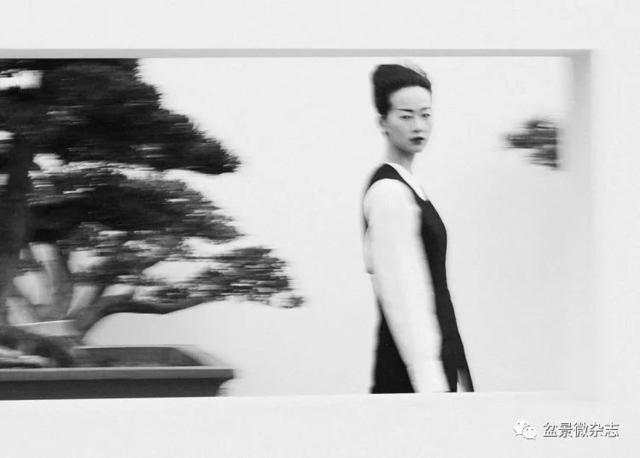
The Integration of Traditional Bonsai and Modern Makeup
For thousands of years, bonsai has risen from a household landscape to a work of art. In our fixed impression, an ordinary bonsai easily costs tens of thousands of yuan, making it a high-end plaything that ordinary people dare not casually enjoy.
So for this bonsai photo shoot, I also came to Rugao International Horticultural City with the mindset of admiring Chinese traditional luxury goods, ready to feast my eyes on luxury items and to exercise my ability to appreciate classical beauty.
"Bonsai is very expensive," "Bonsai is hard to care for," "Bonsai is something only old people play with," "Bonsai is only for rich people," "If you put it at home and accidentally knock it over, it's all over"...
Narrow and one-sided perceptions of bonsai like these have led many people to only hold it at arm's length. And young people, with no time, no patience, and an eager-for-quick-results mentality, find it even harder to truly connect with this traditional art of bonsai.
Bonsai is expensive because its value lies in its overall elegance and spirit. If a bonsai were compared to a person, then a bonsai would be a very well-bred young lady from a prominent family among the crowd.
A person's temperament is cultivated from childhood. When the young lady was little, her parents would devote thought to her figure and appearance, making her accomplished in every way, but they would not let her become spoiled. Instead, they would cultivate her to live wonderfully no matter what environment she is in.
Bonsai is composed of plants and stones, a miniature landscape that reveals the grand through the small. A good bonsai allows you to glimpse the truest beauty of the four seasons in nature through that one corner of soil indoors. They experience spring, summer, autumn, and winter as time passes, and they can bloom and bear fruit, constantly withering and constantly growing back with tenacity.
The aesthetics of bonsai are also quite interesting. At first, people liked to shape bonsai into all kinds of bizarre forms to show uniqueness, losing the plant's most primitive state. But in recent years, the aesthetics in the bonsai world have also begun to tend toward naturalness, no longer pursuing deliberate beauty but the most original state, just like modern attitudes toward people's looks: surgically altered faces are increasingly unwelcome, while natural beauty is more sought after.
There is now a saying for judging whether a bonsai is good: take a photo of the bonsai with a mobile phone, and when its appearance presented in a flat image looks like its natural growing state in nature, then it is a good bonsai. It seems that whether for people or for objects, people's aesthetics tend more toward naturalness.
Before the shoot, we envisioned many plans for bonsai styling. Aloof and ethereal were the character temperament directions that best suited the charm of literati bonsai. But after we started shooting and gained a deeper understanding, we suddenly realized: things that are enshrined on altars can only make people look up to them, revere them, and be afraid to approach and understand them. Later, we added some scenes closer to everyday life, hoping that through this article more people can feel that bonsai is not far away from us, that young people can play with it too, and that if you get good at it, there can even be unexpected rewards.
It is widely acknowledged that bonsai is expensive, but is all bonsai expensive? Of course not. Expensive bonsai mostly come from the hands of masters, and their appearance and spirit can be called works of art. In Rugao Horticultural City, you can often see bonsai priced from three to five hundred to three to five thousand, which in our understanding of bonsai prices is at a low price range. You can even spend less than 100 yuan to buy a bonsai of your own. Therefore, if you are not buying for art collection but for cultivation and for refining your character, then "expensive" does not exist.
So what qualifies as a true bonsai? Having mountain stones, having soil and plants, and being able to grow and go dormant with the four seasons like all plants in nature, that is bonsai. A very good way to judge is: longevity. Of course, this is under the premise that the bonsai is well cared for, and then if the bonsai can accompany you for decades or even be passed down through generations, then it is a good bonsai.
And achieving all this is not something you can do by just buying a small sapling and planting it in a pot. Careful maintenance and sufficient agricultural knowledge are both indispensable. You must know all the habits of the plant in your hands. Therefore, if you do not truly love it, there is no way you can see it grow.
Putting it this way, the expensiveness of bonsai lies in how much energy the person caring for it has put into it, and all of this can be seen with the naked eye.
Modern people often suffer from loneliness, so the proportion of people keeping pets has increased year by year. When interviewing bonsai master Long Biao, he raised a point that I found very interesting, and it is also the approach most accepted by young people: treat bonsai as a pet.
People who keep dogs must really love dogs to be able to care for them attentively. For people who keep bonsai, bonsai is their pet. Every day you have to look at it, communicate with it, and over time a deep bond forms. Animals have relatively short lifespans, but a good bonsai plant can keep living on, staying by your side all along, becoming a pet for generations of the family.
People who have dealt with bonsai for years all have a "Buddha-like" appearance. That is, neither servile nor overbearing, neither impatient nor rash, amiable in dealing with people and things, smiling at all times, and when in contact with them you can feel a sense of inner steadiness and comfort.
Restlessness is a common ailment of modern people, and persistence is even harder to achieve, but keeping a bonsai can cure a whole series of your modern ailments. Why not do it?
Among the bonsai makers we learned about, very few are young people. A large portion of them choose to enter the industry because they have their eyes on its huge profits. There are not many who purely love the art of bonsai.
"Secluded Silence · Ink Ting" comes from the state in calligraphy where ink spreads and blurs between the brushstroke and the paper. We applied this state to this makeup look. Ting is a plant called hua ting, which we found locally in Rugao; its seeds are black-brown, and it can produce blue-purple flowers. Therefore I used relatively dark colors such as black, crimson, purple, and blue, combined with the oppressive feeling of being bound, twisted, and broken during the shaping process of potted plants, thus creating this makeup look.
The main color tone of this makeup look uses the yellow-green color of the stones in bonsai, combining traditional and modern makeup techniques to create the look and highlight a retro charm. The makeup details take bonsai as the prototype: branch shapes for the eyebrows, blue and white for water and stone, brown-yellow blush for soil, and red for wood, creating a makeup look full of artistic conception yet capable of endless associations.
(This article comes from Porcelain CHINA, slightly abridged. If anything is inappropriate, please contact us for removal.)
(Text and images sourced from the internet, copyright belongs to the original author)
(Kind note: We respect and thank the original authors. For any articles without the author's name, it is because we were unable to find the author, and we ask the original authors to forgive us! If there is any copyright issue, please have the original author or colleagues contact the editor's WeChat to let us know, and we will correct and delete it promptly. For other WeChat public accounts reprinting articles published by this publication, please indicate the source. Thank you for your cooperation!
Review of past wonderful content
Click to read"""
(Scroll down to view content)
Hongjiang Story Series
Notice on the Plan to Promote Borderless Circulation of Chinese Bonsai
Jinjiang Bonsai Association Is Recruiting Members
Hongjiang, greetings to you
Learning from Nature---Reflections on Hongjiang Bonsai's True Cypress Works
The freestyle of Hongjiang's true cypress edition
Old-Time Flavor, Slow Life
Video Series
[HD] Exquisite Foreign Bonsai: Appreciation of Multi-Trunk and Literati Trees
HD Footage of the 2017 Noah Land Cup Bonsai Expo
Japan Bonsai Masterpiece Exhibition
HD Footage of Japan's 8th World Bonsai Exhibition
Vietnam Extra-Large Bonsai Exhibition
[Starring Master Lin Qingxiang] Taiwan, China Bonsai Art
Fine Works from Omiya Bonsai Village
Fruit Bonsai That Looks Good Enough to Eat
A Foreign Guy Teaches You DIY Bonsai Step by Step
People Series
Sharing the Creative Journey of Hongjiang Bonsai Technician Liu Shanting's Works
Bonsai Expert Cai Jiubao
The Creation of the Bonsai "Flood Dragon Explores the Sea"
[Bonsai Senior] Zhou Nan | Remembering Grandfather Zhou Shoujuan
Zhang Yongjun's Chinese Arborvitae Bonsai Art
Bonsai Craftsman, Those Summer Days
Chen Zongzheng, with Over 30 Years in the Art
Rui Xinhua on the Current Status and Development Direction of Landscape Bonsai
CCTV Exclusive Interview with Chinese Bonsai Master Wang Yongkang
Taking You to Visit the Suiyuan Garden of Famous Chinese Bonsai Collector Yang Guisheng
Knowledge Series
Searching for the Real Bonsai -- Starting from the View of Life (with sequel)
The Beauty of Bonsai Hidden in the Process of Trunk Chopping and Branch Cultivation
Lingnan Bonsai, the Quintessence of Chinese Culture
The Ultimate Technique of Bonsai Styling
How to Make Miniature Bonsai
A Brief Discussion of Shari Trunk Bonsai
The Particulars of Bonsai Styling
The Great Transformation of Defective Bonsai
Rising Against the Trend, Unafraid of the Low Tide
The Art of Making Landscape Bonsai from Water-Absorbing Stone Rockery Bonsai
。
Hongjiang Bonsai Subscription Account
Hongjiang Bonsai Service Account
Customer Service Account
For business cooperation, submissions, and inquiries, please long-press to identify the Hongjiang Bonsai customer service account