The potted grapes on the balcony are ripe, and the fruit is both sweet and crisp
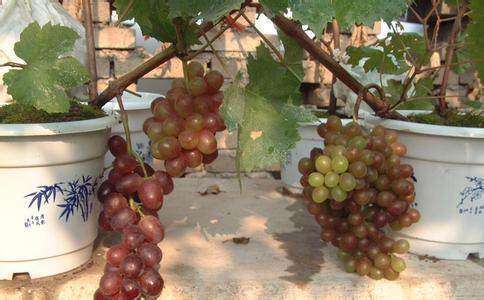
It will soon be June, and the potted grape I painstakingly grew on the balcony for 2 years has finally borne fruit. Looking at the big grapes in cluster after cluster, eating them sweet and crisp, I am overjoyed. It bore so many that I simply cannot finish them all. Friends who like eating them, while they are fresh, come and have a taste.
I grew several varieties in pots. At the beginning I did not have much hope and was sort of growing them for fun, but unexpectedly they really did bear grapes, full of juice and bright in color. Not only are they delicious, they are also a beautiful scenic line, in no way inferior to any potted green plant. Potted grapes bear fruit early; with proper cultivation and management, they can bear fruit in two years, and each pot of grapes can produce 2-6 jin of fruit, with the most reaching 8-10 jin. To do a good job with potted grapes, you need to master the following technical points.
1. What varieties should be potted? Mainly Kyoho, Jingya, Jingchao, Izuju, Black Olympia, Jingyu, Phoenix No. 51, Delaware, 8611, 8612, Zizhenxiang, American Black Seedless and Brown Seedless, Jingzaojing, etc., but potted grapes should as much as possible focus on varieties with weak growth vigor.
2. Potting and soil changing: For the seedlings, cuttings can be inserted directly into the flower pot to root and be cultivated into seedlings. When rooting cuttings, it is best to insert 2 cuttings per pot so that one can be selected and kept. After the plant has grown in the pot for 1-2 years, it needs to be repotted and have its soil changed once. When repotting and changing the soil, part of the dead roots should be cut away, and water should be given immediately afterward to help the plant recover its growth.
3. Watering: When watering, the water temperature should preferably be close to the temperature of the potting soil. Watering before 10 a.m. and after 4 p.m. is best; the water quality should be good, and the number of waterings should depend on the season. If it is winter in the north, remove the pot stand, water thoroughly, dig a trench or hole and bury them, with a burial depth of 30-50cm from the ground surface. If you find it troublesome, just come to my home and eat them.