How to make a Camellia nitidissima bonsai, a step-by-step guide
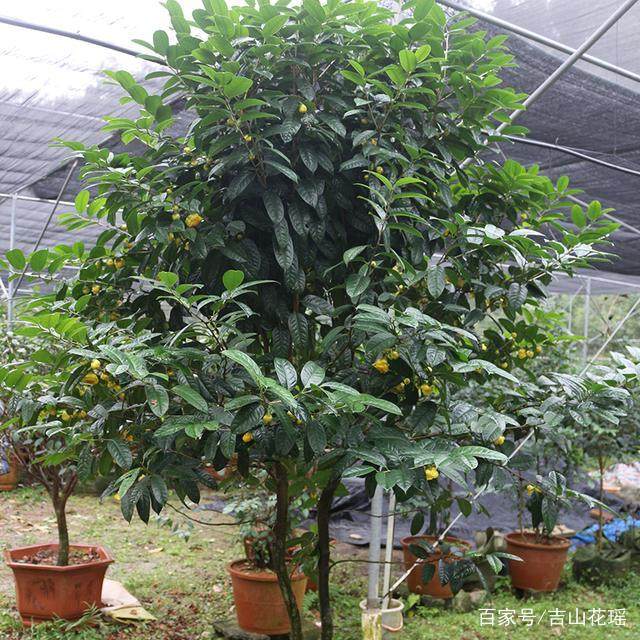
How do you make a Camellia nitidissima bonsai?
A Camellia nitidissima bonsai is a bonsai made from a Camellia nitidissima tree, and it has excellent ornamental value. Existing Camellia nitidissima bonsai all lack a complete production and manufacturing system, which makes Camellia nitidissima bonsai appear uneven, not only unattractive but also wasting a large amount of Camellia nitidissima tree resources.
1. The pot selection process is: for home use, choose clay pots for cultivation as the best option; for commercial use, purple clay pots are better, as they can improve the ornamental effect.
2. The potting soil selection process is: choose a slightly acidic, loose, fertile mixed soil as the potting soil. The ratio of the mixed soil is 6 parts garden soil, 3 parts pine needle humus soil, and 1-2 parts sandy soil.
3. The material selection process is: choose varieties with lower plants, slow growth, smaller leaves and soft branches; and it is best to use 2-3 year old cutting seedlings or seedling plants, as the branches and trunks are easy to process and shape, and during the cultivation process they can be trimmed, pruned, hung with wire and wrapped according to shaping needs to cultivate various tree forms; in addition, old plants such as Camellia oleifera can be dug up and through the trunk-cutting grafting method or by using old residual stumps to sprout new branches, and then through continuous shaping, an aged Camellia nitidissima stump bonsai can be made.
4. The shaping adjustment process includes: the trunk treatment process, the branch treatment process and the leaf treatment process.
The trunk treatment process is:
Double-trunk style shaping: produce a secondary trunk near the base of the trunk, and make the main and secondary trunks different in height;
Slanting-trunk style shaping: the trunk should lean without lying flat, slanting about 45 degrees, with the slanting part of the trunk being more than one half of the total length, and the crown should finally be set upright;
Curved-trunk style shaping: the trunk should curve naturally, with moderate proportions; it should not bend back and forth on the same vertical plane, but should be staggered front and back, first backward then forward, and finally leaning slightly forward;
Cliff-hanging style shaping: the trunk should hang downward, and can be formed by bending and tying or twisting with lead wire.
The branch treatment process is: for branch length, the side branches are the longest, the back branches are next, and the trunk-covering branches are the shortest; viewed from top to bottom, the bottom branches are the longest, gradually becoming shorter from bottom to top; the length and density of the branches must be coordinated with the height and thickness of the trunk; overly dense branches can be pruned moderately; do not let them bloom in the first 2-3 years; during the adjustment process, do not be too hasty, because the branches are relatively brittle and hard, especially the branching points, which break easily, so special care is needed.
The leaf treatment process is: for the relationship between leaves, many leaves should not feel cumbersome, and few leaves should not appear sparse; especially pay attention to appropriate fertilizing and watering during the cultivation process, so that the leaves are as small as possible. Jishan Huayao