How to care for anthurium? Remember these points, no yellow leaves and bright red blooms every day
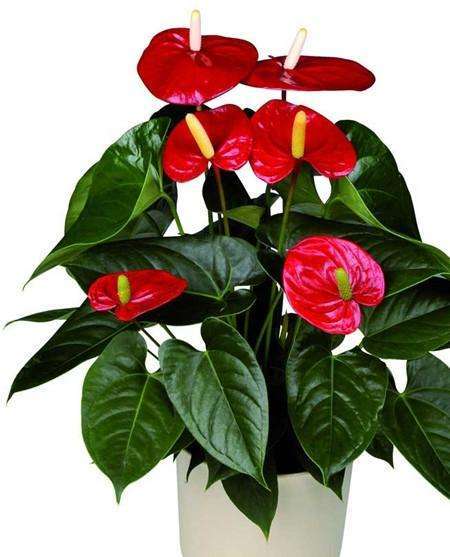
Anthurium has emerald green leaves and brilliant red flowers. If well cared for, each leaf comes with a flower. Its flowers are very special, with bright colors that look very festive. Because of its gorgeous colors, it is used by flower shops as a Chinese New Year flower, carrying the meaning of great prospects, and is deeply loved by flower enthusiasts
Anthurium is a perennial herbaceous flower that prefers a warm and humid environment. Light should not be too strong. Its roots are fleshy roots, and it prefers loose, breathable soil with good drainage. It is afraid of drought and afraid of blazing sun. Its growing temperature is 20°C to 35°C
Many flower enthusiasts say that the anthurium they grow has spots and yellow leaves, and they don't know the reason. Today let's talk about the reasons.
1. Normal leaf aging and yellowing
When anthurium leaves age naturally, the lower old leaves gradually turn yellow. The yellow is relatively bright, and there are generally no various spots. At the same time as aging, the old leaves also become thinner. This is a normal phenomenon
2. Overwatering
If anthurium is watered too much, generally the new leaves on top first turn yellow-green, then the leaves turn yellow, but it is not a very bright yellow, it is a brownish yellow, or the leaves directly rot and eventually fall off. At this time, place the anthurium in a ventilated environment and dry the potting soil in time. If the soil is not breathable, it is best to change the potting soil
3. Bacterial infection
After anthurium is infected with bacteria, yellow-brown spots will appear on the leaves. These spots will spread from bottom to top, patch by patch, causing the entire leaf to rot and die. If the situation is not serious, you can use carbendazim mixed with water at a ratio of 1:1000 to spray the leaves and drench the roots, once a week, and generally it will improve after two or three times
4. Too much fertilizer
When anthurium is fertilized too much, the tips or edges of old leaves turn yellow. The yellow is relatively bright, and the leaves are relatively glossy. At the same time, new leaves will become uneven and increasingly thick. Anthurium flowers and grows leaves at the same time, so fertilization should use a multi-element fertilizer, supplying both leaf growth and flowering. During the growing season, use it once every half month, with light fertilizer applied frequently, which is most beneficial to the growth of anthurium
5. Drought yellowing
If anthurium is not watered for a long time, or the potting soil is compacted and water cannot penetrate, the leaves will turn yellow from drought. The yellow is relatively bright, the leaves will become thinner, and the leaves will gradually dry out from yellowing. Anthurium requires a warm and humid environment and requires relatively high air humidity. Usually, you should spray water on the leaves more often to keep the potting soil slightly moist, but do not let water accumulate
6. Sunburn yellowing
Anthurium's requirements for light
are not high. It needs relatively bright scattered light. If the light is too strong, sunburn spots are likely to appear and the leaves will dry up. So we should usually place it in a place with sufficient scattered light for care
Anthurium does not have high requirements for soil and is also relatively tolerant of alkalinity. You can use tap water directly to water the flowers.
Pay attention to these points, and the anthurium you grow will be bright red, flowering and growing leaves every day, especially beautiful