9 flowering plants suitable for planting on slopes, beautiful and preventing landslides
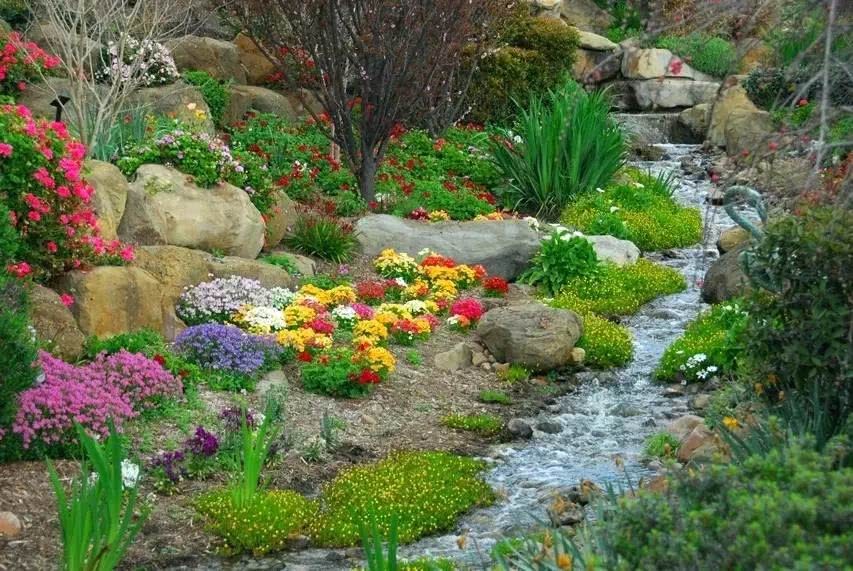
If your yard happens to have a slope, it can be quite troublesome. It is relatively difficult to set up a small garden in an environment with hillsides or slopes. Wind and rain can cause serious damage to the surface soil of slopes, and natural soil erosion is also difficult to deal with, but you can plant more low-maintenance plants.
On slopes, most people lay grid-shaped concrete blocks to prevent soil erosion, and some also plant grass, but it is best to plant trees, flowers and grasses with deeper root systems. The following plants are all worth considering, and their ornamental value is quite good.
You need to consider the area and size of the slope before considering what plants to grow. If the slope is greater than 30%, you need to artificially create some terraced platforms before using them to plant trees. Retaining walls will be effective in the short term, but their long-term effect will gradually weaken.
Which option do you like? Take a look at the following 9 ornamental flowers suitable for planting on slopes.
1. Creeping thyme
Creeping thyme has good adaptability to various soils and can prevent weeds from growing thickly. Its flowering period is extremely long, and both its flowers and leaves have a fresh and rich fragrance. It also has a creeping growth habit, can keep spreading, and quickly grows into a large patch.
Creeping thyme is an excellent groundcover flower. It is very common in parks and various lawns. Its ornamental value during the flowering period is especially great, and it rarely suffers from pests and diseases. It can also sterilise and repel insects, and has a purifying effect on harmful gases in the environment.
2. Upright rosemary
Rosemary also has upright and creeping types. Upright rosemary is suitable for planting on slopes. They like warm and cool environments and have good drought tolerance, making them very suitable in places without frost all year round.
Rosemary does not need frequent care. As long as the soil drainage is relatively good and waterlogging is avoided, they can grow well. In addition to not watering frequently, you should also pay attention to giving appropriate light and applying a little light fertiliser during the growing season. Rosemary grows very slowly.
3. Butterfly bush
Butterfly bush can adapt well to various environments. It likes warm and humid environments all year round, but it can also survive under dry environmental conditions. It is not fussy about soil, but it is best to choose loose, fertile, well-drained, slightly acidic soil. It is also very suitable for growing on slopes.
4. Phyla canescens
Phyla canescens is a very low-growing ornamental plant that can maintain a verdant state all year round. Its leaves grow very densely. In spring and autumn, it can produce beautiful and fresh small flowers. The petals are white, and the stamens are a mix of pink and yellow, looking very charming. It has strong drought tolerance and can grow without watering.
5. Pachysandra terminalis
Pachysandra terminalis grows relatively slowly at first, and after the second or third year it grows very rapidly. The plant is not too tall. This plant is generally used to prevent soil erosion. Pachysandra terminalis can even grow under pine trees, and in spring it produces very delicate white flowers.
6. Callistemon
Callistemon is a very common plant in more southern regions. It grows well in warm and humid environments all year round and likes hot and dry environments. It grows especially vigorously under the scorching summer sun, but its drawbacks are that it is not cold-tolerant and not shade-tolerant. It likes slightly acidic soil for cultivation and is not fussy about soil fertility and water retention capacity.
7. Mahonia
Mahonia is a common ornamental plant. Its cold tolerance is especially good. It grows especially well in shady or semi-shady places. With appropriate light, it can bloom and bear fruit, with strings of yellow flowers and small blue-purple berries. It is suitable for growing on some shady slopes and does not like scorching sun or waterlogging.
8. Purple-leaf barberry
Purple-leaf barberry is an especially easy-to-grow plant. It can grow in various environments. It can grow vigorously in both sunny and semi-shady places, but only when given as much light as possible will its leaves grow more brilliantly and turn purple. When there is insufficient sunlight, its leaves turn green.
9. Heuchera
If you have a shady slope and want to plant plants and flowers, Heuchera is a very good choice. Its shade tolerance is very good, and it likes to grow in loose, fertile and well-drained soil. Its cold tolerance is especially excellent, and it can survive at more than 30 degrees below zero.