Match Plants to Different Decor Styles to Elevate Your Home's Class
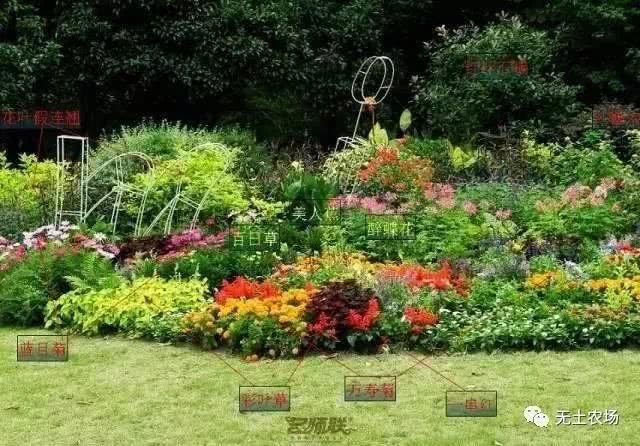
When it comes to pairing plants, there are no shortcuts
The more you look, the more plant names you remember, and the easier it becomes to learn
Remember a few common plant pairing rules
Trees, shrubs, flowering herbs, and ground cover are distributed by layers
Ground cover flowers serve mainly as accents, placed in front of or between shrubs, forming the first layer
Trimmed spherical shrubs form staggered clusters as the second layer, constituting the green framework, in relatively large amounts
Flowering shrubs are planted in small numbers but with staggered forms -- spherical crowns paired with slender crowns
Colored leaves paired with green leaves create rich visual effects
Broadleaf small trees or large trees: only 1-2 per group, or none at all
Evergreen trees: about 1-3
Used for planting areas around buildings and along both sides of roads in villa zones
When planting in clusters, pay attention to the opening and closing variations between clusters, leaving relatively large lawn areas between densely planted clusters. Plant clusters vary in the degree of staggering and combination at different positions, and can be roughly divided into 3 categories: commonly planted in green spaces, planted at structures, entrances and exits, and around buildings, and planted as boundaries for front-yard gardens. Mostly used in green space areas between buildings in garden townhouse zones.
Using extensive planting, alternating larger groups of trees and shrubs to form opening and closing layers, mainly used for public green space landscapes.
Every plant has its own characteristics, and your home decor style can also be paired with different plants to make your home's style even more elegant and refined. Which plants suit your home?
1. Modern Minimalist Style
Modern minimalist style is characterized above all by simplicity and crispness, with graceful lines, bright colors, and clean fluidity. It is a relatively versatile style in home decor, simple and practical yet full of vitality. There are not so many rules when it comes to plant selection, but slender, tall, fine-leaved plants are preferred.
Recommended plant: maidenhair fern
Growing conditions: care under indirect light, avoid direct sunlight; water frequently, keep the soil moist; requires relatively high humidity, mist around the plant when the air is dry.
Recommended plant: areca palm
Growing conditions: shade-tolerant, prefers a well-ventilated environment; when caring for it indoors, open windows regularly for ventilation; not cold-tolerant, in the Yangtze River basin and areas to the north it must be brought indoors for winter; during the growing season the potting soil must be kept moist, and when necessary mist the plant and its surroundings to maintain humidity.
2. Nordic Style
Nordic style is known for its cool aesthetic and is relatively popular among people in China. In fact, it shares a similar appeal with modern style. The overall tone is light, and the pairing is also relatively simple. Most companion plants are foliage plants.
Recommended plant: fiddle-leaf fig
Growing conditions: fiddle-leaf fig prefers a warm, humid environment with plenty of sunlight. When placed indoors, it grows well under indirect light. The soil should be kept moist rather than dry; it has relatively high water requirements.
Recommended plant: Swiss cheese plant
Growing conditions: avoid exposure to direct sunlight, prefers moisture, not drought-tolerant; when growing in pots, choose a loose, fertile, slightly acidic soil with good water retention and high water absorption.
3. Chinese Style
Chinese style is elegant and full of literary flavor, with simple and graceful forms, advocating natural charm, and fully embodying the spirit of traditional Chinese aesthetics. For plant selection, it is best to choose plants that the ancients compared to gentlemen, such as plum blossom, orchid, bamboo, and chrysanthemum, which can bring Chinese style to its fullest expression.
Recommended plant: clivia
Growing conditions: afraid of heat, not cold-tolerant, prefers a semi-shaded, humid environment, avoid direct sunlight; during the growing period ensure ventilation and keep the soil moist, but do not water too frequently; a loose, fertile, slightly acidic soil is preferred.
Recommended plant: asparagus fern
Growing conditions: requires a warm, humid, semi-shaded environment; in summer avoid direct sunlight, maintain air humidity, and provide ventilation and heat dissipation when temperatures exceed 20 degrees; in winter it is not tolerant of severe cold, so keep it warm and reduce watering frequency to avoid root rot.
4. Southeast Asian Style
Southeast Asian style is closer to nature and has a fresh feeling. The natural beauty of tropical rainforests combined with rich ethnic characteristics has swept the world. To add this strong tropical flavor, you can choose plants unique to Southeast Asia such as banana plants, palms, and bird of paradise.
Recommended plant: bird of paradise
Growing conditions: the growing environment must be warm, humid, and sunny; requires loose, fertile, slightly acidic sandy soil.
Recommended plant: Chinese fan palm
Growing conditions: prefers sunlight but cannot be exposed to harsh sun; needs to be placed in a spot indoors with ample sunlight; not drought-tolerant, needs to keep the soil moist, mist frequently to ensure sufficient air humidity.
5. Mediterranean Style
Mediterranean style is mainly about freedom. The colors chosen are usually quite distinctive or relatively bright, presenting a natural, fresh feeling, as if you can open your eyes and see the sea and the beach, displaying perfect natural scenery before everyone.
Recommended plant: lavender
Growing conditions: lavender prefers dry conditions and does not need much water. Apart from watering more during the growing season, a small amount of water in other seasons is sufficient; it prefers light, and if there is insufficient light it will develop poorly and grow weakly; lavender has a particularly developed root system and needs deep, loose, well-aerated, fertile soil.
Recommended plant: rosemary
Growing conditions: rosemary is not very strict about its growing environment; ventilation, keeping cool, and sufficient light are enough; promptly deal with excess or aged dead branches and leaves, and pick up fallen dead branches and leaves on the surface of the potting soil to avoid attracting pests and diseases.
LOVE. Soilless Farm
Soilless FarmShengguoju Mall
Discover the beauty of growing flowers