Detailed Explanation of Soilless Cultivation Techniques for Flowers and Bonsai
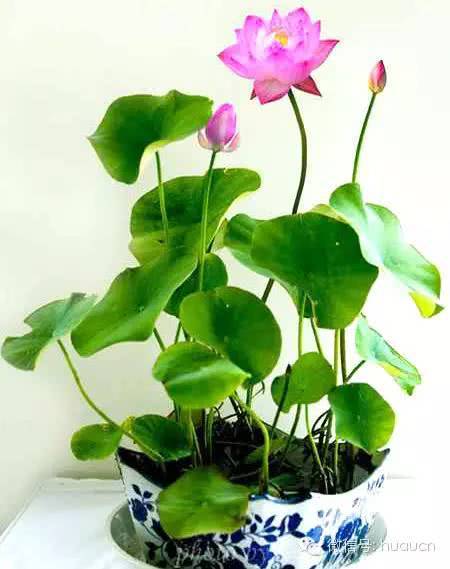
The soilless cultivation technique for flowers and bonsai is a new technique in which perlite, vermiculite or other lightweight stones are placed in a flowerpot (do not use decayed plant matter such as sawdust, cottonseed hulls or similar organic humus as the growing medium), and then an inorganic salt nutrient solution is added to grow flowers. The nutrient solution contains a variety of disinfecting agents, and the medium in the pot is inorganic mineral stone, so it does not breed insects, ants or bacteria; it also contains all the elements needed for plant growth, which can make plants grow quickly, keep the plants robust, produce more flowers that bloom earlier, larger and more fragrant, and make them cold-resistant and heat-tolerant with few pests and diseases. Today, only soilless-cultivated flowers and bonsai can be exported and enter advanced countries; soilless-cultivated indoor plants are even more suitable for display in high-grade hotels, restaurants, shopping malls, office buildings and modern homes. Soilless-cultivated flowers and bonsai have good market sales prospects. In addition, fresh cut flowers and vegetables grown in greenhouses with nutrient solution can increase yield and quality and supply the market in all four seasons.
Soilless Bonsai: Overview of the Five Major Schools of Bonsai Art
The conversion of flowers and bonsai from soil cultivation to soilless cultivation can be carried out at any time. The specific operation method is as follows: Preparing the nutrient solution: dilute the commercially available soilless cultivation nutrient solution with tap water according to the specified multiple.
Removing from the pot: use your fingers to push the plant root system together with the soil up and out through the hole at the bottom of the pot. Washing the roots: soak the soil-covered root system in water close to the ambient temperature, and carefully wash the soil from around the roots. Try not to damage the roots during the operation.
Soaking in solution: place the washed roots in the prepared nutrient solution and soak for 10 minutes to allow them to fully absorb nutrients. Potting and pouring the solution: choose a plastic pot, ceramic pot or porcelain pot of suitable size (with a Saucer) and wash it clean. Place a piece of tile or plug with plastic gauze at the hole in the bottom of the pot, then put a small amount of perlite and vermiculite into the pot. Next, place the plant roots into the pot and hold them upright; then fill perlite, vermiculite and other lightweight mineral stone around the root system, gently shake the flowerpot so that the perlite and other materials fit closely around the roots. Immediately pour the prepared nutrient solution around the edges until liquid flows out from the hole in the bottom of the pot. Reinforcing the root system: although substrates such as perlite and vermiculite are loose and breathable, they do not easily hold the plant root system firmly in place. If necessary, broken pieces of quartz stone, ax-cut stone and the like can be placed on top of the substrate around the root system to reinforce the roots and prevent lodging. For tree-stump bonsai, quartz stone and the like can likewise be used to help press the roots down; unusual stones paired with ancient trees add even more natural scenery.
Finishing and misting: spray some clean water on the leaf surfaces of the potted plants and tidy up their appearance.
Daily management: for soilless-cultivated flowers and bonsai, the requirements for environmental conditions such as light, temperature and humidity are no different from those for soil cultivation. In ordinary management, attention should be paid to watering with tap water at the appropriate time. During the plant growth period, apply nutrient solution once a week, with the amount depending on the size of the plant. For flowers whose leaves grow slowly, reduce the amount as appropriate; in winter or during the plant's dormant period, apply once a month or once every half month. Indoor foliage plants can survive under low-light conditions and should have the amount of nutrient solution reduced. The nutrient solution can also be used for foliar spraying. For soilless cultivation of flowers and bonsai, nutrient solutions such as "Meihua", "Jinyue" and "Xuanwu" can generally be used, or the "Hongmei" soilless cultivation nutrient solution, which sells well in Shanghai and other places, can be used.
If preparing it yourself, you can use the following formula designed by the author:
I. Major elements
Potassium nitrate 3 grams; calcium nitrate 5 grams; magnesium sulfate 3 grams; ammonium phosphate 2 grams; potassium sulfate 1 gram; potassium dihydrogen phosphate 1 gram.
II. Trace elements
Disodium edetate 100 mg; ferrous sulfate 75 mg; boric acid 30 mg; manganese sulfate 20 mg; zinc sulfate 5 mg; copper sulfate 1 mg; ammonium molybdate 2 mg.
Cultivation: Tips for Growing Colored Calla Lilies
III. Tap water
5000 ml (5 kg). Prepare the major elements and trace elements separately into solutions, then mix them together. The amount of trace elements used is very small and not easy to weigh, so the trace elements can be prepared in an expanded multiple and then extracted in a proportionally reduced amount. For example, the trace elements can be weighed out at 100 times the amount and made into a solution, then 1% of that solution can be extracted, which is the required amount. The nutrient solution made according to the above formula is slightly acidic, with a pH value of 6.2. The nutrient solution is non-toxic, odorless, clean and hygienic, and can be stored for a long time. It is suitable for indoor and outdoor flowers and bonsai such as Monstera deliciosa, Philodendron, Ficus elastica, Dracaena fragrans, palm family plants, Dieffenbachia, Codiaeum variegatum, Calathea, ferns, African violet, Phalaenopsis, Paphiopedilum, begonias, Clivia, five-needle pine, Aglaia odorata, camellia, Chinese rose, fuchsia, jasmine, rhododendron and kumquat.
·END·
An interactive platform for enthusiasts of growing flowers, planting flowers and green plants to exchange ideas, show off and have fun. An online home for sharing flower cultivation methods and household flower-growing tips. A fresh flower subscription platform.
Fresh flowers: hyacinth|stock|plum blossom| carnation|camellia|kalanchoe|jasmine|gardenia|peach blossom|balloon flower|osmanthus| calla lily|lily|forget-me-not|clivia|apricot blossom|honeysuckle|Aglaia odorata|peony|sunflower|chrysanthemum|Serissa japonica|crown of thorns|tulip|narcissus
Green plants: poinsettia|money tree|pothos|spider plant|Alocasia|lucky bamboo|asparagus fern|aloe|ivy|Anthurium|Monstera deliciosa|Bougainvillea|Albizia julibrissin|Spathiphyllum|Schefflera|boxwood|sago palm|rubber plant|maidenhair fern|snake plant|
huau.cn
……
Search the public account "Huayou" or "huaucn" to get the latest information
For business cooperation and promotion. Please contact WeChat private ID:ihuaucn