Potted vegetables grow like crazy the moment they touch soil, thriving even with no care at all, and they keep growing back after every harvest, giving you a year of eating.
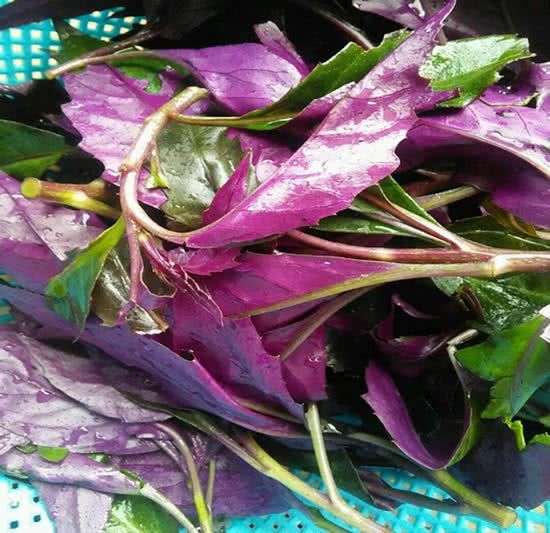
This vegetable is called Gynura bicolor (purple-backed vegetable). It has a very distinctive look: the front of the leaf is green and the back is purplish-red. It is eaten more often in summer and has high nutritional value. Growing it in pots is also very easy, basically the type that comes alive the moment it touches soil.
Gynura bicolor is commonly seen in the southern regions of our country. When eaten, its stems and leaves are usually used, and the leaves are especially tender, with a distinctive fresh fragrance. Its taste is also very unique, and it contains a variety of trace elements, protein and vitamins, and also has the effect of cooling the blood and clearing internal heat.
The whole Gynura bicolor plant is fleshy, usually about 45 cm tall, with a well-developed root system, many shallow-growing lateral roots, a strong ability to regrow, and strong adaptability. It grows robustly even without fertilizer, and is not prone to pests and diseases, making it very suitable for home pot growing.
Care tips for potted Gynura bicolor:
1. Gynura bicolor has strong branching and strong stress resistance, and is relatively tolerant of drought, heat and poor soil. Its optimum growing temperature is 20-30°C. It is fairly shade-tolerant, but grows more robustly under ample sunlight.
2. It is not cold-tolerant. At temperatures above 10°C it can be planted and harvested all year round, and when the temperature is below 10°C it basically stops growing.
3. It is not demanding about soil. Ordinary garden soil can be used as the growing medium, but loose, fertile soil rich in organic matter is best. Water it so the soil dries and gets wet alternately.
4. From then on, each time you harvest, leave 2-3 leaves at the lower part as regrowth for the next crop, so it grows more and more vigorously. With proper care it can be harvested in a year-round cycle, and after each harvest spray on a decomposed organic fertilizer or a dedicated foliar fertilizer.
When growing Gynura bicolor in a pot at home, once its new shoots have grown to about 12 cm, you can pinch them off to eat, and after pinching it will continue to grow.