Grow succulents this way in May, and the leaves will get more and more beautiful, plumping up in just one month
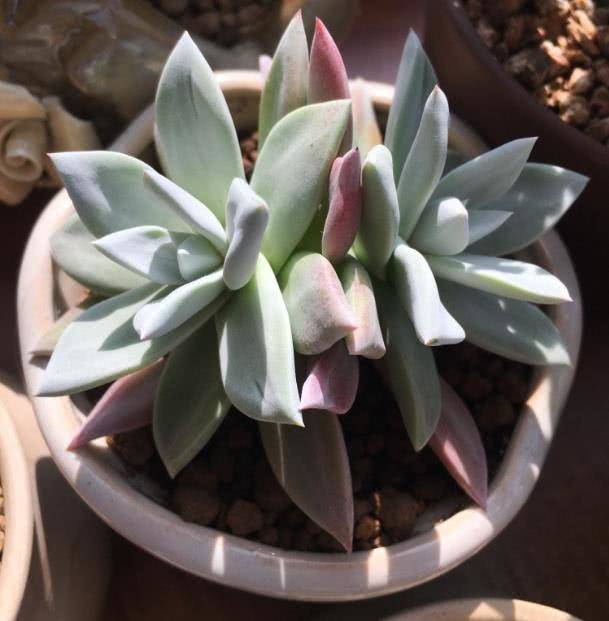
For succulents in May, because the climate is suitable, pests also begin to become active, so attention should be paid to prevention and control. It is also necessary to improve the ventilation conditions of the succulent growing environment to prevent the plants from developing abnormal yellow spots, black spots, blister spots and other physiological diseases due to infection by pathogens. If any are found, fungicides should be sprayed promptly to prevent the infection from spreading. This month, "summer-growing type" succulents can also continue to be repotted, and propagated by division, cuttings, grafting and sowing. For some flowering succulents, manual pollination can also be carried out for breeding.
If your area gets a lot of rain and you do not plan to shelter your succulents from it, the proportion of gritty soil can reach 70 to 80 percent. Even when grown indoors, where the succulents will not be exposed to rain, the proportion of gritty soil should still be around 60 percent. At this time the air humidity is relatively high, moisture evaporates very slowly, and the soil also needs good breathability. Because after repotting, the succulents will immediately enter their growing period, and at this time the soil also needs more nutrients. We can put some nutrient-rich materials into the soil, such as eggshells, bones, plant ash and so on. The soil used can also have some humus soil mixed in, which also contains a lot of nutrients.
As for the soil mix for succulents, generally speaking, a half-and-half ratio of gritty soil and peat soil is fine. It allows for easy drainage, and the soil will also retain some moisture, so the soil will not be in an overly dry environment. But when combined with the environment, you have to adapt accordingly. Adjust the ratio as you like; the mix that suits the environment is the best soil mix for succulents.
As for "winter-growing type" succulents such as Lithops and Haworthia truncata that are about to go dormant, although the plants have not completely stopped growing, growth is very slow and they need little water, so watering should be appropriately controlled and the potting soil kept semi-dry. Plants of the genus Haworthia in the Aloe family and certain varieties of cacti have certain requirements for air humidity. When the environment is dry, sprinkle water on the plants promptly to increase air humidity.
Many people stress that water must be controlled in summer, and so many newly initiated flower lovers understand this to mean cutting off water in summer. In fact, controlling water does not mean cutting off water. It means that after the temperature exceeds 30 degrees, some plants enter a dormant state. They almost stop growing, which also reduces their consumption. In that case, if we still supply water normally, the water cannot be used up, and it will rot the plant's roots.
Many flower lovers are trying to find ways to get through the summer, and some even think of putting them in an air-conditioned room during the day and moving them outside for open-air growing at night (to be honest, I had such a naive idea last year too). In fact, if you really do this, the succulents will certainly die. Because they can never adapt to the environment. The adaptability of plants is probably greater than you can imagine. No matter how hot the environment is, as long as it stays in such an environment all along, it will gradually adapt. But if you make it cold one moment and hot the next, it will not know what to do and will gradually be tormented to death.
This is a gathering place for succulent lovers, sharing succulent care tips. You are welcome to follow and exchange ideas.