What to Do When a Fish Pond Has an Overgrowth of Algae? Practical Methods to Help You Solve It
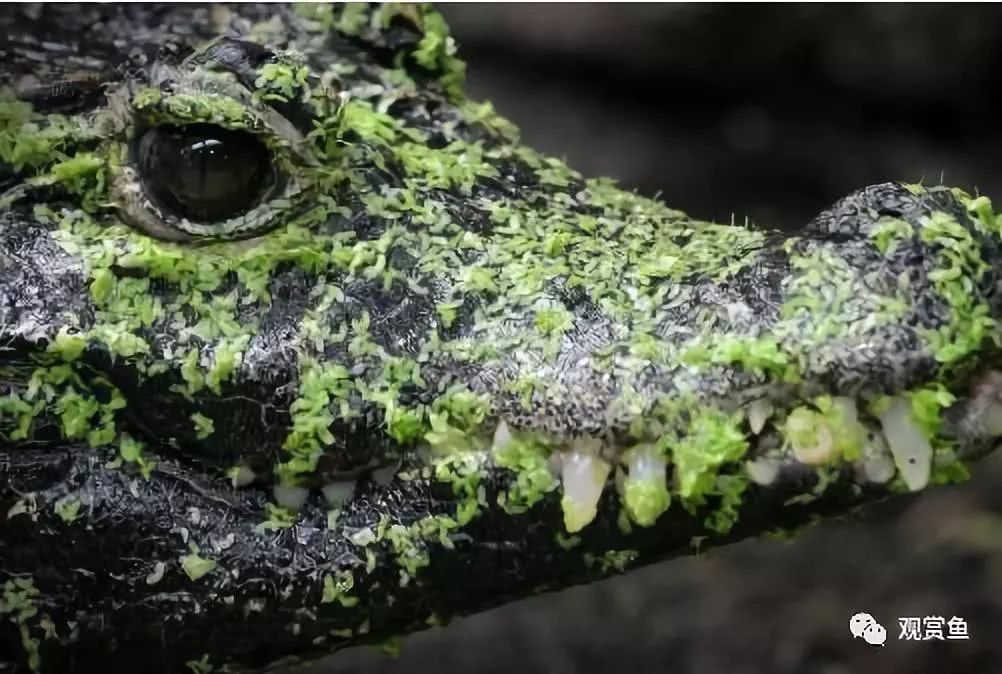
Algae are lower plants that live widely in water and soil. A moderate amount of algae in water has a beneficial effect on ornamental fish. Many algae are rich in nutrients and can serve as supplementary food for tropical fish, especially fry and fish that like to eat algae, such as mollies and various Corydoras catfish. However, excessive algae can attach to the leaf surfaces of aquatic plants, tank walls and filtration equipment, seriously affecting the photosynthesis of aquatic plants. If not removed in time, it will inevitably cause the environment inside the tank to deteriorate and threaten the survival of ornamental fish. In addition, some algae multiplying in large numbers in ponds can spoil the water quality and produce toxic substances, thereby causing fish diseases.
Today we will list several types of algae that commonly occur in fish ponds and the control measures for them.
I. Diatoms
Diatoms are an important group of plankton. They are widely distributed, diverse in species and large in number, and are known as the "grasslands" of the ocean. They are the main primary producers in water bodies and are natural food for filter-feeding fish. But they can also gradually darken the color of fish tank walls and of the coral sand, quartz sand and rocks in the tank until they turn brown, affecting the ornamental effect. Therefore, the suitable quantity of diatoms in the culture water body must be controlled.
Diatoms, also known as "hu zao", belong to the phylum Bacillariophyta (diatoms), with about 300 genera and more than 11,200 species, ranging in size from 3.5 to 4 mm; diatoms with a diameter of 20 to 30 microns are generally the most common. Diatoms are a type of single-celled plant with pigment bodies (chromatophores), often linked by several or many individual cells into filaments and various forms of colonies. There is 1 nucleus, usually located in the center of the cell; the vegetative body has no flagella, while the sperm has flagella of the tinsel type. Diatoms have various shapes, including round, polygonal, spindle-shaped, S-shaped, crescent-shaped and bow-shaped, etc. They can grow in freshwater, seawater, moist ground surfaces, rocks, plants and tank walls, and glide on solid surfaces. According to their lifestyle, diatoms can be divided into benthic diatoms and planktonic diatoms. In aquariums, the commonly seen ones are benthic diatoms, such as Navicula sp., Navicuta latissima Gregory, Amphora sp., Cocconeis sp. and Achnanthes Orientalis Hustedt, etc. Diatoms mainly reproduce by division. In nature, diatoms reproduce very quickly; some species can double about every 4 hours, and can even produce hundreds of millions of offspring within a few days. This can also happen in fish tanks with suitable conditions.
The main causes of diatoms occurring in ornamental fish culture water bodies are:
1. When setting up the tank, the bottom sand of the aquarium was not washed clean, which is the main cause of diatom occurrence, and it is most likely to occur when setting up the tank in winter;
2. In the early stage of tank setup, the filtration system is not yet fully established, and beneficial microorganisms cannot grow and reproduce normally.
3. Nitrates in the water are too high.
4. Organic matter in the water is not completely decomposed;
5. Lighting factor. A light intensity of 2000 to 3000 lux is most suitable for the growth of benthic diatoms. This intensity is equivalent to a 40-watt fluorescent lamp, which is exactly the normal light intensity in a fish tank, so diatoms are very likely to appear in fish tanks. Usually diatoms find it very difficult to reproduce below 3°C, while aquatic plants and coral reef organisms generally live in tropical and subtropical regions, and the diatoms they bring reproduce most easily at 24 to 27°C. This is why diatoms easily reproduce in aquariums in summer.
Control measures
Use fish, snails or shrimp that feed on algae to eliminate them; this is an effective way to control algae. For example, the bristlenose pleco and the whiptail catfish are both ideal fish species that are most effective at swallowing diatoms.
II. Green moss
Green moss is the general name for filamentous green algae, commonly known as "yang tai yi", and includes three groups: Spirogyra, Zygnema and Mougeotia. Green moss likes to grow in shallow water with high transparency in fish ponds. When suitable ecological conditions are encountered (water temperature around 20°C), it begins to grow. In the early stage it grows into strands of dark green fine filaments, attached to the bottom of the water like hair, with a sticky feel when touched; afterward it gradually multiplies, floating in the water like a net; after aging it becomes cotton-like and floats on the water surface, appearing yellow-green. It occurs all over the country, mostly from May to September.
Harm
When green moss multiplies in large amounts, it seriously consumes the inorganic salts in the water body, disrupting the normal nutrient metabolism in the pond water. The water quality becomes lean and clear, and the plankton needed by fish fry and fingerlings cannot multiply in large numbers, affecting the feeding and activity of ornamental fish, thereby affecting their growth and reducing the survival rate; at the same time, a large amount of green moss attaches to the body surface of ornamental fish, affecting their growth and commercial value. When fry or small fingerlings burrow into the green moss, they are often entangled by the tangled filaments, cannot swim out and die; in addition, green moss dies and decomposes in the pond, producing toxic substances such as hydrogen sulfide and hydroxylamine, increasing the ammonia nitrogen content in the pond and reducing dissolved oxygen in the water, thereby causing hypoxia and poisoning in ornamental fish.
Treatment measures
1. Prevention
1) Thoroughly clear the pond with quicklime, which can kill green moss. After clearing the pond, keep the pond water at a depth of more than 1 m so that green moss cannot multiply in large amounts.
2) Thoroughly disinfect the fish pond before filling with water. After filling with water, promptly make the water body appear yellow-green, with transparency controlled at 25 to 35 cm, so that food organisms can multiply as quickly as possible, thereby controlling the growth of green moss.
3) When stocking fry in seasons with lower water temperatures, it is not advisable to plant aquatic plants immediately as shade material, in order to prevent introducing green moss.
4) Change the water in time to avoid excessively high organic matter content in the water.
5) Before stocking fry, apply 75 g of plant ash per cubic meter of water body over the green moss, so that it cannot receive sunlight and cannot carry out photosynthesis, causing it to die in large numbers.
2. Treatment
1) When green moss multiplies in large amounts, you can remove the green moss from the bottom of the pond on a sunny afternoon, and then apply 75 to 150 g of organic fertilizer according to whether the pond water is fertile or lean.
2) Sprinkle copper sulfate over the whole pond at a concentration of 0.7 to 1 g per cubic meter, focusing on places densely covered with green moss. While applying the chemical, continuously stir the green moss with a tool, which can effectively kill it. Change the water after 2 days to avoid deterioration of water quality caused by other harmful gases produced by the decomposition of dead green moss.
3) Use 80 g of raw gypsum powder per cubic meter of water body, apply it evenly over the whole pond in 3 separate applications in the afternoon after feeding the fish, then add water to a depth of 10 to 20 cm, with an interval of 3 to 4 days each time. If the green moss is severe, the dosage can be increased to 100 g; this method generally will not make the water body lean, nor will it cause hypoxia, so the killing effect is relatively significant.
4) Spread quicklime at places where the algae gather, 100 to 150 g per square meter, to kill green moss by suddenly changing the pH of the local water body.
5) Use a new type of water quality improver, "Tai Zao Jing" (developed by Shanghai Zhongyu Science and Technology Research Institute), at 0.75 g per cubic meter of water body; one application can kill it.
6) If traditional methods such as broadcasting copper sulfate over the whole pond and covering with plant ash are not satisfactory, you can use the bleaching powder spot-killing method. That is, choose a windless sunny morning, dilute bleaching powder (with an effective chlorine content of 30%) with water, and pour it pile by pile on top of the green mud moss. If any "moss" is missed, apply it again the next day. By using the strong killing power of bleaching powder, the green mud moss degenerates and turns white, and finally dies; the effect is very good.
Notes on diagnosis and treatment
When using chemicals to kill algae, choose continuously sunny weather and carry out the treatment in the morning, and turn on the aerator in time after applying the chemical. If, while killing algae, 4.5 to 7.5 g of biological preparations such as photosynthetic bacteria are also sprinkled per cubic meter, the effect will be even better.
III. Water net algae
Water net algae, commonly known as green filamentous hair algae, belongs to the family Hydrodictyaceae. The algal body is composed of many long cylindrical cells interconnected to form a net-like body, and each "mesh" is formed by 5 to 6 cells connected together. Because its aggregation resembles a net bag, it is called water net algae. This alga likes to grow in fertile water rich in organic matter, and usually occurs in spring.
Harm
Similar to green moss.
Control measures
Same as for green moss.
IV. Prymnesium parvum (small three-hair golden algae)
Prymnesium parvum, also known as soil-dwelling algae, belongs to the phylum Chrysophyta, family Prymnesiaceae. It is a cold-water single-celled alga. The algal body is oval, oblong-elliptical or spherical, easily deformed, with a size of 6 to 15 mm x 5 to 13.5 mm. The front end of the cell has 3 flagella borne at the tip, and the body contains 2 yellow-green chromatophores. It can occur in all four seasons, mainly in spring, autumn and winter, because the water temperature is lower at these times, other algae are affected by low temperature, reproduce slowly and are fewer in number, while Prymnesium parvum can tolerate low temperatures and becomes the dominant species, causing harm. It generally occurs less in summer, because summer water temperatures are high, and other algae such as blue-green algae and green algae multiply in large numbers, thereby inhibiting the development of Prymnesium parvum. However, when water quality conditions are suitable for the reproduction of Prymnesium parvum, especially when the total ammonia content is low, blue-green algae and green algae cannot become the dominant species, and harm from Prymnesium parvum can still occur. Prymnesium parvum is mainly prevalent in ponds in saline-alkali areas of northern China. Ponds, reservoirs and so on, ornamental fish, cultured fish, wild miscellaneous fish and aquatic animals that breathe with gills can all be affected.
Symptoms and harm
Prymnesium parvum can produce various toxins such as fish toxin, cytotoxin, neurotoxin and hemolysin, causing fish poisoning. In the early stage of the disease, when the toxicity in the water is relatively low, ornamental fish mostly begin to show restlessness in the morning, with increased respiratory rate, rapid swimming and uncertain direction, and soon become calm. The response gradually becomes sluggish, and the fish begin to gather in the shallow corners of the fish pond. A few fish remain motionless and are arranged irregularly; when disturbed, they swim toward deep water and soon return. The fish body secretes a large amount of mucus, the base of the pectoral fins is obviously congested, and the bases of all fins gradually become congested. The rear part of the fish body becomes lighter in color, and the response becomes even more sluggish and calm, with the respiratory rate gradually decreasing. As the poisoning time lengthens, the fish body after the pectoral fins becomes paralyzed and rigid; the caudal fin, dorsal fin and pelvic fin can no longer swing, only the pectoral fins can still swing, but the fish cannot move forward and does not react when touched. The operculum, around the eyes, lower jaw and body surface are congested, with red spots of varying sizes, some merging into patches; the fish spread over the four corners of the pond and shallow areas, generally with the head facing the shore, arranged neatly, motionless under the water surface, but not gasping at the surface, and showing no reaction even when disturbed. At this time, breathing is extremely weak, 22 times per minute or less, and before death there is intermittent struggling breathing, and soon they lose balance and die; however, some fish still maintain a natural posture after death.
Key points for diagnosis
1. On-site diagnosis: A preliminary diagnosis can be made based on the time of onset, epidemiological characteristics and symptoms.
2. Laboratory diagnosis: When the density of Prymnesium parvum in the water exceeds 30 million per liter, the water appears light yellow-brown and can cause the death of ornamental fish. Therefore, laboratory diagnosis should use a microscope to count their number, and at the same time check whether the gills and internal organs of the diseased fish have symptoms of infectious diseases and parasitic infestation.
Control measures
1. Preventive measures
1) Maintaining appropriate fertility of the pond water in winter and early spring is the best way to prevent Prymnesium parvum poisoning, because when the water quality is more fertile, beneficial algae reproduce quickly, which can effectively inhibit the proliferation of Prymnesium parvum and prevent its harm.
2) When the total ammonia content in the water exceeds 0.25 g/cubic m, Prymnesium parvum cannot become the dominant species in the fish pond. Therefore, when the water body transparency is relatively high, ammonium salt fertilizers, urea, ammonia water, nitrogen-phosphorus compound fertilizers and organic fertilizers can be applied to the pond regularly in small amounts and multiple times, so that total ammonia is stabilized at 0.25 to 1 g per cubic meter of water body, which can play an effective preventive role.
2. When Prymnesium parvum poisoning occurs, the following treatments can be adopted.
1) For ornamental fish that have just shown symptoms of Prymnesium parvum poisoning, they can be transferred to a fish pond with more fertile water quality or given fresh water, which can effectively alleviate the poisoning symptoms.
2) Sprinkle copper sulfate over the whole pond at a concentration of 0.7 to 1 g per cubic meter, and the next day sprinkle 0.3% clay slurry water over the whole pond. By using the polarity of clay particles to adsorb toxins, the poisoning symptoms of the fish can be greatly alleviated and they can return to normal within 12 to 24 hours. However, copper sulfate only has the function of inhibiting the secretion of toxins by Prymnesium parvum, or weakening the activity of the fish toxin, but it cannot kill it. When the efficacy of the chemical weakens, the disease can occur again under certain conditions.
3) When a relatively large number of Prymnesium parvum is found in the water, ammonium salt drugs containing about 20% ammonia (such as ammonium sulfate, ammonium chloride, ammonium bicarbonate) can be sprinkled over the whole pond at 20 g per cubic meter of water body, or 12 g of urea per cubic meter of water body, so that the ammonium ions in the water reach 0.06 to 0.1 g per cubic meter, which can cause Prymnesium parvum to swell and disintegrate until all die. However, caution should be used for fry and fingerlings sensitive to ammonia.
Notes on diagnosis and treatment - differential diagnosis
Be careful to distinguish it from pond asphyxiation. Prymnesium parvum poisoning does not show surface gasping, but rather remaining motionless under the water surface, and the dissolved oxygen content in the water is relatively high and transparency is relatively high. Microscopic examination shows a large amount of Prymnesium parvum in the water, and the fin bases, operculum and around the eyes of poisoned fish are congested.
That is all for today. If the above algae occur in your aquarium, you might as well learn from these methods. I hope it can help all fish keepers. If there are any shortcomings, I welcome your guidance.