Propagating figs from cuttings in balcony flower pots: one branch bears hundreds of delicious fruits
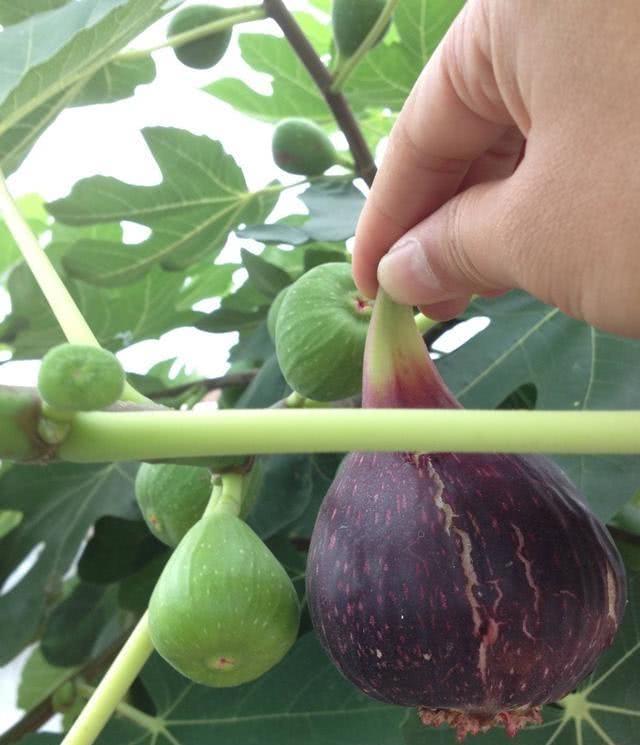
The fig has broad, thick leaves, and its fruits are jade-green with a flush of purple-red, sweet and soft, and especially delicious. It generally bears fruit twice a year, a summer crop and an autumn crop. The summer fruits are larger, but fewer in number; the fruits that ripen in autumn are sweeter, loose and glutinous, soft in the mouth, and you can never eat enough.
If you have enough space, good light and decent ventilation, you can grow one on your own balcony. Its leaves are broad and excellent at trapping dust, and the fruits have even more benefits: they lubricate the intestines and relieve constipation, strengthen the stomach and aid digestion, prevent and fight cancer, and so on, with many benefits.
How can you properly care for a potted fig on a balcony? Let us take a look together:
1. Choosing the container and potting soil
Because the fig's root system is very well developed, when choosing a container try to use a larger one with good breathability; wooden boxes, cement-type containers, purple clay-type containers and pottery are all quite good.
The larger the container and the more potting soil, the more freely the roots can spread and absorb, which is good for the plant's vigorous growth; with a small container the roots go shallow, and later you will still have to repot it, which is too much trouble.
The requirements for potting soil are not too high, as long as it is loose and breathable, with good drainage. You can mix garden soil and leaf mould, and it is best to add some coarse sand and rotted manure, which suits its growth needs very well.
2. Choosing the seedling
Figs can be propagated by cuttings and by layering, and of course you can also buy ready-made ones from a flower shop to grow.
For cuttings, choose thick, sturdy branches more than one year old, cut them off, and insert them into the prepared potting soil, keeping the soil moist; they will quickly grow roots.
Layering means a branch that was layered under the mother plant in the previous year. It has already grown its own root system, so you just move it into a pot, and it survives very easily.
Whichever method you use, you must choose one with thick, sturdy branches and jade-green leaves; a branch like this will survive once planted and is easy to grow.
3. Growth
During the growing period, the fig's height should be kept under control, because as a potted plant it cannot grow too tall. So do not water too frequently; as long as the leaves are not wilting, there is no need to water.
During the fig's growing period, you can use some nitrogen fertilizer. Once the fig fruits begin to take shape, then use some phosphorus fertilizer and potassium fertilizer; this can promote fruit development and avoid excessive vegetative growth of branches and leaves. You must control fertilizing well and avoid excess fertilizer.
Figs have very few pests and diseases, so there is basically no need to spray chemicals; they are an eco-friendly fruit tree.
Figs love sunlight, so during the growing period you must give them plenty of light; only then can their branches grow thick and sturdy and their leaves grow plump and thick.
4. Pruning
For figs more than one year old, prune them appropriately in spring. If you do not want them too tall, you can cut off the tip of the main branch so it splits into several side branches; when these have grown to a certain length, cut off the tips of the side branches to encourage thick, well-developed branches. This can prevent excessive vegetative growth of branches and leaves, make the plant more ventilated and breathable, help flower bud differentiation, and improve the quality and quantity of the fruit.
5. Overwintering
Figs go dormant in winter. In northern households, heating or air conditioning is used in winter; if the plant is placed in a living room at about 25°C room temperature, it will sprout too early, which is bad for the next year's fruiting. In winter you can put it on a balcony without heating or in another room, so it will neither freeze nor sprout too early.
A fig cared for well like this can bear dozens of fruits from a single plant, big and sweet, more than you can eat. Come and give it a try.