Making bonsai from wild-collected stumps: learn these steps so you don't dig in vain
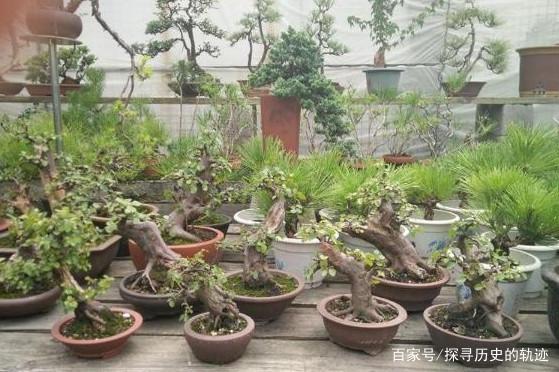
At this moment, people who love bonsai have reached the end of the road, and this is just a good opportunity to dig up stumps. Tree stumps are dug out of the fields, and because they are a natural shape, they are rarely seen. How much natural charm the broken limbs have, the more valuable the bonsai, the more valuable it is. But now is the tricky stage of producing bonsai from tree stumps. Assuming we cannot learn these rules, a good stump will still be raised and die.
Before digging up a stump, it is important to ask about the cost of the stump, to avoid spontaneous digging and waste. Old tree stumps suitable for bonsai are usually found on barren hills and wasteland. The best time to dig up a stump is late autumn or early spring. When digging up the stump, cut off as many useless branches as possible and dig out the stump as much as possible, to improve the survival rate of transplanting on the great occasion.
Because tree stumps spread in nature, their development is extremely poor, especially when the stump spreads on a cliff. To protect the roots, the stump breaks the main root, then breaks the side roots. Some trees are suitable for digging on rainy or cloudy days. Regarding loosening, do not damage the root. After digging out the stump, it is best to sprinkle mud on the roots, equivalent to a protective film on the stump.
The stump part should be handled accurately. Ash can be treated with white wax language. The wound can be gently wiped with white wax. This is to increase the plant's evaporation of water, and then the pot can heal normally. After a period of time, once the stump is found to have survived, it is not too early to fertilize and ventilate to shade and sun. It can heal under cold and weak light conditions.