How to grow a dawn redwood bonsai? I'll teach you the cultivation methods so you can grow a bonsai that everyone praises.
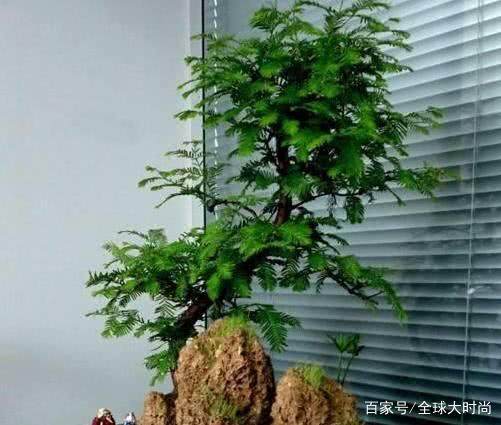
Many people care about bonsai, but only care about its ungraceful drift, yet the environment is unhealthy; the beauty of a bonsai lies in its natural beauty. Because bonsai landscapes go from potted plant to pot, they are destined by heaven to grow in a very limited space, and nutrients are limited, so they need even more careful care. The quality of the bonsai soil is an important factor determining the development of the bonsai root system.
At present, many bonsai enthusiasts are not particularly particular about bonsai. The bonsai soil is not suitable for bonsai growth, and the bonsai grows slowly and unhealthily. When many people are growing bonsai, the stump is planted directly in the soil as a bonsai. The water, oxygen and nutrients in the soil are insufficient, and over time it easily compacts. If it is kept in the yard for several years, it cannot drain during the rainy season.
This is unhealthy for the bonsai to live in, and if it is not changed in recent years the potted bonsai will die. The choice of pot soil is based on three principles: strong water-holding capacity, strong drainage capacity, and good ventilation performance. The average cutting length is 10-15 cm, with the upper end straight and 1 cm from the bud, and the lower end slanted. The cuttings on the cutting branches are better on the young twigs and the middle part of young trees, inserted at harvest time. In order to improve the survival rate of dawn redwood cuttings,
in addition to growth hormone treatment, the "hibernation" method is usually adopted. In winter, cut sturdy branches from the mother tree and cut them into cuttings. According to thickness, bundle every 60-100 into a bundle, choose a leeward, sunny and well-drained place, soak the bottom of the bundle into the foundation, bury the soil in wet sand, and cover with a roof mat to prevent the soil from freezing and rain and snow from entering and rotting. Practice has proven that after winter storage the dawn redwood tissue softens.
The cuttings root easily, which helps improve the survival rate and the seedling rate. After the dawn redwood is cut, the temperature rises only a little. As long as the seedbed is properly watered and kept moist, there is no need to shade it immediately. This can raise the soil temperature and help the cuttings root. In late April, shading begins. After the dog days, the shading time gradually shortens. After the first half of September, it will no longer be shaded. Frequently weed the grass.
After the cuttings root, use 2-3 topdressings to promote seedling growth. 1, 200 times or 50% dehumidifying powder can control dawn redwood blight; 50% dehumidifying powder, at the end of the plum rain season 4-5 times, once every 10-15 d, can control disease occurrence. To control the large bagworm moth, use 800-1000 times matrine or 1000 times moth-killing larvae. Softwood cuttings: can be done in mid-May in early summer.
In the early morning, cut 14-18 cm long branches from the swollen part of the bud scale at the base of the branch, trim off excess leaves, leaving only the top 4-6, soak the cut base with 300-500 mg/L naphthalene acetic acid for 3-5 seconds, then insert into the seedbed, 6-7 cm deep, 180-200 plants per sq m, water thoroughly and keep the base. The quality is moist. It can be sprayed 3-5 times a day according to weather conditions, or covered with a small hoop shed to retain moisture, usually rooting in 20-50 days. After rooting, the small hoop shed should be removed, once every 20 days, and then transplanted in the second half of the year.