What to do after Phalaenopsis orchid flowers fade? Two methods to make it bloom a second time
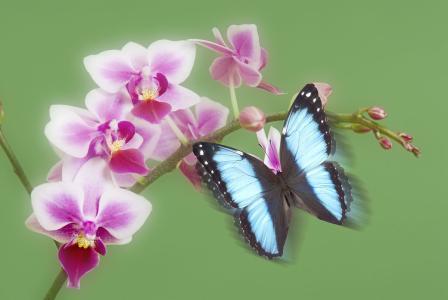
The Phalaenopsis orchid is a plant that can produce flowers shaped like butterflies. Many flower lovers also like to grow one or two Phalaenopsis orchids in their own homes, and quite a few have said that the Phalaenopsis orchids they grow fade very easily. So next, the editor will bring you how to handle Phalaenopsis orchids after the flowers fade, and how to make a Phalaenopsis orchid bloom a second time.
Generally speaking, the flowering period of a Phalaenopsis orchid is rather long, and in a single bloom it can produce more than 10 flowers. The flowering period of a Phalaenopsis orchid is long, and the time it can be enjoyed is also relatively long, but after a Phalaenopsis orchid has bloomed once, should it be thrown away? In fact, if you carry out the following handling, a Phalaenopsis orchid can bloom a second time.
Handling methods: 1. Pruning at the flower stem
(1) After the Phalaenopsis orchid you are growing has finished blooming, you can prune the flower stem of the Phalaenopsis orchid at the 4th to 5th node counted from the base.
(2) After pruning, continue growing the Phalaenopsis orchid, and in the months after growing it, the Phalaenopsis orchid can continue to bloom.
(3) Maintain soil moisture.
Pros and cons of method one: Pruning the Phalaenopsis orchid is actually meant to let the Phalaenopsis orchid bloom twice in a single year, but the downside is that this will cause overall damage to the Phalaenopsis orchid. It may be that by next year, the blooming of the Phalaenopsis orchid will weaken quite a bit.
2. Pruning at the base
(1) Prune at the base of the flower stem of the Phalaenopsis orchid.
(2) After pruning, grow it according to normal growing methods.
(3) Ensure the soil moisture level and prevent waterlogging.
Pros and cons of method two: After pruning the Phalaenopsis orchid at the base of the flower stem, doing so can ensure that the Phalaenopsis orchid suffers the least possible loss, and by next year the Phalaenopsis orchid will grow better, and the flowers it produces will also be more numerous. But if you do it this way, it may cause the Phalaenopsis orchid to be unable to bloom twice within one year this year.
Both methods can make the Phalaenopsis orchid better, and what is worth our attention is this: after growing the Phalaenopsis orchid, you should maintain the moisture level of the Phalaenopsis orchid's soil so that the Phalaenopsis orchid can smoothly absorb water, while also preventing waterlogging from occurring for the Phalaenopsis orchid. In summer, you should place the Phalaenopsis orchid in a place with sufficient light, and water supply should also be appropriately reduced to prevent waterlogging for the Phalaenopsis orchid, and in summer it is best not to fertilize the Phalaenopsis orchid, and wait until summer has passed before starting to maintain the fertilizer amount.
That is the end of the editor's discussion this time on how to handle Phalaenopsis orchids. If flower lovers still know of better handling methods, why not come and share them with the editor? The editor would be very happy to discuss them with you all.