Spend your limited energy on what truly matters.
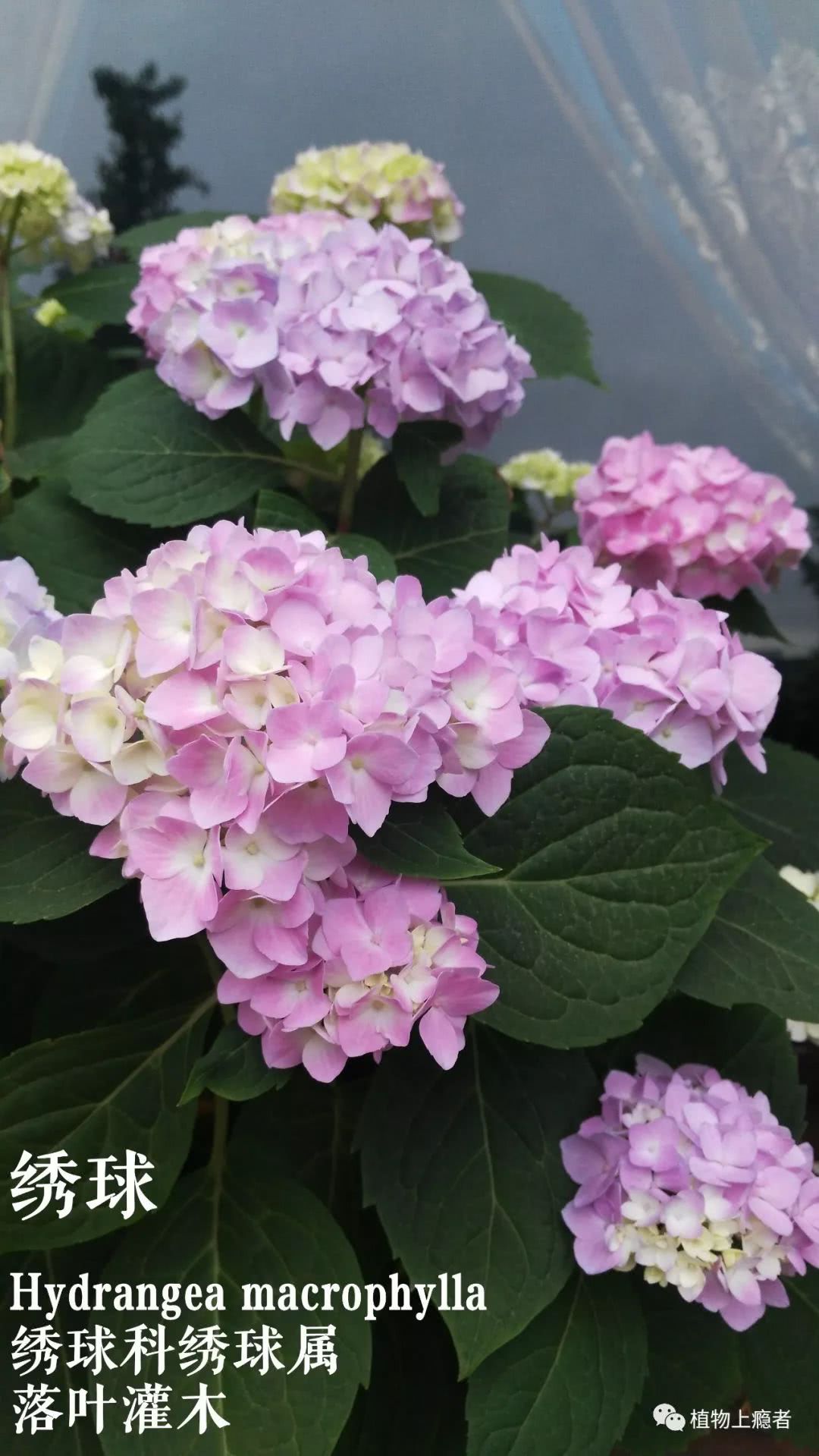
Last month, downstairs from the office, gardeners carried a pile of hydrangea seedlings down from a truck and nimbly planted them in the ground, dividing them into three clumps. Before long, these little seedlings, only a dozen or so cm tall, had sprouted tender green-yellow flower buds at their tips, packed densely into a cluster. After another week, hey, they had actually bloomed - pink, blue, blue-purple, a lush profusion of blossoms.
Everything was incredibly fast, like the trending topics that cycle through social media every three to five days, and like this era itself.
At home this year I also planted two pots of hydrangeas, small seedlings divided from a friend's garden, healthy in body and handsome in appearance, but growing rather slowly. I am not in a hurry either; let them grow slowly.
For a long time, I felt rather indifferent toward hydrangeas, probably because the flowers are too densely packed, giving me a feeling of breathlessness. Of course, one man's meat is another man's poison - plenty of friends around me love them very much.
Pale blue hydrangea flowers really do have a summer coolness, and their temperament is quite refined. Its most famous garden variety is called Endless Summer, wujinxia, a name that is also very beautiful. According to introduction, the characteristic of Endless Summer is that it can also bloom on new branches produced in the current year, achieving a new breakthrough in breeding technology. In addition, the flower quantity is extremely large, and as the name suggests, the flowering period lasts the entire summer.
A major characteristic of hydrangeas is that the flowers change color, meaning they can produce flowers of different colors in soils of different acidity and alkalinity. Blue hydrangeas are produced in acidic soil, while in alkaline soil the flowers turn to the red range, the so-called "acid blue, alkaline red" - the aluminum sulfate content in the soil determines the flower color. When in full bloom, the edges of the flowers first turn blue or red, then gradually suffuse the entire flower; as the flowers near the end of bloom, they turn blue-purple or pink-purple again.
Green small flower buds
Color change begins at the edges
Alkaline soil produces pink flowers
These hydrangeas downstairs from the office, in the same patch of soil, produce both blue and red flowers. I wonder what method was used.
However, this feature is only the surface appearance. The true characteristic of hydrangeas is that they have two different kinds of flowers: sterile flowers and fertile flowers.
What you usually see, sitting atop the branches like a big ball, which foreigners vividly call "mopheads", are all sterile flowers. A standard sterile flower has 4 "petals", and there are also often 5-petaled or 3-petaled ones.
The quotes around "petals" are there to say that they are not true petals. In essence, these are specialized sepals that look like petals. Of course, sterile flowers are also flowers; the raised little dot at the center of the flower is the extremely degenerated petals and stamens. Usually this little dot stays just like that, but when conditions are suitable or when it is in a good mood, it will also bloom, except that it cannot marry and have children.
The degenerated small flower sometimes also blooms
The true flowers, namely the fertile flowers, are very small and very few in number, hidden away in darkness within the flower cluster formed by the sterile flowers. The true flower has a cup-shaped calyx tube and 5-lobed sepals, 5 slender small petals of the same color as the sterile flowers, 10 stamens, and 3 stigmas. But according to my observation, those with 4 stigmas are also not few.
The fertile flowers hidden below
In the bud stage, it is easier to observe the fertile flowers. On the green small buds, the 5 petals arranged in valvate fashion are clearly visible. On this point, bees are obviously more discerning than our naked eyes.
I always felt hydrangeas looked very much like artificial flowers, and later I found the reason - its flowers (mainly the sterile flowers) can bloom for a very, very long time. This characteristic makes hydrangeas very suitable for cut flowers, bouquets, and even dried flowers. In foreign interior design images, hydrangea flowers can also often be seen. The reason hydrangeas can stay in bloom for so long without fading is that a large number of sterile flowers need not waste energy on blooming and fruiting; the strength saved can of course "just keep being beautiful like this".
Photogenic both indoors and outdoors, image from the internet
The genus name Hydrangea comes from the Greek roots hydro, water, + angeion, vessel, referring to the fruit shape of plants in this genus resembling a water jug. The species epithet macrophylla means large-leaved. Hydrangea leaves are opposite, with a long pointed tip at the apex, a wedge-shaped base, coarsely serrate margins, lateral veins curving upward near the margin, and very well-developed reticulate veins.
Leaves decussate, with coarse teeth on the margins
Compared with the hydrangea, the bees visiting Hydrangea macrophylla var. normalis clearly have it much easier. Exactly opposite to the hydrangea, the fertile flowers of mountain hydrangea far outnumber the sterile flowers, and all are arranged at the branch tips in a horizontal plane, with no need to expend effort to push through clouds to see the sun. The sterile flowers are arranged on the outer edge of the inflorescence - usually 8 of them, like holding hands to form a circle, enclosing the fertile flowers inside.
In horticulture, mountain hydrangea is also relatively common, and its colors are many. Its leaf shape is very similar to that of the hydrangea, and the plant is usually somewhat taller and larger. Flora of China lists it as a variety of the hydrangea.
Mountain hydrangea
Fertile flower with 10 stamens, 3 stigmas
There is a type of flower that at first glance looks quite similar to mountain hydrangea, such as the doublefile viburnum (Viburnum plicatum f. tomentosum) and Tianmu guelder rose (Viburnum opulus subsp. calvescens). Their inflorescences are also composed of a central cluster of tiny fertile flowers plus a ring of conspicuous sterile flowers at the edge. In the past, friends often sent pictures to ask, and I too was foolishly unable to tell them apart. This time, after studying them seriously, I found that telling them apart is not difficult.
Tianmu guelder rose, photographed by Yan Chao
Doublefile viburnum, photographed by Liuyue Nanshanxue
The doublefile viburnum and guelder rose and the like all come from the genus Viburnum in the family Adoxaceae. The most direct and accurate way to distinguish Viburnum from Hydrangea is to count the stamens: Viburnum has 5 stamens, while the fertile flowers of Hydrangea usually have 10 stamens. For plants, the most essential difference is the difference in sexual organs.
The stamens of Viburnum are all 5
In addition, there is another simple way to distinguish them: the sterile flowers of Hydrangea have a raised little dot at the center (an extremely degenerated flower), and the petal-like sepals are usually 4. The sterile flowers of Viburnum have no little dot at the center and are usually 5-lobed - not 5-petaled. Because Viburnum is gamopetalous, and below the corolla lobes there is always a corolla tube, long or short.
Hydrangea sterile flowers have a raised little dot at the center, Viburnum does not
Whether Viburnum or Hydrangea, in evolutionary terms they have clearly chosen the same path: the sterile flowers are only responsible for being beautifully blooming, in charge of attracting bees and butterflies; the unremarkable fertile flowers are solely responsible for reproduction, only in charge of bearing offspring and carrying on the family. Flowers, like people, all have limited energy. Through this division of labor, they achieve "spending limited energy on what truly matters", making them veritable successful essentialists.
In the age of fragmentation, this is a rare advantage, and also a goal I have always strived toward.
The article and plant images (unless otherwise credited) are all original works by the author
If you like it, please share, thank you for your support
Plant Addict
WeChat ID: plantfiend
Discover the unique beauty of every plant