Care for succulents this way to easily replenish nutrients for strong roots and green leaves
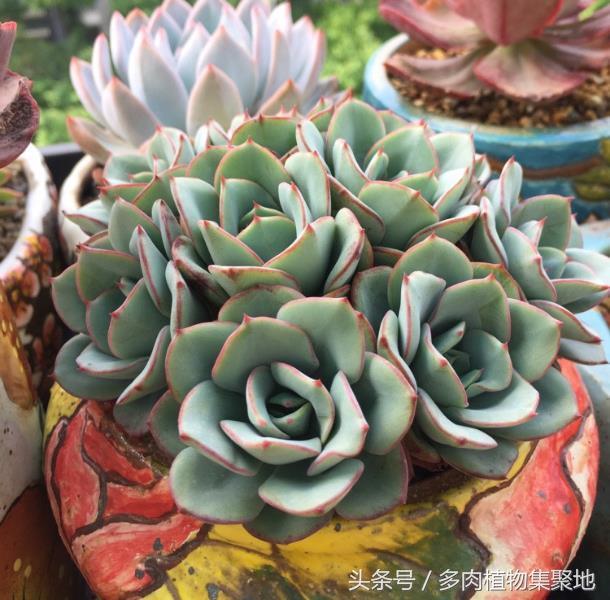
Eggshells, various bones. Eggshells, various leftover bones: after washing off the egg liquid and grease, let them dry, then crush them into powder and put them in the soil. Some bones are hard to crush, so you can break them with a small hammer. Larger bones can be placed at the bottom of the soil, which can enhance the soil's drainage, and the effect of replenishing nutrients is also very good.
In the past, using eggshells to grow flowers and vegetables worked quite well, so they should also be usable for succulents. Besides, throwing eggshells away feels like a waste, so just dry the eggshells, crush them and bury a little in the soil. Not to mention, the succulents grew quite sturdy. In fact, eggs are a natural fertilizer of phosphorus, potassium and calcium, and are very beneficial for growing succulents. However, it is best to process them first before use. First, the eggshells must be washed; if not washed, they easily stink, and the egg white remaining in the eggshells may make the soil clump. The eggshells should preferably be crushed, which helps absorption. Then you can fry them in a pan before mixing them into the soil, which can prevent the eggshells from breeding insects.
How exactly do you do it? You can filter off the egg white from the eggshells and collect them, or rinse them with clean water, otherwise they easily attract insects. Put them in the sun to bake for a week until they become very brittle. Use a tool to crush them, and crush them very finely, to about the size of fine sand. Put the crushed eggshells into a container, then add vinegar (without salt), wait for it to react for a month, and it is ready to use.
Dilute the eggshell vinegar solution; the ratio of solution to water is 1:10. It can be used to water flowers. Acid-loving potted plants love it very much, such as gardenias, azaleas and camellias, and it can make them more vigorous. Be sure to dilute it before use! Rice washing water can also be used to grow flowers. Rice washing water is a fertilizer we commonly use, but it must be fermented before use. Using it directly easily attracts fungus gnats and also easily causes pest problems. After fermentation, this problem will not occur; after fermentation, just dilute it with water before use.
Using rice washing water to water succulents: rice washing water is rich in nutrients, but if it ferments in the soil, it easily attracts fungus gnats. Moreover, since eggshells have already been added to the succulent soil, the nutrients are already plentiful enough, and using rice washing water easily produces the opposite effect; the succulents may get root burn. But if succulents have too many nutrients, they are not only prone to growing leggy, but may also get root burn and cause root rot. If succulent lovers are interested and want to try it, they should still be cautious.
The soil for succulents must be changed after being used for a certain period, because the soil no longer has nutrients, which is not suitable for the continued growth of succulents. If you grow relatively few succulents, then it does not hurt to throw the soil away, but if you grow quite a lot, the soil thrown away every year is enough to make you feel distressed for quite a while. So what should you do? How to recycle and reuse it is a big problem. If the nutrients are insufficient, then replenish the nutrients. You can gather the replaced soil, spread eggshells, melon peels and so on on top, water more to filter out toxic substances, and by the next spring, the soil can be reused with succulent medium added.
This is a gathering place for succulent lovers, sharing succulent care tips. You are welcome to follow and exchange ideas.