Succulent Leaf Cutting Propagation Tips to Help You Fill a Pot with Abundant Growth
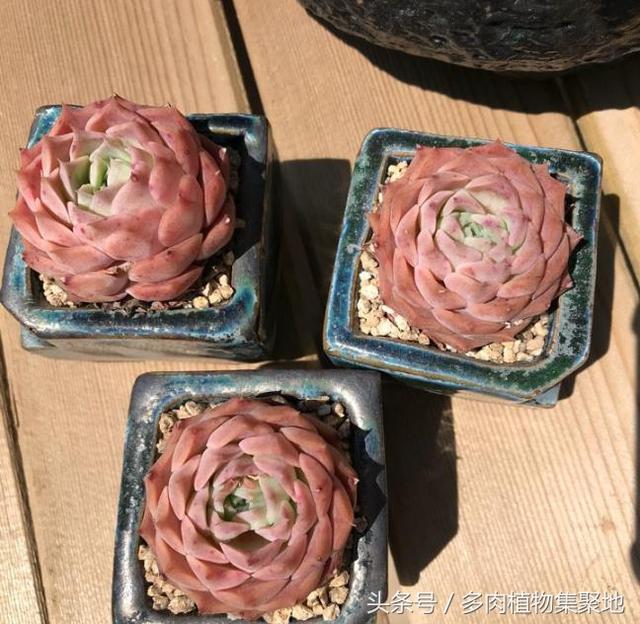
Those familiar with succulents know that they are plants with extremely strong vitality, one manifestation of which is their extremely high cutting success rate and reproductive capacity. Whether it is a stem or a single leaf, as long as it is in a suitable environment, it can smoothly take root and reproduce. The best time for cuttings is spring and autumn, when rooting and sprouting are faster. That is, use succulent leaves for leaf cuttings to achieve the effect of filling a pot, such as the succulents Pai Mudan (Graptoveria 'Titubans'), Longyue (Graptopetalum paraguayense), Hongzhiyu (Sedum rubrotinctum), Lanshilian (Echeveria glauca), Zizhenzhu (Echeveria 'Perle von Nurnberg'), etc. In a short time you can harvest a full pot.
First, is succulent leaf cutting really difficult? Actually, it is not as difficult as imagined. I often hear succulent enthusiasts ask whether to use moist soil or dry soil for leaf cuttings, and whether leaf cuttings need watering. The answers they get are often inconsistent, so they feel leaf cutting is very complicated, but the truth is actually not so. Usually, as long as it is a variety with a not-low leaf cutting success rate, and as long as the leaf is still healthy and plump, without black rot, wateriness, or drying up, it can wait for the time to root and sprout.
For leaf cuttings, choose common succulents first. Common ones are much easier to propagate by leaf cutting than expensive ones, because they have strong vitality, are easy to propagate, and are fast. It can be said that common succulents' leaf cutting success rate and the speed of rooting and sprouting are both faster than those of expensive ones. You should know that the reason expensive ones are expensive lies precisely in being difficult to propagate or having high propagation difficulty.
Are there any tips for leaf cutting? When breaking off leaves, do it before watering to reduce the chance of injury. Let the broken-off leaves dry for 2-3 days to heal the wounds, which can reduce the chance of black rot during leaf cutting. Dry soil leaf cutting is safer, while moist soil leaf cutting requires attention to ventilation. The leaf cutting method can be flat laying or slanted insertion. The former reduces the growth point's contact with soil and reduces infection, while the latter makes rooting convenient and saves time and effort.
After beheading a succulent, many small heads will sprout from the stump, which is very suitable for clustering succulents. This method is also very suitable for dealing with leggy succulents. The leaves after beheading can be used for leaf cuttings, and the original plant in the pot is used to grow new buds, turning one succulent into a pot. You can also plant several succulents of the same variety in the same pot. Each succulent grows some side buds, and then many small amounts accumulate into more, gradually gathering together, and naturally the pot becomes full.
In people's impression, succulents are not cold-resistant and not easy to overwinter. When the temperature is low, in order to prevent frost damage, reduce watering frequency. After less water, the concentration inside the succulent plant becomes higher, making it less likely to freeze. As in summer, control watering. In particular, varieties that are not cold-resistant can go completely without watering. Cold-intolerant varieties will drop leaves, completely stop growing, and enter dormancy. For these varieties, you can completely cut off water until spring and wait for new buds to revive. They must overwinter indoors, placed by a window with light, with as much sunlight as possible. At night, place the plants slightly farther from the window to prevent freezing.
This is a gathering place for succulent enthusiasts, sharing succulent care tips. You are welcome to follow and exchange ideas.