Put these granules at the bottom of a succulent pot, and new roots will grow fast without root rot
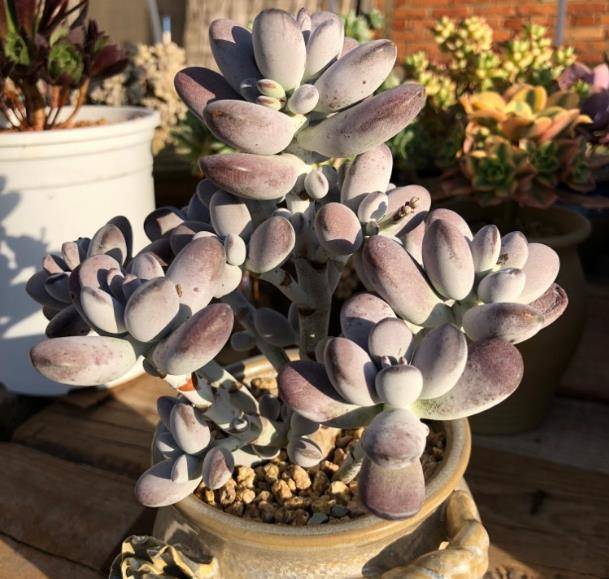
To ensure the soil has good drainage, you must put some large granules at the bottom of the pot, such as the widely used expanded clay pebbles, broken bricks and tiles, nut shells, etc. In addition, whether you are repotting or have just bought a succulent, be sure to trim the roots as much as possible. This not only lets the succulent grow new roots quickly, but also reduces the potential risk (rot) that dead roots bring to the succulent. I will not go into the root-trimming process.
Coal cinders are a commonly used ingredient, but almost all furnace slag contains sulfur. Succulents are not allergic to sulfur, and sulfur has sterilizing and pest-killing effects. From years of growing comparisons, plants grown with coal cinders are more resistant than those without, and are less prone to root rot and root mealybugs. Different growing media have different physical functions and different nutrients, and using a mix of several is definitely better than a single ingredient. Whichever ingredient you use, at the very least you must sun-dry it for several days before use.
When you first start growing succulents, be careful not to use vegetable garden soil or soil from flower beds, because this soil tends to compact after watering, causing the plant's roots to suffocate and die or rot. There are plenty of breathable soils around you, for example: river sand, which can be washed to remove the dust, with granules of 1-5 mm all being fine; coal cinders, which can be crushed to remove the dust, then washed to remove the fine powder, with the slightly larger pieces placed at the bottom of the pot.
Flower pot requirements: ceramic pots absorb water very well, so watering too much is not a big problem, and they can ease the negative effects caused by overwatering, but a ceramic pot becomes heavier after absorbing water, which requires the plant stand to be sturdy. The breathability of purple clay pots falls between that of clay pots and porcelain pots, and generally purple clay pots should be used for growing succulents. With purple clay pots you need to pay special attention to the thickness of the pot wall; the thinner the wall of the purple clay pot, the stronger the breathability, while the breathability of those with very thick walls is about the same as porcelain pots.
In caring for succulents, how much sunlight the placement location gets is also a very important point. Not only succulents, but all plants cannot survive in a place with completely no light. Without light, plants will grow like bean sprouts, frail and weak, and the color of the leaves will slowly fade. If you want them to maintain a healthy, good posture, you must give them the most appropriate sunlight. Lamp light cannot replace sunlight, and this point needs attention.
Summer is a season that is relatively hard for succulents to get through. During this period, humidity is high and there is more moisture in the air, and succulents can survive on the moisture in the air alone. Watering can be controlled. But if the plant is too small, it will also dry up if not given water for 3 months, so you can judge by the condition of the leaves and choose a cool night to replenish water.
This is a gathering place for succulent lovers, sharing succulent care tips; you are welcome to follow and exchange ideas.