How do you get a potted peony to burst with blooms? These few points below are very important
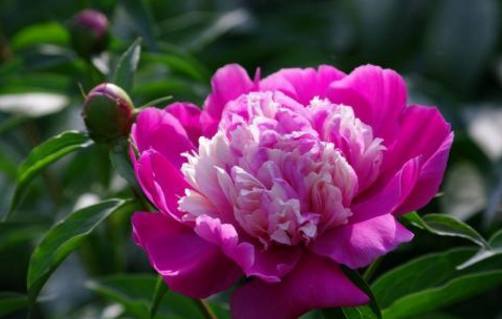
Peony flowers are brightly colored and resemble tree peonies; the flowers are large and slightly fragrant, with colors including pure white, slight red, deep red, purple-red, pale red, golden yellow, and more, and there are single-petaled and double-petaled types. Those usually grown for ornament are double-petaled varieties. Peony roots can be used as medicine, with a slightly bitter taste and effects such as pain relief.
I. Time to pot peonies
Peonies like light and tolerate cold, but do not tolerate high temperatures. Their temperature requirement is to endure low temperatures rather than high ones; they prefer cool conditions and fear heat. In the high-temperature season of summer, they easily grow poorly, so after the weather turns cool in autumn is the best season for potting.
II. Soil for potted peonies
Choose loose, fertile, slightly acidic sandy soil. Do not use alkaline soil. If the soil is too alkaline, it easily causes yellow leaves and can even lead to withering and death.
III. Temperature and light
Peonies tolerate cold and drought, like sunlight, and prefer a cool climate in summer. Potted peonies exposed to the scorching sun in midsummer easily develop scorched leaves, so shade should be provided in summer. Peony plants need sufficient light during the growing period. When light is too intense, environmental humidity can be appropriately increased to reduce the impact of excessive light on peony growth. However, high-density shading should not be used; a long period in a shaded environment will weaken peony growth and affect the flowering period.
Peony
IV. Watering and fertilizing
Peonies tolerate drought and do not need frequent watering. However, water demand is greatest before and after the flowering period. When the weather is relatively dry in spring, the frequency of watering can be appropriately increased. Because peonies have fleshy roots, be sure to pay attention to watering frequency. Never water too much or allow water to accumulate, otherwise it will cause root rot and lead to plant death.
Usually, fertilizer is applied three times a year. The first time is in spring, when new shoots emerge rapidly; the other two times are when the leaves and flower buds are extending. Fast-acting fertilizer is mainly used, also called flower-promoting fertilizer. Note that the amount of fertilizer must not be too much; excessive amounts can also burn the roots.
V. Shaping and pruning
1. Pruning time: About half a month after sprouting each spring, appropriate pruning should be carried out once. From mid-March to early May, during the bud stage, removing buds and some spent flowers of flowering peonies can reduce nutrient consumption. In late autumn, a third pruning should be carried out, cutting off weak branches, diseased branches, dead branches, and remnant leaves, cleaning the garden in time and burning the debris in a centralized way to reduce the occurrence of pests and diseases.
2. Pruning method: Remove all weak branches and keep only thick, strong branches. Keep only one relatively robust flower bud on each branch, or keep two larger flower buds. Keep only 5-7 leaves on a branch, and the rest can all be cut off.
Peony
VI. Precautions
1. Do not transplant frequently: After peonies are planted in a fixed spot, they should not be transplanted frequently, otherwise the roots will be damaged, affecting growth and flowering. Generally, repot once every 2-3 years. During this period, just loosen the soil and remove weeds in time.
2. Cut off dead leaves in time: For potted peonies, cut off withered branches and leaves after Frost's Descent to avoid breeding pests and diseases. In winter, there is also no need to move peonies indoors. They can be placed on a balcony or under the eaves in a sunny place, avoiding wind and snow. Just do not let the potting soil become too dry.
3. Care during the flowering period: Before peonies bloom, after side buds appear, remove excess buds in time. This can concentrate nutrients and encourage the terminal bud to produce large, beautiful flowers. After the flowers fade, if you are not collecting seeds, cut off the flower stalks directly to avoid seed production consuming nutrients.