Succulents come in all sorts of styles, and these few are great for beginners
Main text
Images and text: Too Much Thigh Meat
Succulent beginners should definitely not rush into buying succulents; some succulents are not something you can handle. You need to know that if you are unaware of many details, succulents can easily be killed. As a beginner, you can choose some succulents that just won't die. Today we'll introduce 5 succulents that are impossible to kill, so you can give them a try!
The Astrophytum asterias plant is a flat, round sphere, with a single plant diameter of 5-8 cm. The body has line-like grooves, somewhat like flattened meridians. It is native to the United States and Mexico. The Astrophytum asterias has no spines, only white star-shaped woolly hairs, breaking the childhood impression of cacti. It blooms with funnel-shaped yellow or red flowers at the top of the sphere. A mature Astrophytum asterias only needs repotting once every 5-6 years.
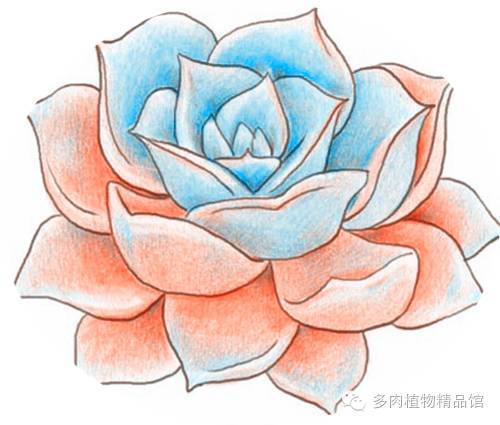
Echeveria 'Chihuahuaensis'
Echeveria 'Chihuahuaensis' is easy to grow and is now at a common-market price. During the spring and autumn growing seasons, keep it in sufficient light, and water using the principle of watering thoroughly only after the soil has dried out. In summer, when high temperatures bring on dormancy, pay attention to providing appropriate shade and controlling water, maintaining good ventilation, and avoiding excessive direct sun or prolonged rain, which can cause rot in high temperatures. In winter, move it indoors to a sunny spot, control water, and simply keep the potting soil dry.
Sedum rubrotinctum
Sedum rubrotinctum grows in both spring and autumn, so give it plenty of water, using the principle of not watering until dry and watering thoroughly when you do. In summer it enters dormancy and water can be controlled. In summer, water in the evening; in winter, water on a warmer afternoon. If the leaves curl up, it has begun to go dormant, and at this point water can be controlled. In autumn the leaves will automatically spread out and begin to grow, and at this time light exposure needs to be increased.
Sedeveria 'Fire' (Flame Tia)
Sedeveria 'Fire' likes a sunny, warm, and dry growing environment. It is drought-tolerant but not cold-tolerant. In summer, high temperatures will bring on dormancy, so pay attention to providing shade and controlling water, but do not shade too much, as this will cause leggy growth and the leaves will turn green. At the same time, ensure good ventilation to avoid rot in high temperatures. In autumn and winter, it can take full sun, which is the best season for it to color up, with fiery red leaves like flames. Water using the principle of watering thoroughly only after the soil has dried out. In winter, keep it above 5°C and water normally; below 5°C, gradually control and stop watering as it enters dormancy; below 0°C, be sure to keep the potting soil dry to prevent freezing.
Mammillaria plumosa may be the only succulent that still looks soft and cute even with spines, because its spines are snow-white, and the whole plant looks like a big snowball, simply adorable. Mammillaria plumosa is super easy to grow; during the growing season, water using the principle of watering thoroughly only after the soil has dried out, keep it in sufficient light, and just make sure there is ventilation. However, note that Mammillaria plumosa's growing season is in summer, and when temperatures are high it also needs appropriate shade to avoid prolonged direct sun. In the rainy season, ensure ventilation to prevent water accumulation from causing rot in high temperatures. In winter, when it drops below 2°C, you can stop watering and keep the potting soil dry.
Kalanchoe daigremontiana
Kalanchoe daigremontiana is a succulent in the Crassulaceae family, Kalanchoe genus, native to Africa. It is also known as "air plant" (luodi shenggen), Lace Maiden, and Flower Butterfly. Called the cockroach of the succulent world, it has extremely strong vitality and can take root and grow wherever there is soil. Its leaves are long spindle-shaped, opposite, and fleshy, dark green with brown markings. The leaf edges are irregularly serrated and will grow many small buds, called adventitious buds, shaped like butterflies or lace, which is why it is named Flower Butterfly and Lace Maiden.
These succulents are more suitable for beginners. Once you have grown these into super beautiful specimens, you can move on to rare varieties.
The article was compiled by the Succulent Plant Boutique Gallery. Copyright belongs to the original author. For some articles, the source cannot be identified and is marked as sourced from the internet. If there is any infringement, please contact us immediately and we will handle it promptly.