How to grow orchids so they produce more shoots, more flowers, thick roots, and lush leaves? A step-by-step guide
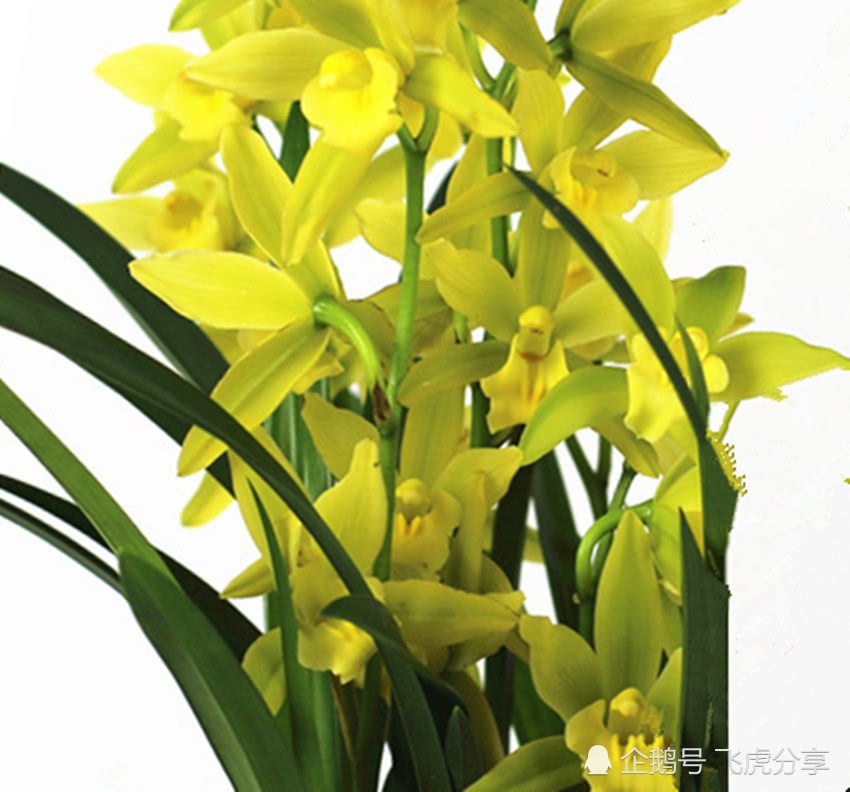
Many beginners who have just taken up the hobby always think orchids are very hard to grow, and no matter how they try, they just can't grow them well. For people with experience in growing orchids, cultivating orchids is not difficult at all, and in fact it is very easy and very simple to grow them. The reasons orchids don't grow well all come down to getting these few things wrong, which leads to root rot, stalled growth, drying up, and finally death. So that more orchid lovers can grow orchids well and avoid taking more detours, today we are specially sharing some tips for growing orchids. Let you use the correct and scientific method to cultivate orchids.
1. Mistake one: the reason most orchid lovers fail to grow orchids well is mostly that they use the wrong potting medium. Why does using a poor medium mean orchids won't grow well? Because during growth, orchids need the moisture around their roots to be moist; if the medium is too wet or too dry, neither is good for orchid growth. If you grow orchids using only ordinary soil or a fine-textured medium, after watering the moisture in the soil cannot dissipate for a long time and the soil stays on the wet side; if you water too little, the soil ends up wet on top and dry below, and since orchids are a very delicate flower, over time they either dry up or die. So ordinary soil cannot grow orchids well. When growing orchids you must use a mix of coarse and fine materials, so that it becomes loose and granular. You can use local materials according to the conditions in each area, such as: leaf mold, immortal soil and the like, which are fine materials, to which you can add coarse materials such as tree fern, pine bark, and granular media. But any medium used must be fully decomposed, otherwise it easily burns the roots. If you find mixing troublesome, you can buy Ishiyaku stone and immortal soil, using 60% Ishiyaku stone + 40 immortal soil, or use 40% leaf mold + 60% peanut shells. Many orchid lovers use these two media, and the results are very good.
2. Mistake two: watering with no regularity. Orchids like a cool, shady and damp growing environment, but damp does not mean keeping the inside of the pot wet every day. The "damp" in orchid growing means the soil moisture should be moist, and moist is not the same as soggy; it means damp but not dry, which can also be understood as half dry and half wet. You must never water too much or too often. Before watering, first check the medium: the method is to push aside the top layer of potting medium about two fingers deep, and if you find it dry inside, water immediately; if it is wet, don't water. Each time you water, you must water thoroughly. When the weather is dry, use a spray bottle to mist the leaves and keep them moist.
3. Mistake three: improper fertilizing. Orchids are very sensitive to soil, water and fertilizer, and the slightest carelessness causes problems. Although orchids like fertilizer, they cannot tolerate too much or too concentrated fertilizer. For beginners, fertilizing is very hard to get right; it is better not to fertilize at all than to fertilize improperly. It is recommended that beginners, each time they water, best use rice-washing water that has been left to stand for 24 hours instead of tap water to water the plants; this can basically meet the needs of orchid growth. But be careful not to pour it on the leaves. If you soak the apple peels and orange peels left over from everyday eating in rice-washing water, and water the flowers with it a few days later, the effect is very good. Because this kind of water has thin, diluted fertilizer and contains a variety of nutrients, and is also somewhat acidic, it is very suitable for orchid growth.
4. Mistake four: an unsuitable care environment. Although orchids are shade-loving flowers, they will not grow well if they never see sunlight. Generally, in spring and winter you can give them plenty of light, and in summer and autumn shade them in good time to avoid direct sunlight. If conditions allow, you can let them get sun before 8 o'clock every morning, or simply place them under a large tree outdoors, which is very beneficial to orchid growth. Orchids like coolness and humidity, and fear muggy heat, dryness, and poor ventilation. Therefore, the care environment should be shady and well ventilated in summer, and sheltered from wind and warm in winter. In addition, orchids fear coal smoke and environmental pollution the most, so the growing site must keep the air fresh and the humidity suitable.