A bamboo-like harmful weed at the edge of fields was once hated by farmers, now it sells for 18 yuan per jin and has become a rare commodity
Friendly reminder
Hemu Report aims to share and popularize information about various plants and their uses, for reference only. If medicinal use is needed, it is recommended to consult a professional doctor to avoid problems!
In rural areas there are all kinds of wild grasses, and I believe friends who have lived in rural areas for a long time are very familiar with them. As for these wild grasses, most farmer friends are quite fond of them, because wild grasses are treasures. Some wild grasses have good nutritional value and can be eaten as wild vegetables, and some have good medicinal value and can be used as Chinese herbal medicine. Therefore, most farmer friends are very fond of wild grasses. But there are always exceptions. Some wild grasses grow at the edges of farmland and orchards, affecting crop growth, which makes many farmer friends dislike them. Below, the author will introduce one such plant.
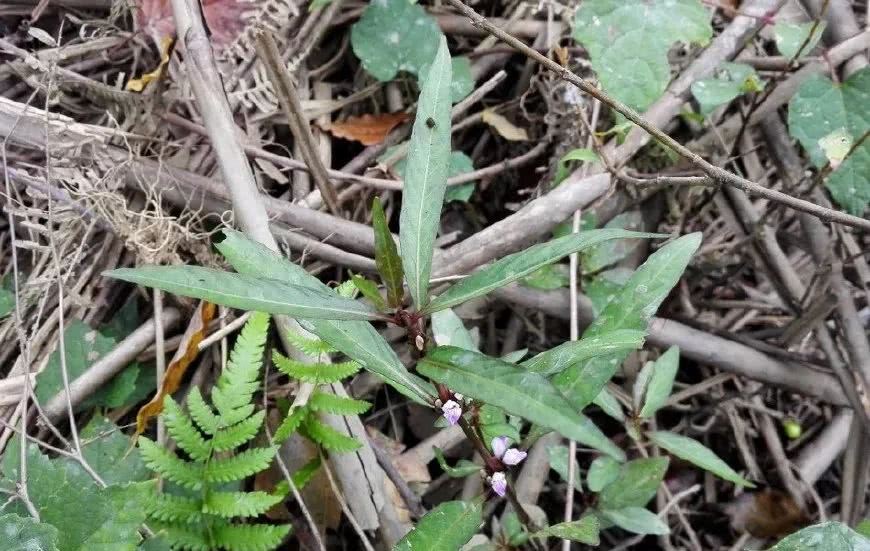
After spring arrives, wild grasses and wild plants in the rural outdoors put down roots and sprout one after another. By the small streams and paddy fields in rural areas, a kind of wild grass grows. It is segmented, just like bamboo, and when May and June come, it blooms on those bamboo-like nodes. This wild grass is "water sagittaria" (Hygrophila salicifolia). Because its appearance is rather special and its flowering is also rather special, farmer friends also call it water bone joint, water arrow grass, nine-node flower, node-by-node same, flower on the node, and bamboo-node grass.
When it comes to this wild grass, water sagittaria, quite a few old farmer friends say that this wild grass was once a major "harmful weed." The reason is the issue of where this wild grass grows. Water sagittaria likes to grow in damp places, and paddy fields have become a place where it often grows. Water sagittaria has strong vitality and strong reproductive capacity, so it often robs the crops in paddy fields of nutrients, causing poor crop growth and even reduced yields. Moreover, its stems are tough, even tougher than many crops, so water sagittaria was once hated by many farmer friends who farmed fields, and they would cut it down as soon as they saw it in the fields.
Although water sagittaria has quite a few harmful aspects and was once hated by many farmer friends who farmed fields, quite a few farmer friends still like it, because water sagittaria is also a very good Chinese herbal medicine. According to "Chinese Materia Medica," the whole plant of water sagittaria can be used as medicine. Its taste is sweet and its nature is cool. As medicine it has the effects of clearing heat and detoxifying, dispersing blood stasis and reducing swelling. It can be used to treat epidemic heat toxin, erysipelas, jaundice, mouth sores, coffee swelling and pain, breast abscess, vomiting blood and nosebleed, bruises and pain from falls, fractures, venomous snake bites, and many other conditions. Its main methods of use are soaking in liquor or pounding it and applying it externally.
Because in the past water sagittaria was cut down as a harmful weed by many farmer friends who farmed fields, the quantity of this wild grass also decreased, and it became a rare commodity. However, because its medicinal value is very good, the price of water sagittaria is also relatively high. According to a farmer friend in the village who specializes in growing water sagittaria, at present water sagittaria can sell for about 18 yuan per jin, which can also be considered a path to wealth for farmer friends.
Dear friends, do you know about water sagittaria? You are welcome to leave a message and exchange views.
Text/Hemu Report, images/Internet
If you like Hemu's articles, you are welcome to follow.