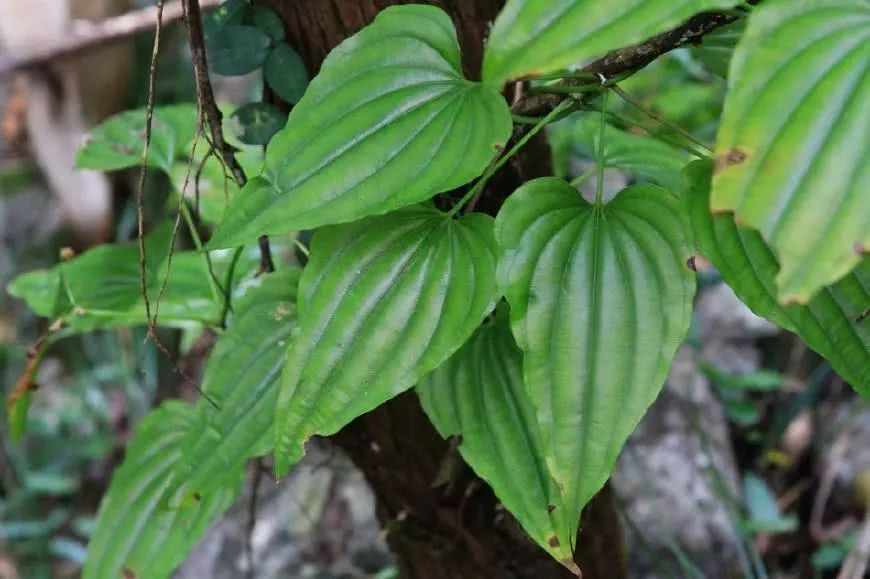
Stemona japonica twines around trees and drains their nutrients, and farmers cut it down on sight without knowing how precious it is
Friendly reminder
Hemu Report aims to share and popularize information about various plants and their uses, for reference only. If you need it for medicinal purposes, it is advisable to consult a professional doctor to avoid problems!
China's rural areas are rich in vegetation resources, especially in the mountains, where there are all kinds of wild plants, and the most abundant of all are wild grasses. Most farmer friends are very fond of these wild grasses, because they all have great uses. Some wild grasses are nutritious and can be eaten as wild vegetables, some have medicinal value and can be used as herbal medicine, and quite a few wild grasses are even grown and sold by farmer friends as "fortune-making grass." Below, the author introduces one such wild grass.
In fact, this wild grass was once used only by farmers in mountainous areas, and in the early days, many farmer friends who did not know it even removed it as a harmful weed. Only later did they learn about its benefits, and it was called "hundred-root" by farmer friends. Speaking of it, hundred-root also grows quite distinctively, looking like Boston ivy. The reason some farmer friends disliked it back then was that, like Boston ivy, it is a climbing plant that twines around trees as it grows, absorbing and robbing other plants of their nutrients. So in the past, some farmer friends who planted orchards in mountainous areas would mistake it for a harmful weed and cut it down whenever they came across it, never realizing that it is the precious "Stemona japonica."
In fact, anyone who knows Stemona japonica will not only refrain from removing it, but will also treat it as a treasure. In the morning, the author followed an experienced farmer friend from the village into the mountains to look for Stemona japonica, and on a dead tree in the mountains, we saw some. Actually, the stems and leaves of Stemona japonica are not of much use; its most useful part is its root. The root of Stemona japonica resembles ginseng, and although it is not as valuable as ginseng, it is worth more than the roots of ordinary wild grasses.
According to the villagers, the root of Stemona japonica has been a very good traditional Chinese medicine since ancient times. The author also consulted relevant materials, and according to the Qing Dynasty medical text "New Compilation of Materia Medica," the root of Stemona japonica used as medicine has the effects of relieving cough and reducing phlegm, warming and moistening the lungs, dispelling heat and relieving external symptoms, and killing insects. It can be used to treat many conditions such as recent and chronic cough, cough from pulmonary tuberculosis, pulmonary tuberculosis, long-term cough, cough from pulmonary tuberculosis, whooping cough, asthma with whooping cough, head lice, body lice, pinworm disease, and genital itching. In ancient times, people mostly used Stemona japonica to treat symptoms such as chronic cough, excessive phlegm, and roundworms.
It is precisely because Stemona japonica has these effects that it is loved by farmer friends. However, because Stemona japonica mainly grows in the damp, shaded places of rural mountains and is relatively rare, its price on the market is also relatively high. According to the villagers, Stemona japonica now generally sells for 38 yuan to 48 yuan per jin. Therefore, quite a few farmer friends also specifically grow Stemona japonica near mountainous areas, making it the "fortune-making grass" of many farmer friends in mountainous areas.
Dear friends, do you know about Stemona japonica? Have you ever grown Stemona japonica? You are welcome to leave a comment and share your thoughts!
Text/Hemu Report, Images/Internet
If you like Hemu's articles, you are welcome to follow