What are the cultivation methods and precautions for clematis?
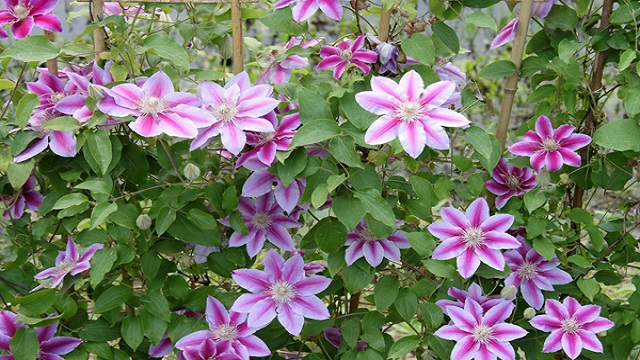
1. Growing environment
(1) Soil: The soil for growing clematis must be well-drained, fertile, and so on, and according to the plant's requirement for pH, alkaline soil is needed. You can use coconut coir, peat, and perlite in a 3:1:1 ratio to mix the soil, and you can also add large-particle materials such as bark and volcanic stone.
(2) Watering: It is relatively drought-tolerant but afraid of waterlogging. During the growing season, just keep the soil moist, without water accumulation. In summer, the frequency can be higher, once every three days; in winter, control watering, about once every half month. In spring and autumn, watering can be done as needed; water when the soil is dry.
(3) Light: It is very fond of light, so full-light care is better, and direct sunlight is fine. However, in summer there will be particularly strong direct sunlight, and at that time shade is needed.
(4) Fertilizing: It does not need much fertilizer; using some liquid fertilizer only during the growing season can meet its requirements, once every half month.
2. Disease prevention and control
Clematis wilt is relatively common and must be dealt with promptly. After wilt occurs, immediately reduce watering. Then it needs to be topped, and afterward the leaves should be cut. Finally, use carbendazim to drench the roots for disinfection, and place it in a cool place for care, waiting for it to send out new shoots.
3. Pruning
After the flowering period, pruning is needed once, and at the same time some branches can be cut off for cuttings. In autumn and winter, because the plant is about to enter dormancy, pruning is needed once to help it overwinter.